Archdiocese of Cologne to Shift FABC Partnership Toward Green, Self-Sustaining Projects

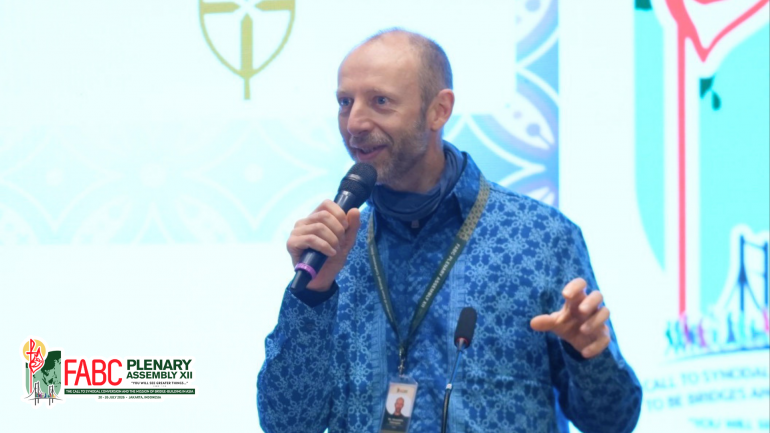
The Archdiocese of Cologne is expanding its support for the Church in Asia beyond funding church buildings and pastoral facilities, placing greater emphasis on environmental sustainability, financial self-reliance, and safeguarding as essential elements of future partnerships.
The message was delivered by Mr. Alessandro Chieregato, Project Coordinator of the Archdiocese of Cologne's Department of the Universal Church, during his address to delegates at the 12th Plenary Assembly of the Federation of Asian Bishops' Conferences (FABC) on July 23 in Jakarta.
Opening his remarks, Mr. Chieregato conveyed greetings from Cardinal Rainer Maria Woelki, Archbishop of Cologne, and Mr. Nadim Amel, Director of the Department of the Universal Church. He said it was a privilege to join the assembly and witness the Church in Asia discerning its future together.
The Archdiocese of Cologne's participation also coincides with the 50th anniversary of its Department of the Universal Church, which will celebrate its Golden Jubilee from October 2 to 4, 2026, in Cologne, Germany. Mr. Chieregato invited FABC partners to participate in the celebration.
Reflecting on five decades of collaboration with Asian dioceses, he noted that the archdiocese has long supported the construction of churches, seminaries, convents, pastoral centers, and bishops' residences. Today, however, changing pastoral realities call for a broader vision of Church assistance.
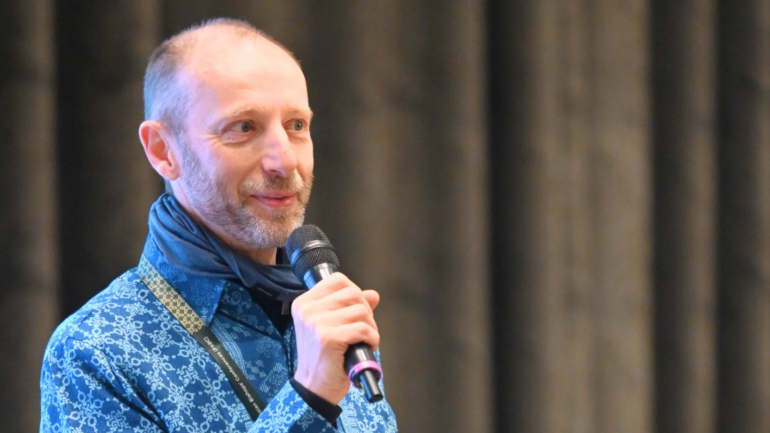
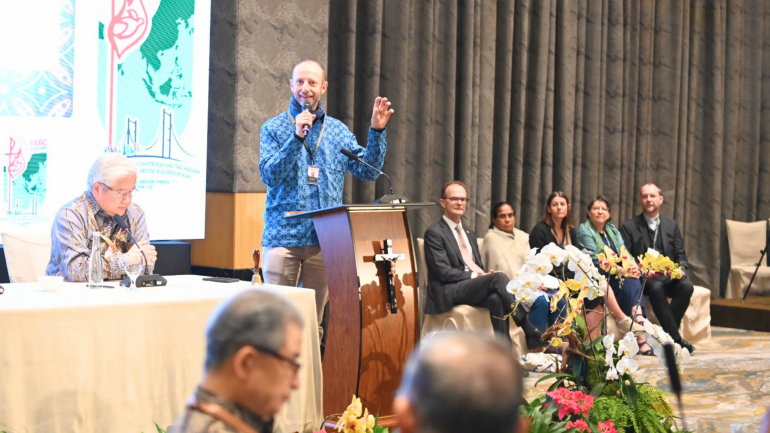
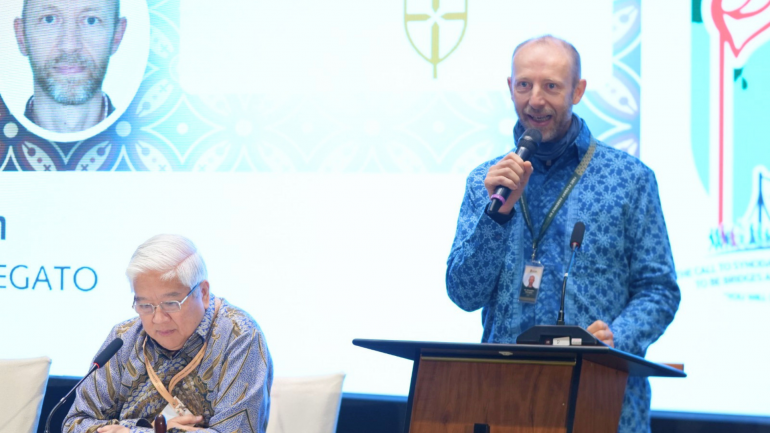
"Over the past 50 years, we have supported many dioceses in Asia in developing pastoral infrastructure. We are now expanding our funding guidelines to include environmentally friendly, income-generating projects that also help reduce operating costs," he said.
According to Mr. Chieregato, the revised approach seeks to help local Churches become more financially sustainable while exercising greater care for creation. He said future pastoral projects should not only meet immediate ministry needs but also strengthen long-term economic resilience and environmental responsibility.
The Archdiocese of Cologne is therefore encouraging projects that improve operational efficiency, generate sustainable income, and reduce environmental impact while continuing to support the Church's pastoral mission.
Another priority, he said, is ensuring that every partnership incorporates strong safeguarding standards to protect children and vulnerable people.
"We want to accompany our partners in achieving greater environmental and financial sustainability within the framework of well-designed and effectively implemented safeguarding policies," he said.
Although he did not present the new funding guidelines in detail during the session, Mr. Chieregato invited participants to continue the conversation and learn more about the archdiocese's evolving approach.
His presentation highlighted how the Archdiocese of Cologne's long-standing partnership with the Churches of Asia is adapting to new pastoral challenges. Rather than focusing solely on infrastructure, the partnership now aims to strengthen ministries that are financially viable, environmentally responsible, and committed to safeguarding human dignity.
Concluding his address, Mr. Chieregato expressed hope that the FABC Plenary Assembly would bear lasting fruit for the Church in Asia. He reaffirmed the Archdiocese of Cologne's commitment to walking alongside the FABC in its mission of evangelization and pastoral renewal.
His remarks underscored how international Church partnerships are increasingly being shaped by a shared commitment to sustainability, responsible stewardship, and the synodal vision of building resilient local Churches equipped to serve future generations.
Radio Veritas Asia (RVA), a media platform of the Catholic Church, aims to share Christ. RVA started in 1969 as a continental Catholic radio station to serve Asian countries in their respective local language, thus earning the tag “the Voice of Asian Christianity.” Responding to the emerging context, RVA embraced media platforms to connect with the global Asian audience via its 21 language websites and various social media platforms.
Latest News