


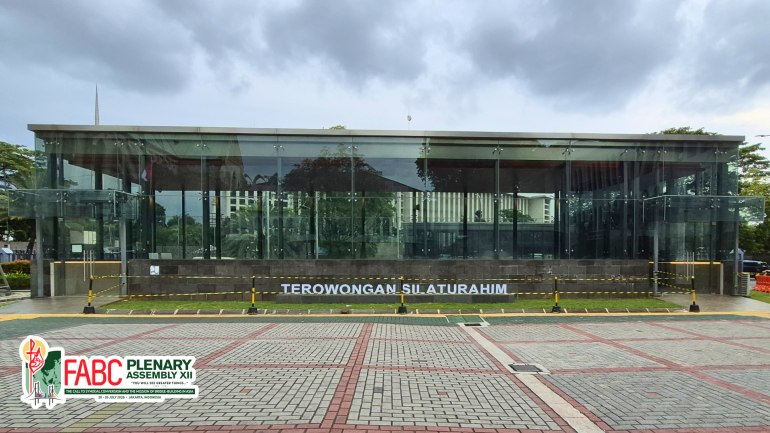
Indonesia's long-standing tradition of interreligious harmony will take center stage during the 12th Plenary Assembly of the Federation of Asian Bishops' Conferences (FABC) in Jakarta, as hundreds of Catholic bishops from across Asia are scheduled to visit the Tunnel of Friendship and Jakarta's Istiqlal Mosque, two of the country's most prominent symbols of religious coexistence.
The visit, scheduled as part of the assembly's closing events on July 26, will see the bishops celebrate the Eucharist at Jakarta Cathedral before walking together through the Tunnel of Friendship to Istiqlal Mosque, Southeast Asia's largest mosque.
Far more than a simple underground passage, the Tunnel of Friendship has become an internationally recognized symbol of dialogue, mutual respect, and peaceful coexistence between religious communities in Indonesia.
The idea for the tunnel was first proposed by then-President Joko Widodo during the renovation of Istiqlal Mosque in 2020. Construction began in January 2021 as part of the mosque's revitalization project, creating a direct underground connection between Istiqlal Mosque and Jakarta Cathedral, two iconic houses of worship that have stood side by side since the era of Indonesia's founding president, Sukarno. Designed not merely for convenience but as a visible expression of interfaith friendship, the tunnel gained global attention during Pope Francis' Apostolic Journey to Indonesia in September 2024, when he visited the site during the Interreligious Meeting at Istiqlal Mosque. The tunnel was officially opened to the public in December 2024.
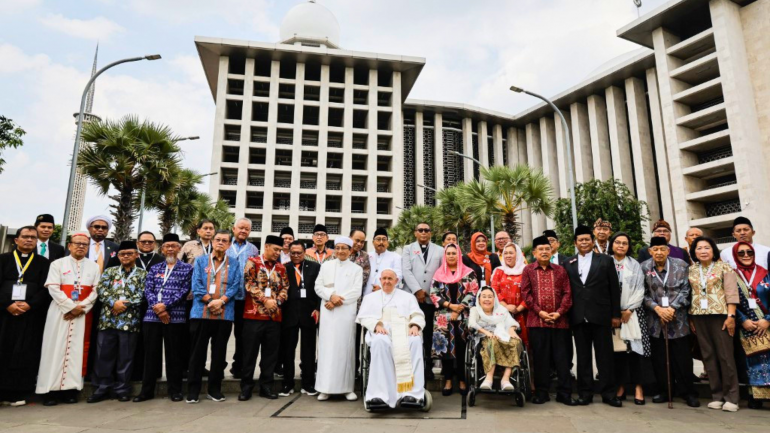
Minister of Religious Affairs Nasaruddin Umar said Indonesia's experience in fostering harmony among diverse religious, ethnic, and cultural communities offers an important example for the international community, particularly for participants attending the FABC Assembly.
"Indonesia possesses strong social capital in nurturing harmony. The presence of bishops from across Asia provides an opportunity to demonstrate that differences are not barriers, but rather strengths that enable us to build peace together," Nasaruddin said.
He emphasized that both the and Istiqlal Mosque represent Indonesia's national values, where dialogue, mutual respect, and solidarity form the foundation of religious life.
"We want the participants not only to see these symbols, but to experience firsthand how religious harmony is lived out in the daily lives of Indonesians," he added during a meeting with the Catholic Bishops' Conference of Indonesia (KWI) to discuss preparations for the FABC Assembly.
Bishop Antonius Subianto Bunyamin of Bandung, president of the Indonesian Bishops' Conference, confirmed that the visit to the Tunnel of Friendship and Istiqlal Mosque has been included in the official closing program of the assembly.
Around 110 bishops from across Asia are expected to participate, joined by representatives from the Americas, Africa, Oceania, and Europe. They will be welcomed at Istiqlal Mosque by Minister Nasaruddin Umar in his capacity as the Grand Imam of the mosque.
"The Minister has confirmed that the bishops and delegates will visit the Tunnel of Friendship during the closing program and will be officially received at Istiqlal Mosque," Bishop Antonius said.
Cardinal Ignatius Suharyo, Archbishop of Jakarta, said the visit perfectly reflects the central theme of the 12th FABC Plenary Assembly: "You Will See Greater Things" (John 1:50): Synodal Conversion and the Mission to Be Bridges and Bridge-Builders in Asia.
"We will witness greater things through encounters with people of different religions and cultures. God shows us that something greater becomes possible when we build bridges of dialogue. That is why the visit to the Tunnel of Friendship symbolizes Indonesia's aspiration to live in harmony amid diversity," Cardinal Suharyo said.
Radio Veritas Asia (RVA), a media platform of the Catholic Church, aims to share Christ. RVA started in 1969 as a continental Catholic radio station to serve Asian countries in their respective local language, thus earning the tag “the Voice of Asian Christianity.” Responding to the emerging context, RVA embraced media platforms to connect with the global Asian audience via its 21 language websites and various social media platforms.
Latest News