As the Federation of Asian Bishops' Conferences (FABC) prepares for its Plenary Assembly in Jakarta, Indonesia, from July 20 to 26, under the theme "Call to Synodal Conversion and Mission to be Bridges and Bridge-Builders in Asia," a Pakistani Dominican priest says authentic bridge-building must begin at the grassroots, where people of different faiths encounter one another in daily life.
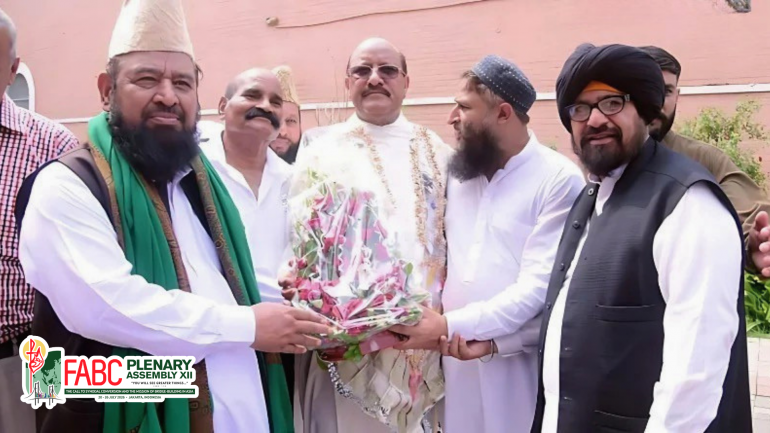
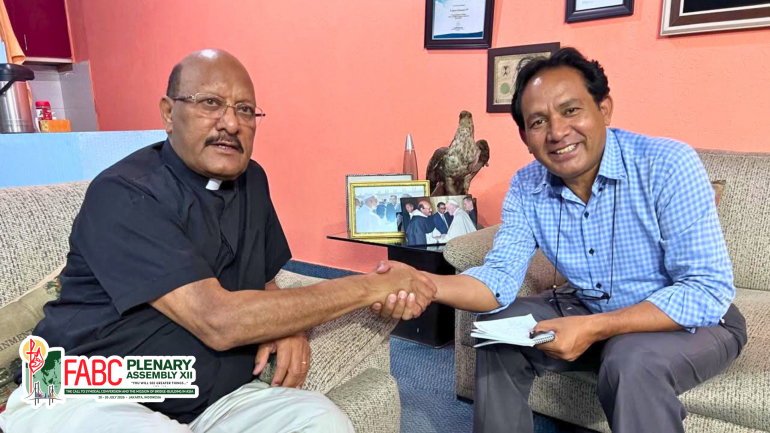
Fr. James Channan, OP, is widely recognized as one of Pakistan's leading pioneers of interreligious dialogue and peacebuilding. For more than 40 years, he has worked to promote peace and strengthen Christian-Muslim relations in the Muslim-majority nation.
His leadership includes serving for seven years as executive secretary of the FABC Office of Ecumenical and Interreligious Affairs (OEIA) and 17 years as executive secretary of the Catholic Bishops' National Commission for Christian-Muslim Relations. He also served as a consultor to the Vatican's former Pontifical Council for Interreligious Dialogue.
He shared his insights in an interview with Radio Veritas Asia (RVA), drawing on more than four decades of experience promoting Christian-Muslim relations.
Excerpts:
What does "building bridges" look like in your daily ministry?
"On the ground, building bridges is a daily ministry of presence, patience, and active engagement. Having served the FABC's Office of Ecumenical and Interreligious Affairs for seven years, I deeply appreciate the theme of the upcoming plenary assembly. In Lahore, we put this into practice through our Peace Center, where Muslim, Christian, Hindu, and young leaders come together to build mutual respect. When local tensions arise, our interfaith networks enable us to work directly with imams and community leaders to defuse conflicts before they escalate."
What inspired you to dedicate your life to peacebuilding?
"My turning point came in 1977 when, as a young seminarian, I felt a deep calling to serve my people in Muslim-majority Pakistan. To build genuine bridges, I devoted six years to studying Islam, including research on fasting and the pilgrimage to Makkah. Later, I earned my licentiate in Arabic and Islamic studies from Pontifical Institute for Arabic and Islamic Studies in Rome.
"That foundation shaped decades of ministry, including my appointment as a consultor for interreligious dialogue at the Vatican and 17 years of service with Pakistan's National Commission for Christian-Muslim Relations."
How do you continue peacebuilding despite deep divisions and recurring violence?
"We face enormous challenges—religious extremism, attacks on homes, violence against Christian girls, and the denial of justice. Yet we continue to choose the path of peace. To counter walls of hatred, we build lasting structures of trust by establishing peace centers, strengthening interfaith commissions, and working closely with local authorities. I have learned never to give up. Even in our darkest moments, we must light a candle of hope rather than curse the darkness."
What is the most urgent step toward building genuine trust among communities?
"We must address the systemic issues affecting minority communities, including restrictions on religious freedom, mob violence, forced conversions, forced marriages, and the misuse of blasphemy laws. But resolving these issues requires grassroots action, not merely statements from leaders. We need structured dialogue and regular local encounters between communities. When people meet face to face, misunderstandings diminish and mutual respect can grow."
How are you preparing the next generation of bridge-builders?
"My priority is mentoring young people in Pakistan. We prepare them through seminars, national conferences, and exposure visits where they meet leaders of other faiths in person. I also engage them through my publications. By leading through example and demonstrating that dialogue can make a real difference, I hope to inspire them to continue this mission."
What are your hopes for the FABC as it moves forward?
"We must continue promoting interfaith dialogue across Asia. In countries where Christians are a minority, dialogue is not optional, it is a pastoral necessity for peaceful coexistence. We also need to involve young people more actively in peacebuilding, equipping them to become tomorrow's bridge-builders.
"Finally, we must continue sharing the Church's teachings on human dignity, justice, and the common good, so they become a lived reality within our societies."