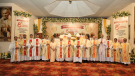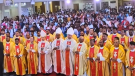



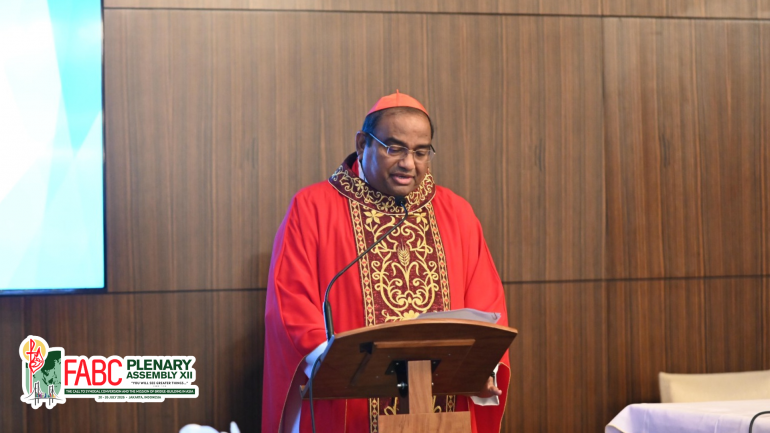
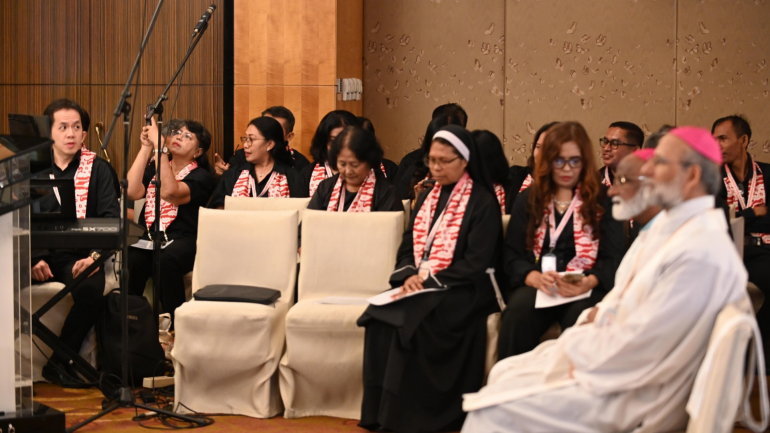
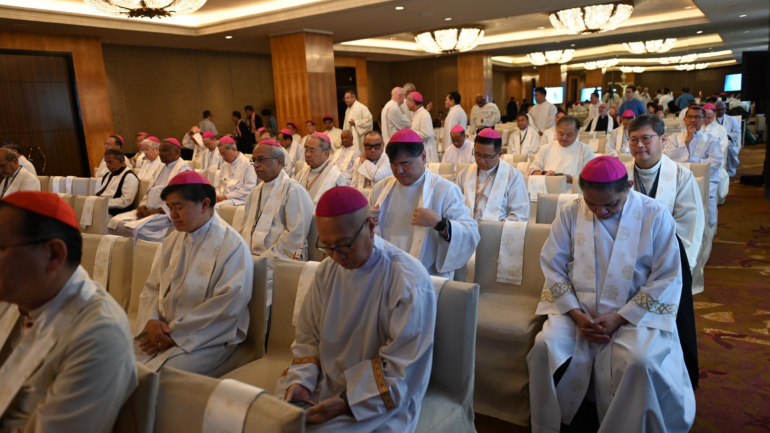
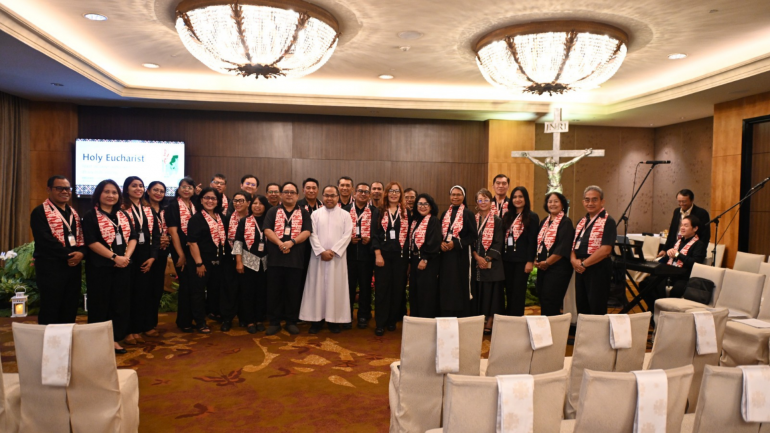
The call of a bishop is not to seek honor or authority but to serve God's people with humility and sacrifice, Cardinal Anthony Poola told bishops gathered for the 12th Plenary Assembly of the Federation of Asian Bishops' Conferences (FABC) in Jakarta.
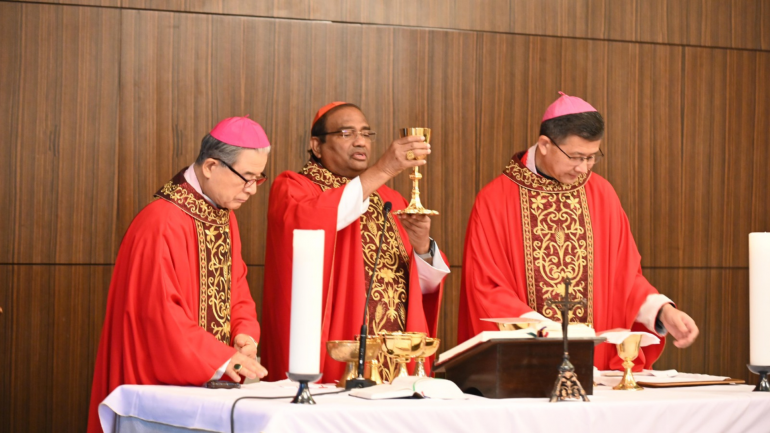
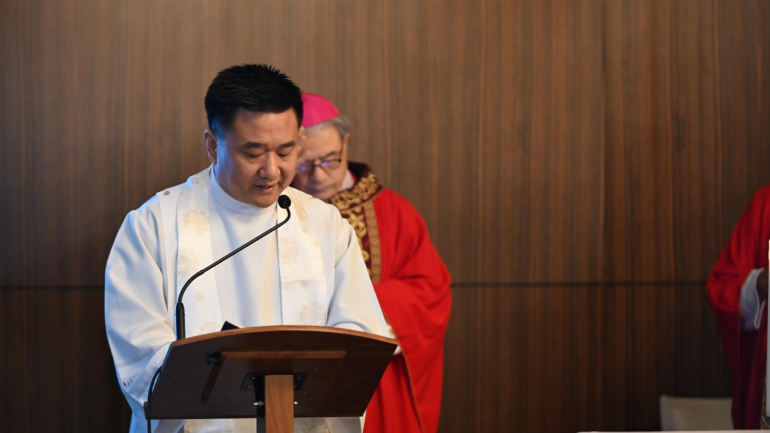
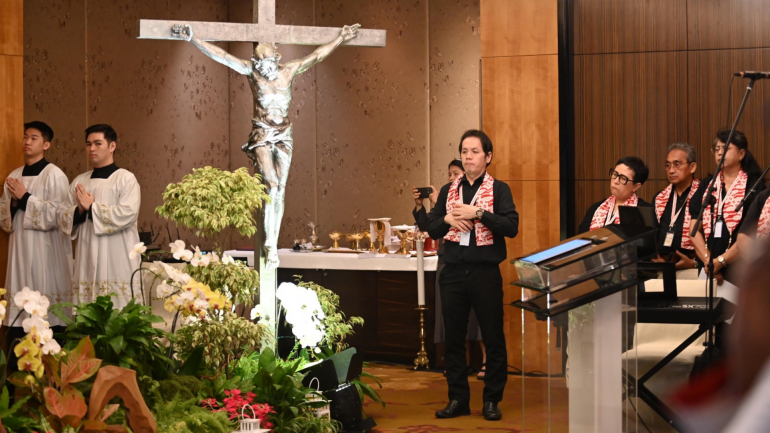
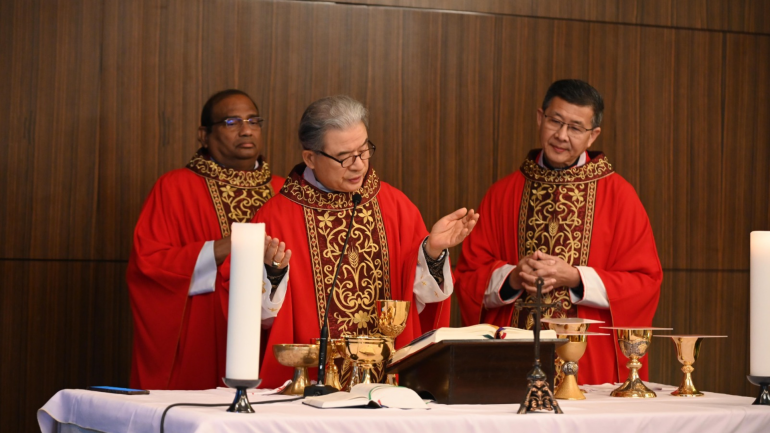
Preaching during the Eucharistic celebration for the Feast of St. James the Apostle on July 25, Cardinal Poola, President of the Catholic Bishops' Conference of India, urged Church leaders across Asia to embrace a model of leadership rooted in Christ's self-giving love rather than worldly notions of power and prestige.
Reflecting on the Gospel account in which the mother of James and John asks Jesus to grant her sons places of honor in His Kingdom, Cardinal Poola acknowledged that the desire for recognition and security is deeply human. Yet, he said, Jesus redirects His disciples to the true meaning of leadership.
"The apostolic office is not a seat to occupy but a cup to receive. It is not first about a visible position, but about participating in Christ's self-offering," Cardinal Poola said.
Referring to Jesus' question, "Can you drink the cup that I am going to drink?" he reminded the bishops that authentic leadership in the Church is inseparable from sacrifice and service.
Quoting Christ's teaching that "whoever wishes to be great among you must be your servant," Cardinal Poola stressed that episcopal authority becomes genuinely evangelical only when exercised in humility.
Drawing on Pope Francis' teaching that authority is fundamentally a form of service, Cardinal Poola said a bishop is called to remain close to God's people rather than simply administer Church institutions. Citing Evangelii Gaudium, he noted that the Church is called to go forth, accompany people, bear fruit, and rejoice in proclaiming the Gospel.
"For the Church in Asia, leadership is not supervision from a distance but missionary closeness; not self-centered administration but pastoral conversion," he said.
The cardinal warned against the temptation for Church leaders to seek status, preserve positions, or measure success by influence. Instead, he pointed to Christ, "who came not to be served but to serve and to give His life as a ransom for many."
He said this message carries particular significance for the Churches of Asia, where Catholics often live as small minorities amid religious diversity while facing poverty, migration, economic inequality, political conflict, environmental degradation, and the concerns of young people.
"The Church cannot proclaim Christ through power," he said, "but through humble service, sincere dialogue, courageous witness, and compassionate presence."
Reflecting on St. Paul's Second Letter to the Corinthians, Cardinal Poola described bishops as "earthen vessels" entrusted with the priceless treasure of the Gospel.
"A bishop is not called to pretend that he is not an earthen vessel. Rather, he is called to let the treasure shine through his own fragility," he said.
Human weakness, he explained, becomes the place where God's grace is revealed, reminding bishops that their ministry depends not on personal strength but on the Lord's power.
Cardinal Poola also linked his reflections to the Church's synodal journey, describing synodality as a continual conversion that enables the Church to listen more attentively to the Holy Spirit and walk faithfully with the People of God.
He concluded by urging bishops to embrace three priorities: to share in the sufferings of the poor and marginalized, to proclaim the Gospel with humility, and to become bridge-builders through dialogue with cultures, other religions, and those on the margins.
"We are not called to sit at the right or left of power," Cardinal Poola said. "We are called to walk the path of the Servant. We are not called to protect the earthen vessel, but to reveal the treasure within it. We are not called to build towers, but to build bridges."
Radio Veritas Asia (RVA), a media platform of the Catholic Church, aims to share Christ. RVA started in 1969 as a continental Catholic radio station to serve Asian countries in their respective local language, thus earning the tag “the Voice of Asian Christianity.” Responding to the emerging context, RVA embraced media platforms to connect with the global Asian audience via its 21 language websites and various social media platforms.
Latest News