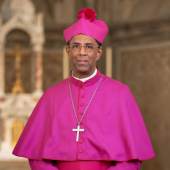
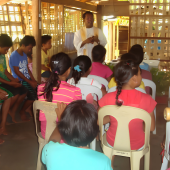
Cardinal Malcolm Ranjith of Colombo has called for a fundamental transformation of Sri Lanka’s economic and political system, warning that ordinary citizens continue to bear the brunt of the country’s prolonged economic crisis.
The cardinal made the remarks on May 30 during Vesak, the most important Buddhist festival in Sri Lanka, commemorating the birth, enlightenment, and passing away of Gautama Buddha. The celebration is observed on the full moon day of May and is marked by religious observances, acts of charity, and colorful lantern displays across the island nation.
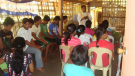
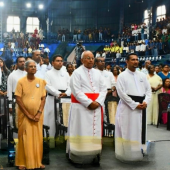
Speaking at a Dansala, a traditional community service in which free food and drinks are offered to pilgrims, visitors, and the poor during Vesak, organized by the Archdiocese of Colombo, Cardinal Ranjith urged religious leaders to work together in advocating for the welfare of the people.
“The situation is becoming increasingly difficult for the public,” Cardinal Ranjith told reporters. “Religious leaders and clergy can unite to influence or intervene with the government. The current state of the country is truly tragic.”
Sri Lanka is still recovering from the unprecedented economic collapse of 2022, which led to severe shortages of fuel, food, medicine, and foreign currency. Although economic conditions have shown signs of stabilization, many families continue to struggle with high living costs.
The cardinal attributed the economic burden to both international and domestic factors. He said global military tensions and conflicts have contributed to rising oil prices, increasing the cost of living worldwide.
At the national level, he criticized what he described as inadequate efforts to combat corruption and improve transparency.
“There is still a noticeable failure within the government to establish a proper mechanism against corruption and to make ongoing transactions fully transparent,” he said. “The government must make every effort to ease the people’s cost of living.”
Cardinal Ranjith also questioned Sri Lanka’s long-standing free-market economic model, arguing that globalization has weakened local production despite the country’s favorable climate and agricultural potential.
Addressing Sri Lanka’s relationship with the International Monetary Fund (IMF), he acknowledged that the current administration inherited a massive debt burden that necessitated international assistance. However, he cautioned against relying exclusively on IMF-driven policies.
“If we continue to run the country solely on IMF conditions, and if global conflicts escalate in the future, it will be impossible to move the country forward,” he said.
Despite his criticisms, the cardinal emphasized that responsibility for addressing the crisis rests not only with the government but also with opposition parties and all national leaders.
In a gesture of interreligious solidarity, many Catholic churches and institutions across Sri Lanka joined Buddhist communities during this year’s Vesak celebrations by organizing Dansalas and displaying traditional Vesak lanterns, reflecting the country’s longstanding culture of religious coexistence.
Radio Veritas Asia (RVA), a media platform of the Catholic Church, aims to share Christ. RVA started in 1969 as a continental Catholic radio station to serve Asian countries in their respective local language, thus earning the tag “the Voice of Asian Christianity.” Responding to the emerging context, RVA embraced media platforms to connect with the global Asian audience via its 21 language websites and various social media platforms.
Latest News