Caritas Bangladesh Hosts National Consultation on Media Advocacy for Climate Migrants

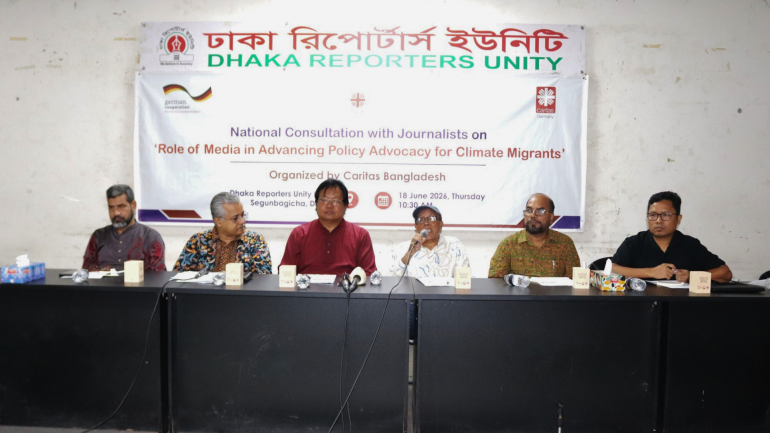
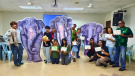
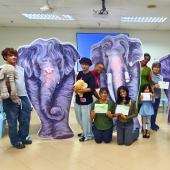
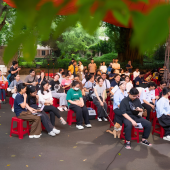
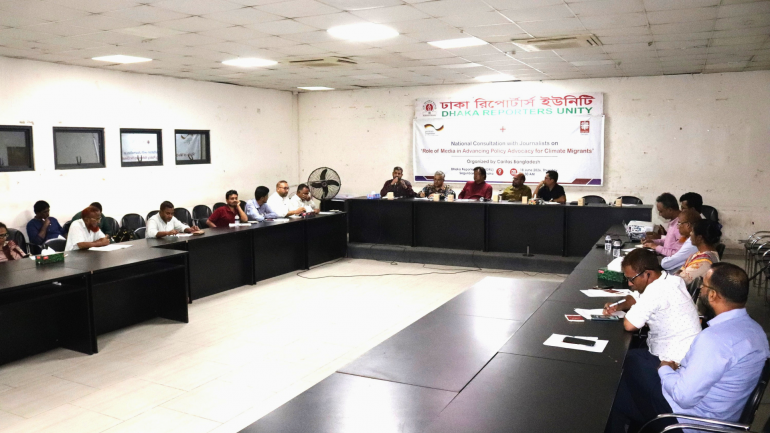
Caritas Bangladesh organized a national-level consultation meeting with journalists at the Dhaka Reporters Unity (DRU) Auditorium in Dhaka, the capital city of Bangladesh, on June 18 to discuss the role of the media in promoting effective policies for climate migrants and communities displaced by climate change.
The consultation brought together journalists from various national print and electronic media outlets to exchange views on the protection of climate-displaced populations and the policy measures needed to address the growing challenges posed by climate change-induced displacement.
Distinguished speakers at the event included renowned journalist and Editor of Charcha.com Sohrab Hasan, former President of Dhaka Reporters Unity Rafiqul Islam Azad, and Executive Member of the Bangladesh Federal Union of Journalists (BFUJ) Shaheen Hasnat.
At the beginning of the program, Theophil Nokrek, Director of CDI at Caritas Bangladesh, welcomed the participants and presented an overview of the organization’s initiatives aimed at reducing risks, strengthening adaptation, and improving the livelihoods of disaster-affected, vulnerable, marginalized, and climate-displaced communities across the country.
Addressing the gathering, veteran journalist Sohrab Hasan stated, “The crisis of climate-induced displacement is becoming increasingly severe. It is now a multidimensional challenge that often remains invisible. Therefore, the government may consider establishing a dedicated ministry to address this issue.”
He also urged the government to reduce wastage in development projects in order to minimize climate-related losses and damages.
Former DRU President Rafiqul Islam Azad described climate-displaced people as “climate warriors.” He highlighted the unimaginable hardships faced by people living in Bangladesh’s coastal regions and their ongoing struggle for survival.
BFUJ Executive Member Shaheen Hasnat referred to Dhaka as a “mysterious city of the East” and observed, “People have opportunities to enter Dhaka, but very few opportunities to leave. Due to the lack of adequate employment opportunities in rural areas, many migrants are unable to return home.”
He further noted that Bangladesh’s classification as a lower-middle-income country has led to a reduction in foreign assistance, while climate-related disaster risks continue to increase.
“A significant gap has emerged that requires urgent attention. Addressing this challenge is a shared responsibility of the government, civil society organizations, and journalists alike,” he added.
Responding to questions from journalists, Alexander Tripura, Head of the Disaster Management Department of Caritas Bangladesh, emphasized that although Bangladesh contributes very little to global carbon emissions, it suffers disproportionately from the impacts of climate change.
He acknowledged that many developed countries provide grants and support as compensation for climate-related losses and damages and stressed the importance of ensuring the effective utilization of such funding. Alongside infrastructure development, he urged policymakers to prioritize climate-induced displacement as a critical national issue.
Journalist Dr. Dipu Siddiqui observed that while media outlets regularly publish stories on sports and entertainment, there remains a shortage of reliable information regarding policy gaps and planning related to climate migration.
“Journalists often lack access to accurate data on climate migrants, which makes it difficult to report comprehensively on the crisis,” he noted.
The meeting underscored the critical role of the media in bringing these issues to public attention and encouraged news organizations to undertake more investigative and analytical reporting to support the development of comprehensive policy frameworks.
Radio Veritas Asia (RVA), a media platform of the Catholic Church, aims to share Christ. RVA started in 1969 as a continental Catholic radio station to serve Asian countries in their respective local language, thus earning the tag “the Voice of Asian Christianity.” Responding to the emerging context, RVA embraced media platforms to connect with the global Asian audience via its 21 language websites and various social media platforms.
Latest News