Church Leaders Urge Support for Farmers After Climate-Linked Storms Devastate Crops in Pakistan

Church leaders in Pakistan have called for urgent support for farmers affected by unseasonal storms, warning that the crisis reflects the growing impact of climate change on vulnerable agricultural communities.
Fr. Qasir Feroze, a Capuchin Franciscan order (OFM Cap) serving in the Punjab province, said the recent heavy rains and hailstorms have caused extensive damage to wheat and corn crops across the province, urging the government to take immediate steps to assist farmers in their recovery. He described the unseasonal weather as a “wake-up call” to take global warming and climate change seriously, calling for collective action to address the worsening environmental challenges.
Echoing the same concern, Amjad Gulzar, Executive Director of Caritas Pakistan, said the extreme weather has exposed the vulnerability of the agricultural sector to climate-related shocks. He noted that smallholder farmers, who form the backbone of rural communities, are facing severe financial strain as crops are destroyed and livelihoods disrupted.
Caritas Pakistan, through its Emergency Response Team, is currently assessing the damage and coordinating immediate assistance to affected families to help restore livelihoods and prevent further losses.
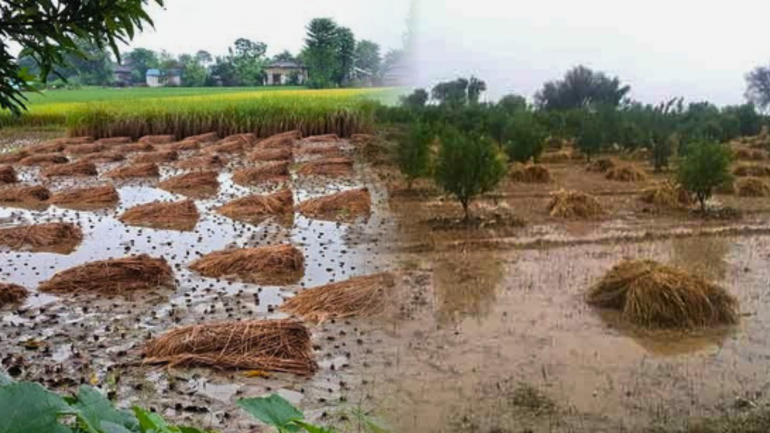
In April 2026, heavy rain, hailstorms, and strong winds caused widespread damage to standing wheat crops across Punjab, particularly in the southern districts of Multan, Muzaffargarh, Kot Adu, and Layyah.
Field reports indicate that mature wheat crops ready for harvest were flattened by high-velocity winds, a condition known as “lodging.” Continuous rainfall worsened the situation by increasing moisture levels, leaving crops highly vulnerable to further damage.
Agricultural experts have warned that the storms could significantly reduce yields due to grain shedding and increase the risk of fungal infections, including black point disease. Excess moisture has also affected grain quality, causing discoloration and lowering market value.
Harvesting has been delayed by at least two weeks due to waterlogged fields, raising concerns about additional losses if adverse weather conditions persist. The economic impact is expected to be significant, with fears that Pakistan may fall short of its wheat production targets this year.
The Punjab government has ordered a special crop assessment survey, known as girdawari, to evaluate losses and facilitate compensation for affected farmers. Authorities have also advised farmers to drain excess water from fields and prepare for potential pest outbreaks.
The severe weather has also damaged mango orchards and key infrastructure, including electricity poles and solar-powered irrigation systems, further compounding the challenges faced by farming communities.
Radio Veritas Asia (RVA), a media platform of the Catholic Church, aims to share Christ. RVA started in 1969 as a continental Catholic radio station to serve Asian countries in their respective local language, thus earning the tag “the Voice of Asian Christianity.” Responding to the emerging context, RVA embraced media platforms to connect with the global Asian audience via its 21 language websites and various social media platforms.
Latest News