A surge in rat infestation is destroying crops and threatening food security for Indigenous farming communities in Bangladesh’s southeastern hill district of Rangamati, where many families depend on seasonal agriculture for their survival.
Known locally as a “rat flood,” the infestation has devastated rice and other crops in remote hill communities. The crisis follows months of inadequate rainfall, leaving farmers facing the prospect of poor harvests and food shortages in the coming year.
“We are anxious about the future,” one farmer said. “If God does not help us, many people in the hills will suffer. There is a real possibility of food shortages.”
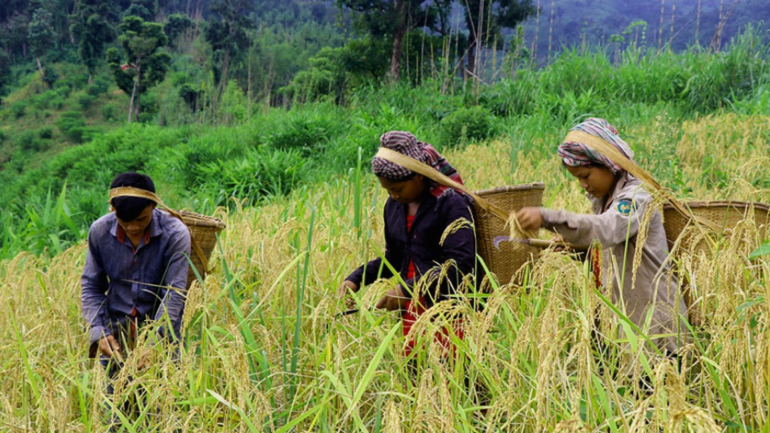
Farmers said their crops were already weakened by below-average rainfall when large numbers of rats began invading agricultural fields and consuming crops before they could mature. Rice, millet, maize, sesame and other food crops have reportedly been affected.
The phenomenon is particularly damaging to families practicing jhum, or shifting cultivation, a traditional farming system widely practiced by Indigenous communities in the Chittagong Hill Tracts of southeastern Bangladesh.
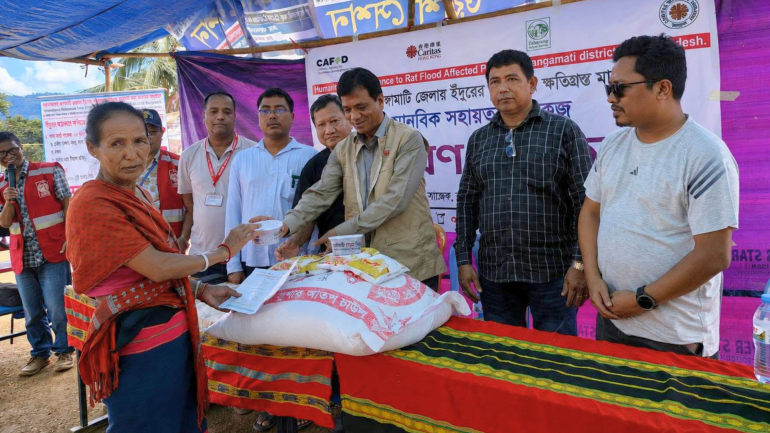
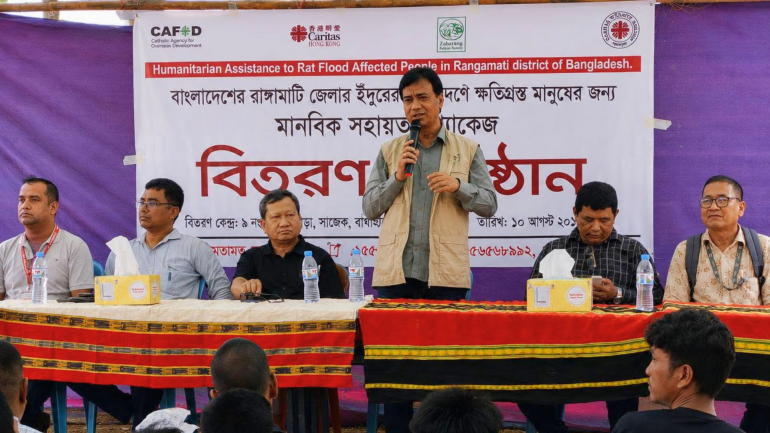
In response, Caritas Bangladesh has launched emergency assistance with financial support from CAFOD and Caritas Hong Kong, in partnership with the local organization Zabarang Kalyan Samity.
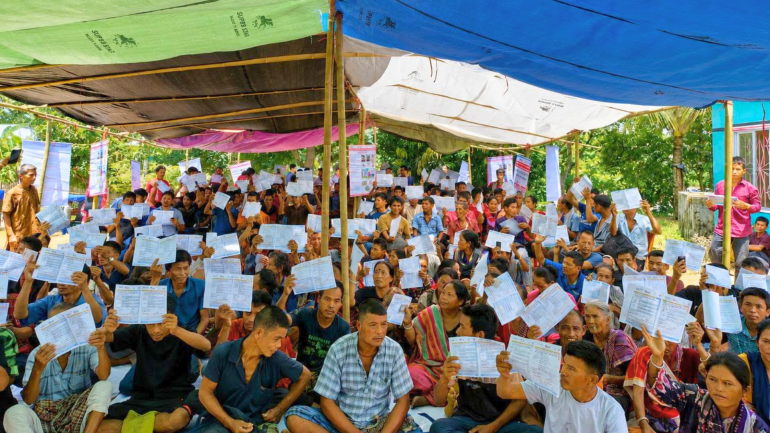
On August 10, the organizations distributed food and cash assistance to 186 jhum farmers affected by the rat infestation in Tripura Para of Sajek Union, under Baghai Chhari Upazila. The recipients included 157 men and 29 women whose crops had been severely damaged.
The project titled Humanitarian Assistance to Rat Flood Affected People in Rangamati District of Bangladesh aims to support 550 vulnerable households.
Each household receives 80 kilograms of rice, four kilograms of salt, one kilogram of dried fish known locally as nappi, and 2,000 Bangladeshi taka (about US$17) in cash assistance.
Speaking on behalf of the beneficiaries, Ullindra Tripura and Naten Mala Tripura said the infestation had wiped out much of their jhum harvest.
“Our crops are our main source of livelihood,” they said. “The losses have created serious food shortages for many households.”
They thanked Caritas Bangladesh and Zabarang Kalyan Samity for responding to the crisis and supporting affected families.
Chayon Hubert Rebeiro, acting regional director of Caritas Bangladesh’s Chattogram Region, emphasized solidarity and community participation in responding to the crisis.
“External assistance can provide temporary relief, but sustainable solutions require preparedness, community initiative, and collective action,” he said. “No one can build alone. We have to build together and support one another in overcoming this situation.”
Speaking to RVA News, Rebeiro highlighted the difficulties of reaching isolated communities in Sajek.
“There are no good roads here, and food shortages are severe,” he said. “Rice prices are very high, and farmers specifically requested food assistance.”
For families facing depleted food supplies, the assistance provides immediate relief while highlighting the need for longer-term solutions to recurring agricultural and food-security crises in Bangladesh’s remote Indigenous communities.
Radio Veritas Asia (RVA), a media platform of the Catholic Church, aims to share Christ. RVA started in 1969 as a continental Catholic radio station to serve Asian countries in their respective local language, thus earning the tag “the Voice of Asian Christianity.” Responding to the emerging context, RVA embraced media platforms to connect with the global Asian audience via its 21 language websites and various social media platforms.
Latest News