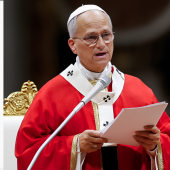



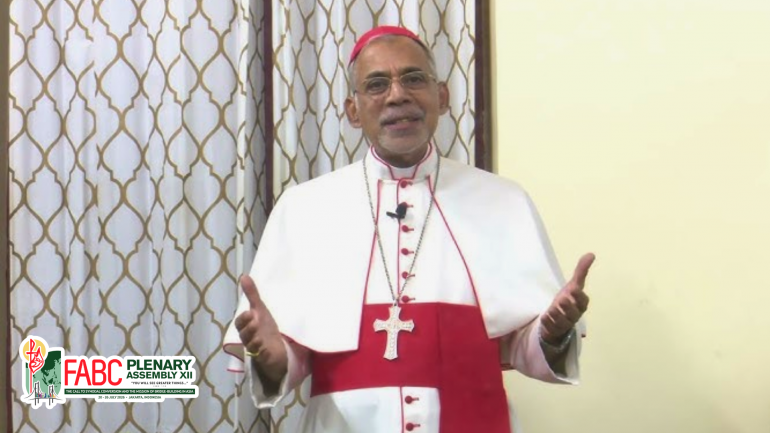
As the Catholic Church in Asia prepares for the 12th Plenary Assembly of the Federation of Asian Bishops' Conferences (FABC), Cardinal Filipe Neri Ferrão, President of the FABC and Archbishop of Goa and Damão in western India, has shared his vision for a more synodal, missionary, and dialogical Church.
The assembly will be held in Jakarta, Indonesia, from July 20–26 under the theme, "The Call to Synodal Conversion and the Mission of Being Bridges and Bridge-Builders in Asia." It will bring together bishops from across the continent to reflect on the Church's mission amid Asia's rapidly changing social, cultural, economic, and religious realities.
In an exclusive interview with Radio Veritas Asia (RVA), Cardinal Ferrão discusses the significance of the assembly, his expectations for the gathering, and how it can shape the future mission of the Church in Asia.
What is the significance of the theme of the 12th FABC Plenary Assembly?
The Plenary Assembly of the Federation of Asian Bishops' Conferences convenes once every four years, bringing together bishops from across Asia to reflect on a chosen theme and respond to the evolving realities and challenges of the region.
This year's theme is "The call to synodal conversion and the mission to be bridges and bridge-builders in Asia." The biblical focus is drawn from the Gospel of St. John, Chapter 1:50: "You will see greater things."
In light of the rapidly changing realities in Asia and the wider world, marked by cultural shifts, migration, economic inequality, environmental crisis, and religious diversity, the Church in Asia is called to foster peace, harmony, and dialogue.
Grounded in synodality, the Church becomes a space for encounter and reconciliation. We seek to be both a bridge and a bridge-builder, strengthening connections among peoples, cultures, religions, and nations across Asia and beyond while witnessing to hope and unity.
What are your expectations for this Plenary Assembly?
We will focus on five priorities.
First, we will prayerfully and critically reflect on the life and mission of the Church in Asia, its diversity, growth, and challenges.
Second, we aim to discern the most urgent pastoral priorities for the Church in Asia through shared listening and dialogue.
Third, we seek to deepen unity, collaboration, and the exchange of gifts among member episcopal conferences through stronger communication, mutual support, and shared initiatives.
Fourth, recognizing Asia's rich religious and cultural diversity, we will seek ways of building bridges of understanding, promoting peace and mutual respect, and witnessing to the Gospel.
Finally, we will engage honestly with the pressing issues facing both Church and society, responding with pastoral sensitivity, prophetic clarity, and practical action rooted in the Gospel.
While we hold these expectations, we entrust ourselves to the guidance of the Holy Spirit, who leads and renews us, opening new pathways for our common journey.
We also plan to produce a final document of the 12th Plenary Assembly that will serve as a practical vademecum on synodality in Asia.
How do you envision the Assembly contributing to the future mission and growth of the Church in Asia?
I believe the Plenary Assembly can contribute to the future mission and growth of the Church in Asia in three important ways.
First, by deepening synodality among the Churches of Asia. It fosters stronger bonds of unity and collaboration among the local Churches, encouraging a synodal way of being Church marked by listening, participation, and shared discernment among bishops, clergy, religious, and laity.
Second, by renewing evangelization in response to emerging realities. It provides a space to reflect on the changing social, cultural, and religious landscapes of Asia, helping the Church strengthen its evangelizing mission with renewed missionary zeal, creativity, and relevance.
Third, by promoting dialogue, justice, and peace in society. It encourages the Church to engage more deeply in interreligious dialogue and to be a stronger voice for peace, justice, and human dignity, offering a credible Christian witness in the diverse societies of Asia.
Radio Veritas Asia (RVA), a media platform of the Catholic Church, aims to share Christ. RVA started in 1969 as a continental Catholic radio station to serve Asian countries in their respective local language, thus earning the tag “the Voice of Asian Christianity.” Responding to the emerging context, RVA embraced media platforms to connect with the global Asian audience via its 21 language websites and various social media platforms.
Latest News