FABC Vice President Warns Nuclear Powers against “Intimidation Disguised as Disarmament”

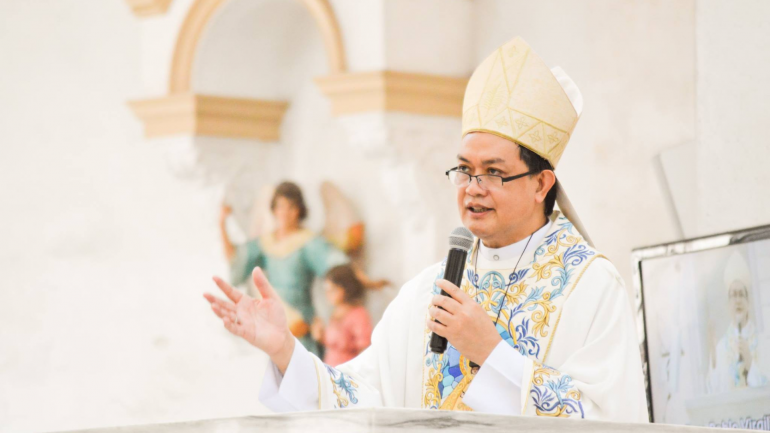
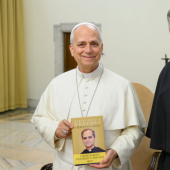
Calls for nuclear restraint ring hollow when they come from countries that continue to maintain the capacity to destroy the world, Cardinal Pablo Virgilio David has warned, as renewed geopolitical tensions revive concerns about nuclear escalation.
The reflection comes amid growing global concern over nuclear weapons as regional conflicts and rivalry among major powers raise fears about the future of international arms control agreements.
Cardinal David, who serves as the Vice President of the Federation of Asian Bishops Conferences, said powerful nations cannot credibly demand that other states abandon nuclear ambitions while preserving vast nuclear arsenals of their own.
“Powerful nations cannot preach nuclear restraint while maintaining the capacity to destroy the world,” the cardinal said. “A state that maintains a massive nuclear arsenal and a sophisticated system of ballistic missiles capable of destroying cities in minutes cannot credibly demand that another nation disarm.”
“That is not disarmament,” he added. “That is intimidation.”
Cardinal David recalled that the global movement to control nuclear weapons emerged from the devastation caused by the atomic bombings of Hiroshima and Nagasaki in 1945.
In the decades that followed, nations negotiated agreements such as the Treaty on the Non-Proliferation of Nuclear Weapons, aimed at preventing the spread of nuclear arms while encouraging gradual disarmament among states that already possessed them.
Global nuclear stockpiles have fallen significantly since the height of the Cold War.
In 1986, the world possessed more than 70,000 nuclear warheads.
Today the number is estimated at around 12,000.
The United States alone dismantled more than 12,000 nuclear warheads between 1994 and 2023, illustrating that nuclear disarmament is possible when nations commit to it.
The reductions also suggest that further nuclear disarmament remains achievable through sustained international cooperation and arms control agreements.
Cardinal David warned that the credibility of the global nuclear order weakens when powerful states demand restraint from others while modernizing their own arsenals.
“What happens when the institutions meant to uphold international law become powerless?” he asked. “What happens when the community of nations allows the rules of the global order to be bent or ignored by those who possess the largest arsenals?”
Near the entrance of the United Nations headquarters in New York, he noted, are engraved the words of the prophet Isaiah: “They shall beat their swords into plowshares.”
“Those words were not meant to decorate a building,” the cardinal said. “They were meant to guide the conscience of humanity.”
Radio Veritas Asia (RVA), a media platform of the Catholic Church, aims to share Christ. RVA started in 1969 as a continental Catholic radio station to serve Asian countries in their respective local language, thus earning the tag “the Voice of Asian Christianity.” Responding to the emerging context, RVA embraced media platforms to connect with the global Asian audience via its 21 language websites and various social media platforms.
Latest News