India: Cardinal Ferrão Calls for Communion-Centered Formation at National Seminar in Goa


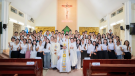
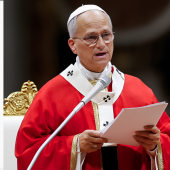
Archbishop Filipe Neri Cardinal Ferrão of Goa and Daman, southwest India, called for a renewed vision of integral and communion-centered formation as he presided over the inaugural Eucharistic celebration of the National Seminar titled “Connectedness in a Fragmented World: A Path for Formation 2035.”
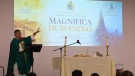
The two-day seminar, held from February 27 to 28 at the Institute Mater Dei in Old Goa, was organized in collaboration with the CCBI Commission for Vocations, Seminaries, Clergy and Religious.
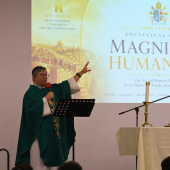
In his homily, Cardinal Ferrão reflected on the biblical image from the Book of Ezekiel of joining the divided sticks of Judah and Joseph, describing it as a symbol of God’s desire to heal divisions and restore unity. He emphasized that formation is not merely a human effort but cooperation with God’s work of reconciliation.
Addressing the theme of the seminar, the Cardinal observed that although today’s world is technologically connected, it remains socially and spiritually fragmented. He noted that many candidates for priesthood and religious life carry personal and relational challenges shaped by contemporary culture.
He stressed the urgency of integral formation, human, spiritual, intellectual, and pastoral, so that future ministers may become integrated persons rooted in Christ. Christian unity, he clarified, does not mean uniformity but communion in diversity, animated by the Holy Spirit.
The Cardinal also underscored the importance of intercultural sensitivity, community life, and openness to the human sciences in formation programs. He encouraged formators to build resilient communities capable of witnessing to Christ amid social polarization and mistrust.
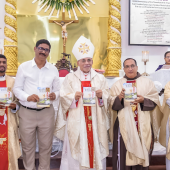
He was joined at the Eucharistic celebration by Fr. Charles Leo, Executive Secretary of the CCBI Commission; Fr. Joseph Lobo SJ, Head of the Department of Systematic Theology at JDV, Pune; Fr. Norman Almeida, Rector of All India Mission Seminary, Pilar; Fr. Jason K. Fernandes of Se Cathedral, Old Goa; and several other priests.
Following the Mass, the formal inauguration of the seminar took place.
Sr. Aruna Jose, CHF, Vice President of the Conference of Religious Women India (CRWI) and President of the Institute Mater Dei, delivered the presidential address. She described the gathering as a sign of hope for vocations and formation in India.


Sr. Aruna noted that fragmentation today affects identity, relationships, faith, and commitment. She emphasized the need for formation that is emotionally mature, spiritually grounded, socially sensitive, and attentive to the digital realities shaping young people’s lives.
True formation, she said, must integrate human, spiritual, academic, and pastoral dimensions within a synodal spirit of walking together and discerning in communion. She encouraged participants to view the seminar as a shared journey of listening and responsibility for the future of vocations in the Church.
Earlier, Sr. Margaret Julie Thumma, SSAM, Animator of the Institute Mater Dei, welcomed participants and highlighted the significance of the gathering. Fr. Charles Leo explained the objectives and structure of the seminar, focusing on preparing formation programs for emerging pastoral realities. Sr. Gracy Lilly, FS, Treasurer of the Institute, delivered the vote of thanks.
The inaugural ceremony was anchored by Sr. Amruta Bansode, SCC and Sr. Rita Beck, SCJM.
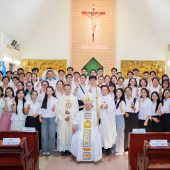
The seminar brings together formators, clergy, religious, and Church leaders from across India to reflect on how formation processes can respond effectively to social fragmentation while strengthening communion within the Church.
Organizers expressed hope that the deliberations over the two days would help shape formation pathways that prepare future priests and religious to serve with resilience, faith, and a deep commitment to unity in an increasingly complex world.
Radio Veritas Asia (RVA), a media platform of the Catholic Church, aims to share Christ. RVA started in 1969 as a continental Catholic radio station to serve Asian countries in their respective local language, thus earning the tag “the Voice of Asian Christianity.” Responding to the emerging context, RVA embraced media platforms to connect with the global Asian audience via its 21 language websites and various social media platforms.
Latest News