

“EDSA at 40: Filipino Catholics Reflect on Unity, Promise, and the Unfinished Work of Democracy”

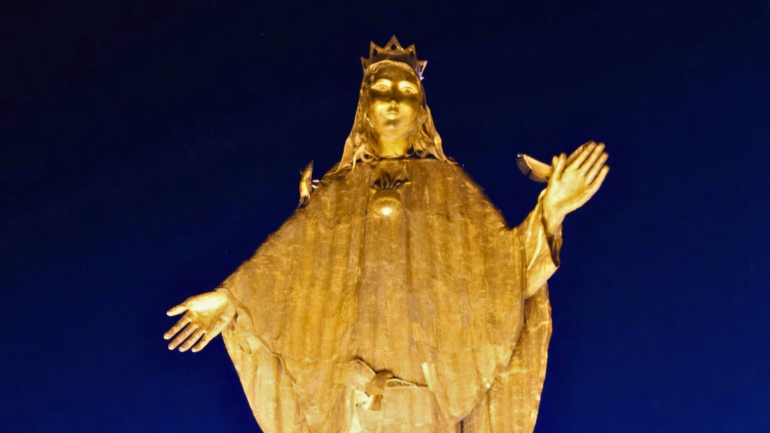
Forty years after the 1986 People Power Revolution, EDSA remains both a memory and a question.
For many Filipinos, it symbolizes unity and the peaceful reclaiming of democracy.
For others, it represents a promise still being tested.
Three lay Catholics from different dioceses share how they understand EDSA today.
Unity as Foundation
For Redentor Floralde of the Diocese of Kalookan, Metro Manila, the word that immediately comes to mind when he hears “EDSA” is “unity.”
“It symbolizes the unity deeply etched in the hearts of Filipinos,” he says. “When the people come together for a single purpose, they can bring about change peacefully and defend their rights as citizens.”
His strongest memory of EDSA is the image of Filipinos, rich and poor, young and old, gathered in the streets to fight for freedom and democracy without violence.
For him, the revolution proved that change does not rest on one person alone but on the collective strength of the people.
That memory shaped how he views politics today.
Participation, he says, should not end with voting. Citizens must remain vigilant, critical of information they consume, and active in community life.
While he acknowledges that polarization and social media have made unity more difficult, he believes people power can still work when citizens rally peacefully around a shared purpose.
A Promise Still Being Tested
For Emil Estuye of the Diocese of Imus in Cavite province, just south of Metro Manila, EDSA carries personal symbolism.
He was born in 1986, the year of the revolution.
“In a way, my entire life has existed in its shadow,” he reflects.
Though he did not witness the crowds along EDSA, he grew up hearing that it was a moment when Filipinos proved democracy could be reclaimed peacefully.
As a child, the story felt heroic, almost sacred.
But his perspective grew more complex over time.
Political dynasties remained powerful. Corruption did not disappear. Inequality continued to shape everyday life.
“It made me ask uncomfortable questions,” he says. “Was EDSA a revolution, or just a reset of who held power?”
When asked what word comes to mind when he hears “EDSA,” his answer is “promise.”
“EDSA represents a promise of democracy and accountability. But a promise is only meaningful if it is fulfilled.”
He believes people power still works, but only if citizens are willing to sacrifice comfort. Mass mobilization alone, he says, is not enough. Real people power must demand institutional reform, transparency, and long-term accountability.
A Beginning That Must Continue
Stephanie dela Cruz of the Diocese of Novaliches in northern Metro Manila views EDSA as a major turning point, but not the final solution to the country’s problems.
“EDSA was not the answer to everything,” she says. “It was a beginning that must be continued, especially since negative forces still operate in our country.”
She expresses gratitude to priests and religious who continue serving the people and standing against corruption.
For her, the Church’s role during the revolution remains an important reminder of its responsibility in public life.
“EDSA should not be forgotten,” she adds. “The Church must always stand with the Filipino people.”
The Unfinished Work
Across their reflections, a common thread emerges: EDSA was historic, but it was not final. It was a moment of unity. It was a promise of democracy. It was a turning point that demands continuation.
After four decades, EDSA remains an unfinished task, one that calls for vigilance, participation, and the courage to keep building the democracy it once promised.
Radio Veritas Asia (RVA), a media platform of the Catholic Church, aims to share Christ. RVA started in 1969 as a continental Catholic radio station to serve Asian countries in their respective local language, thus earning the tag “the Voice of Asian Christianity.” Responding to the emerging context, RVA embraced media platforms to connect with the global Asian audience via its 21 language websites and various social media platforms.
Latest News