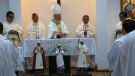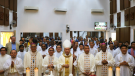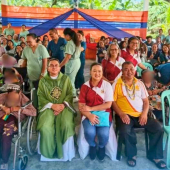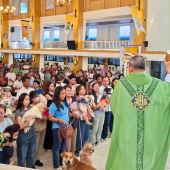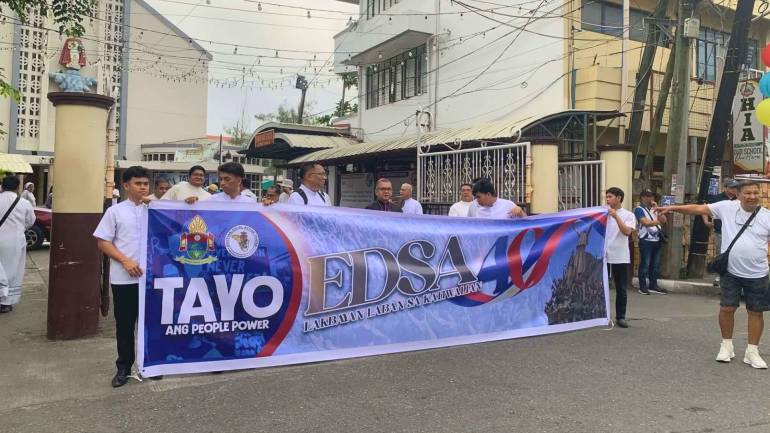
Participants and Church delegations gathered on Feb. 24 at the Divine Word College of Calapan (DWCC) in Calapan City, the capital of Oriental Mindoro province, Philippines, for “EDSA 40: Pilgrimage March Against Corruption.” Many wore white T-shirts as a symbol of patriotism and unity.
The activity, spearheaded by the Apostolic Vicariate of Calapan, commemorated the 40th anniversary of the 1986 EDSA People Power Revolution. The uprising, held along Epifanio de los Santos Avenue (EDSA), a major highway in Metro Manila, led to the peaceful ouster of President Ferdinand Marcos Sr. and restored democratic rule in the Philippines.
Organizers said the Church-led event was open to all sectors, regardless of political affiliation.
“This is an action led by the Church, but it is open to all sectors, whatever side or political party they belong to. In the spirit of EDSA, our hope and prayer is unity for justice and change toward a government that truly serves and does not exploit,” part of the statement read.
The commemoration had been announced during Sunday Masses across parishes in Oriental Mindoro, where churches read the pastoral letter of the Catholic Bishops' Conference of the Philippines marking the revolution’s 40th anniversary.
Activities began with a protest march from Holy Infant Academy to the DWCC campus in Calapan City, followed by a forum on good citizenship that emphasized the role of Christians in nation-building and public accountability.
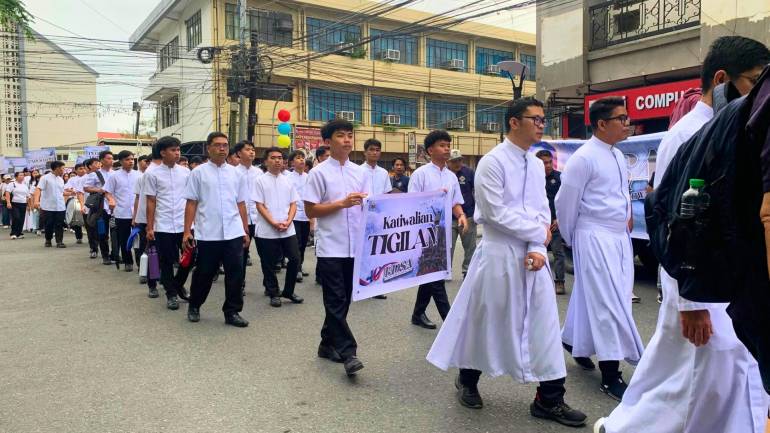
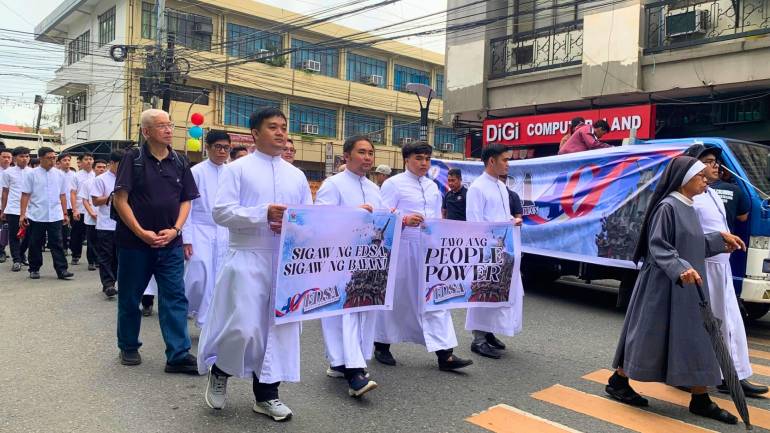
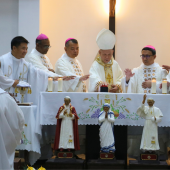
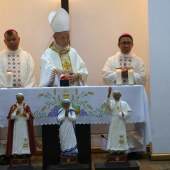
Organizers also launched “TAPAT,” an initiative encouraging vigilance and integrity in public life, particularly against alleged government anomalies and corruption. A Holy Eucharist presided over by Bishop Moises Cuevas, apostolic vicar of Calapan, was celebrated, and participants observed “sacrificial fasting” in solidarity with the poor, especially those affected by the alleged misuse of public funds.
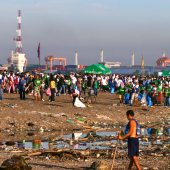
Participants later held a motorcade to a flood control project site in Tagumpay village in the neighboring town of Naujan, about 15 kilometers from Calapan City, for what organizers described as an on-site inspection. They said the visit aimed to present what they claimed was physical evidence of negligence or irregularities.
A youth program featuring spoken word performances on accountability and social issues was held, followed by a rite of repentance and communal prayer.
A simultaneous prayer vigil also took place at the Cathedral of the Holy Child in Calapan City for those unable to join the outdoor activities, including the praying of the Holy Rosary and the Stations of the Cross.
Promotional materials carried the message: “Stop corruption / Punish those who steal from the nation!”
Organizers said the event sought to affirm that the spirit of People Power, widely regarded as a defining moment in modern Philippine democracy, remained relevant as communities continued to call for integrity, justice, and responsible public service.
Radio Veritas Asia (RVA), a media platform of the Catholic Church, aims to share Christ. RVA started in 1969 as a continental Catholic radio station to serve Asian countries in their respective local language, thus earning the tag “the Voice of Asian Christianity.” Responding to the emerging context, RVA embraced media platforms to connect with the global Asian audience via its 21 language websites and various social media platforms.
Latest News