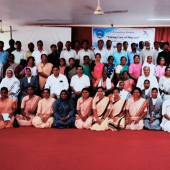



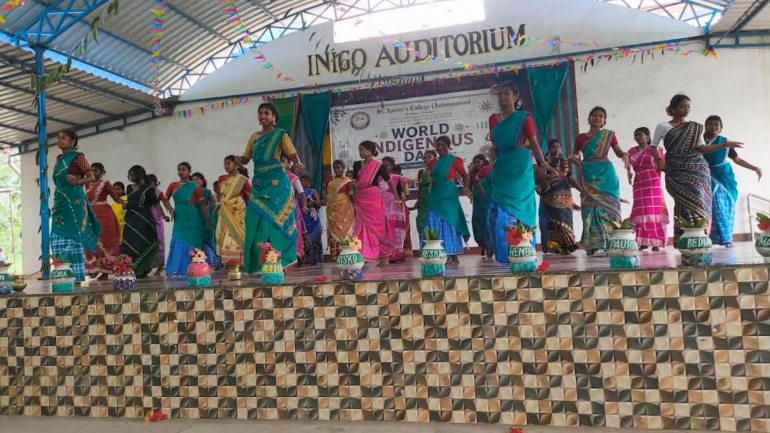
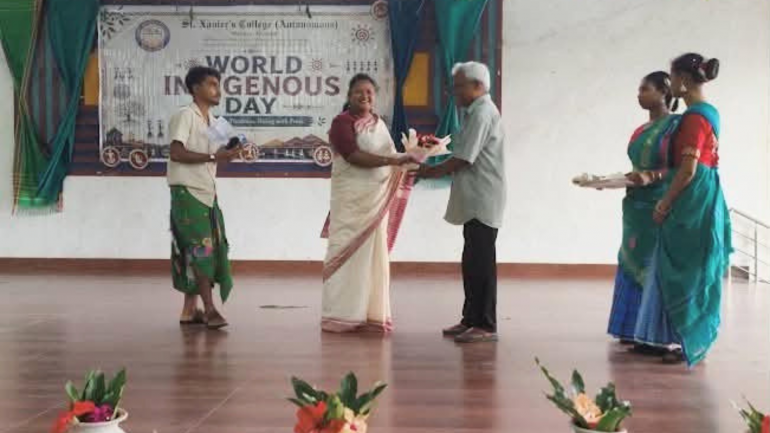
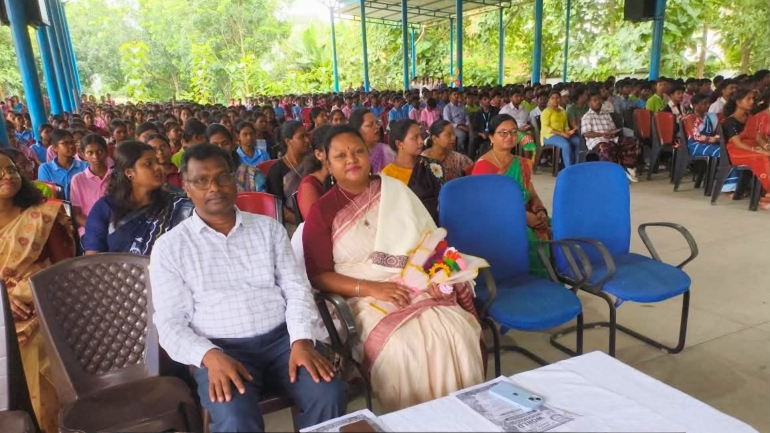
More than 1,100 members of tribal communities, predominantly Santals, gathered at St. Xavier’s College (Autonomous), Maharo, in Jharkhand, eastern India, on August 8 to mark World Indigenous Day with a call to preserve Indigenous identity while preparing young people for a changing world.
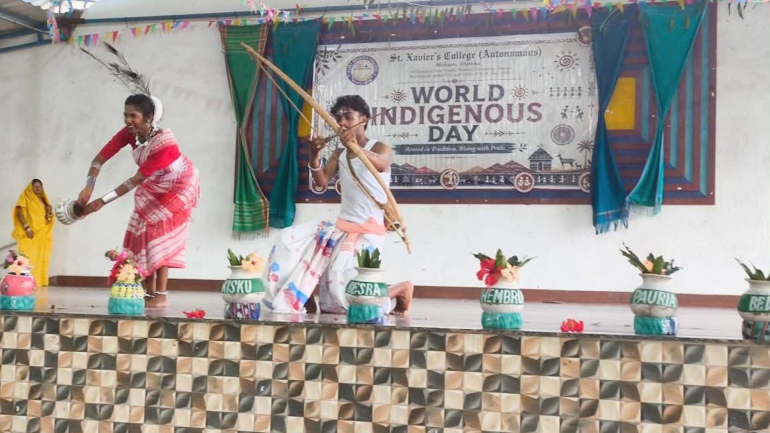
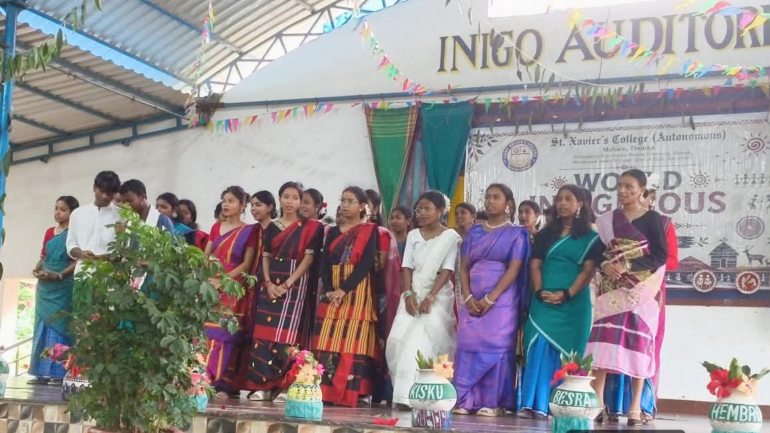
Held at the Inigo Auditorium under the theme “Celebrating Indigenous Heritage, Inspiring a Sustainable Future,” the celebration brought together students, educators and community members for reflection, cultural performances and discussion on Indigenous heritage.
Dumka, the sub-capital of Jharkhand, lies in the Santal Parganas, a region where Santal language, culture and traditions have shaped community life for generations. Santals are the largest tribal community in Jharkhand.
Chief guest Dr. Jyotsana Baa urged young people to remain rooted in their heritage while acquiring the skills needed to participate confidently in wider society.
She particularly encouraged students to learn English as an additional language without abandoning their mother tongues. Such skills, she said, can open opportunities in higher education, employment and wider communication while allowing Indigenous languages and cultures to remain strong.
Fr. Varghese Palli, SJ, Principal of St. Xavier’s College, welcomed the gathering. Fr. Damian Tudu, Controller of Examinations, also addressed the participants, while Fr. Jesuraj Poobal, SJ, Vice Principal, helped coordinate the event.
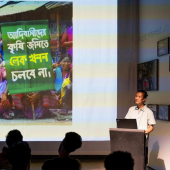
A session by Assistant Professor Sudeep Besra on “Preserving Indigenous Knowledge, Culture and Identity in the Modern World” highlighted the importance of safeguarding Indigenous traditions amid social change.
The cultural program brought the message to life through Santal Desai dance, Santal songs, Nagpuri dance and a cultural walk. Student speakers, including Golak Marandi, also reflected on their Indigenous heritage.
Fr. Kuruvilla Pandikattu, SJ, who oversees the Internal Quality Assurance Cell at the college, stressed that education should not force Indigenous young people to choose between identity and opportunity.
“Our students should be able to say with confidence: I know where I come from, I am proud of who I am, and I am also prepared for the world that is coming,” he said. “Education must give them roots and wings.”
He urged the Church and educational institutions to go beyond annual cultural celebrations by listening to Indigenous students, valuing their languages and learning from their communities.
“Respect has to enter our classrooms and everyday relationships,” he said, emphasizing the importance of preserving Indigenous stories, knowledge and ecological wisdom while allowing communities to interpret their own history.
The celebration emphasized that Indigenous heritage need not be left behind in the pursuit of modern education and opportunity. Rather, young people can carry their language, culture, memory and relationship with nature into the future while gaining the knowledge and skills needed to navigate a changing world.
Radio Veritas Asia (RVA), a media platform of the Catholic Church, aims to share Christ. RVA started in 1969 as a continental Catholic radio station to serve Asian countries in their respective local language, thus earning the tag “the Voice of Asian Christianity.” Responding to the emerging context, RVA embraced media platforms to connect with the global Asian audience via its 21 language websites and various social media platforms.
Latest News