

Indonesia: Catholic Forum Issues Moral Appeal on Democracy, Human Rights, and Governance

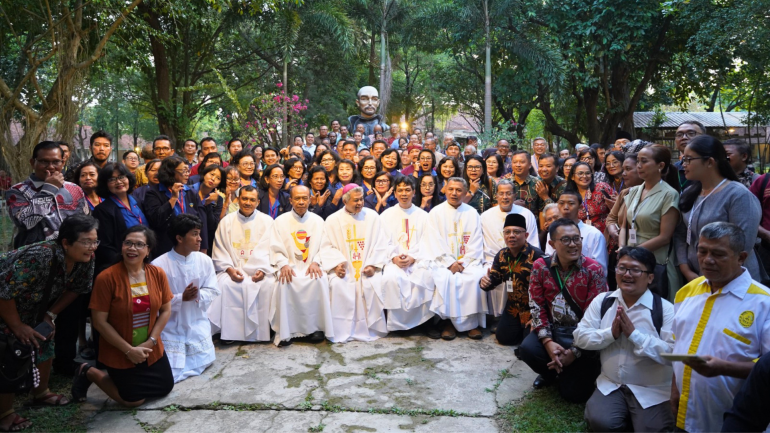
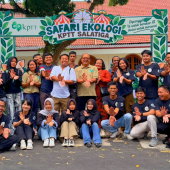
The Indonesian Catholic Community Forum (FMKI) has issued a Moral Appeal urging stronger protection of democracy, human rights, and social justice in Indonesia following its 13th National Meeting held in Klaten Regency, Central Java, from June 4 to 6.
The appeal was formally released on June 7 at the conclusion of the gathering, which brought together representatives from Catholic communities across Indonesia under the theme: “FMKI Rises and Moves: Safeguarding a Democracy Rooted in Pancasila Values.” Klaten is located in Central Java, between the cities of Yogyakarta and Semarang, in Indonesia’s main island of Java.
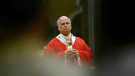
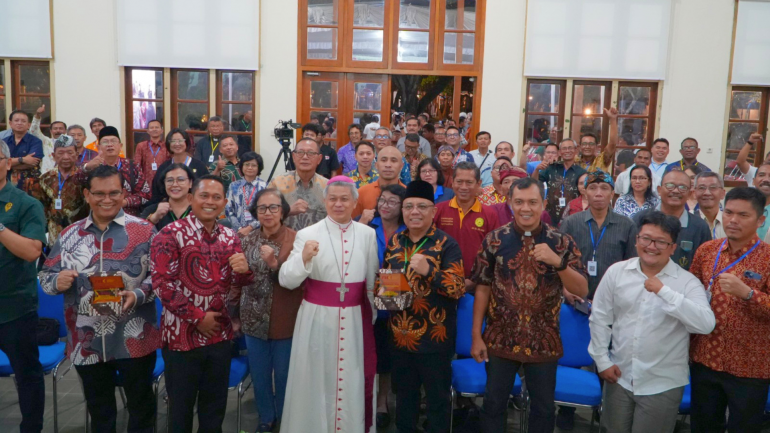
FMKI is a Catholic civil society forum representing lay communities from dioceses nationwide. The meeting included participation from Church leaders and officials, including Mgr. Antonius Subianto Bunjamin, OSC, chairman of the Indonesian Bishops’ Conference (KWI), and Mgr. Robertus Rubiyatmoko, Archbishop of Semarang. Delegates attended from across the archipelago, including Sumatra, Kalimantan, Sulawesi, Java, Bali, West Nusa Tenggara, East Nusa Tenggara, Maluku, and Papua.
The Moral Appeal draws on recent Church reflections, including the May 20, 2026 pastoral message of the Indonesian Bishops’ Conference and the outcomes of the 2025 Indonesian Catholic Church Grand Assembly (SAGKI). Both documents emphasized the protection of human dignity and social justice.
FMKI raised concerns over governance and democratic accountability, citing weakening oversight functions in the House of Representatives (DPR RI), declining quality of regional autonomy, limited application of merit-based systems, and increasing militarization in civilian spaces.
On legal and human rights issues, FMKI highlighted concerns over the rapid drafting of legislation with limited public consultation, reduced independence of law enforcement institutions, and the use of the Electronic Information and Transactions Law (UU ITE), which has been criticized for restricting freedom of expression.
In the economic sector, FMKI noted currency pressure on the Indonesian rupiah, market instability, and concerns over National Strategic Projects, which they said have not yet delivered balanced benefits to local communities. The Free Nutritious Meal Program (MBG) was also described as still lacking measurable impact.
Environmental and agrarian issues were another focus. The forum pointed to ongoing deforestation in Sumatra, Kalimantan, Sulawesi, and Papua, overlapping land permits, and rising conflicts affecting Indigenous communities. It also noted that security-focused approaches in Papua continue to limit opportunities for peaceful resolution.
Social and education concerns included religious intolerance, low welfare for honorary teachers, and widening inequality within the education system.
FMKI emphasized that its Moral Appeal represents correctio fraterna, a fraternal correction offered in a spirit of dialogue and responsibility. The forum expressed hope that government institutions and society will remain open to constructive engagement in strengthening democracy, justice, and human dignity across Indonesia.
Radio Veritas Asia (RVA), a media platform of the Catholic Church, aims to share Christ. RVA started in 1969 as a continental Catholic radio station to serve Asian countries in their respective local language, thus earning the tag “the Voice of Asian Christianity.” Responding to the emerging context, RVA embraced media platforms to connect with the global Asian audience via its 21 language websites and various social media platforms.
Latest News