Indonesian Bishops Promote Ecological Conversion as Foundation for Community Development

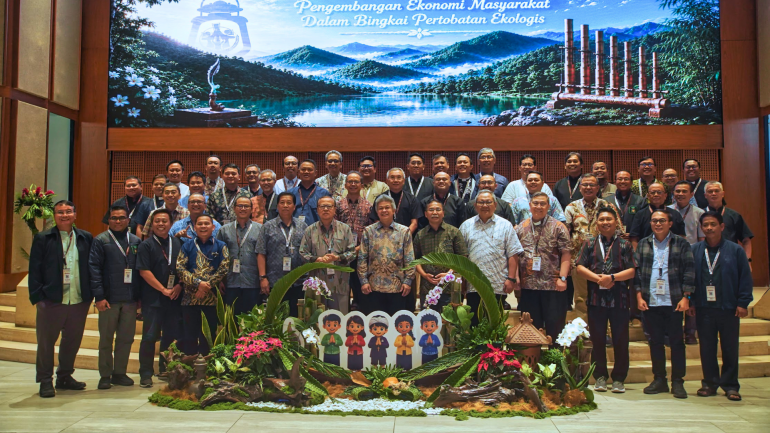
Catholic bishops from across Indonesia’s Java region have called for economic development initiatives that protect the environment, strengthen local communities, and uphold human dignity, emphasizing that care for creation is an essential part of the Church’s mission.
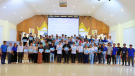
The commitment emerged during the 2026 Meeting of the Bishops of the Java Region, held from July 6 to 8 in Bandung, West Java Province, under the theme “Community Economic Empowerment in the Framework of Ecological Conversion.”
The annual gathering brought together bishops, vicars general, diocesan officials, and administrators from the Archdioceses of Jakarta and Semarang, and the Dioceses of Bandung, Bogor, Purwokerto, Malang, and Surabaya.
Opening the meeting, Bishop Christophorus Tri Harsono of Purwokerto Diocese in Central Java, chairman of the Java Region Bishops, said protecting creation is a responsibility rooted in Christian faith.
“The natural resources we enjoy today must be preserved so that future generations may also benefit from them,” Bishop Tri said during the opening Eucharistic celebration.
Bishop Anton Subianto Bunjamin, OSC, of Bandung Diocese, which hosted the meeting, stressed the need for economic initiatives that promote both social welfare and environmental sustainability.
The keynote address was delivered by Fr. Eko Aldi, O.Carm, executive secretary of the Commission for Social and Economic Development of the Indonesian Bishops’ Conference (KWI). Drawing from Pope Francis’ encyclicals Laudato Si’ and Fratelli Tutti, he urged participants to move away from a “throwaway culture” and promote an economy that respects people and the environment.
Fr. Eko highlighted three areas for action: environmentally responsible credit unions, sustainable agriculture through eco-pastoral initiatives, and ethical investments that support environmentally friendly projects.
“Ecological conversion requires a profound change of mindset, from individual self-interest to responsibility for our common home,” he said.
During the discussions, Cardinal Ignatius Suharyo, Archbishop of Jakarta, emphasized the importance of integral ecology, warning that economic development separated from social, cultural, and political realities cannot lead to genuine human progress.
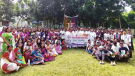
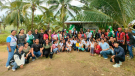
Participants also visited community empowerment projects in Ciwidey, South Bandung Regency, where they observed initiatives supporting coffee farmers, organic agriculture, circular economy practices, and sustainable waste management.
The meeting concluded with dioceses sharing experiences from their pastoral programs, including Green Parish initiatives, waste banks, organic farming, biogas projects, support for small businesses, and preservation of indigenous seeds.
Participants acknowledged challenges such as land conversion, declining interest among young people in farming, dependence on chemical agriculture, and unsustainable economic practices. They also highlighted the need for greater cooperation among parishes, Catholic schools, religious communities, and social organizations.
Bishop Tri Harsono said the gathering was not intended to create identical programs for every diocese but to encourage each local Church to develop responses suited to its own pastoral realities.
The bishops concluded that ecological conversion is not only an environmental responsibility but also a pastoral commitment to protect creation, strengthen communities, and promote a more sustainable future.
Radio Veritas Asia (RVA), a media platform of the Catholic Church, aims to share Christ. RVA started in 1969 as a continental Catholic radio station to serve Asian countries in their respective local language, thus earning the tag “the Voice of Asian Christianity.” Responding to the emerging context, RVA embraced media platforms to connect with the global Asian audience via its 21 language websites and various social media platforms.
Latest News