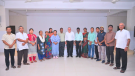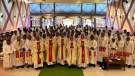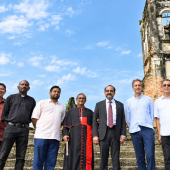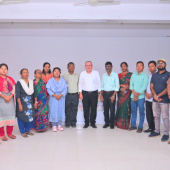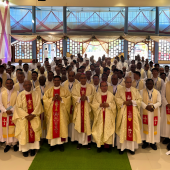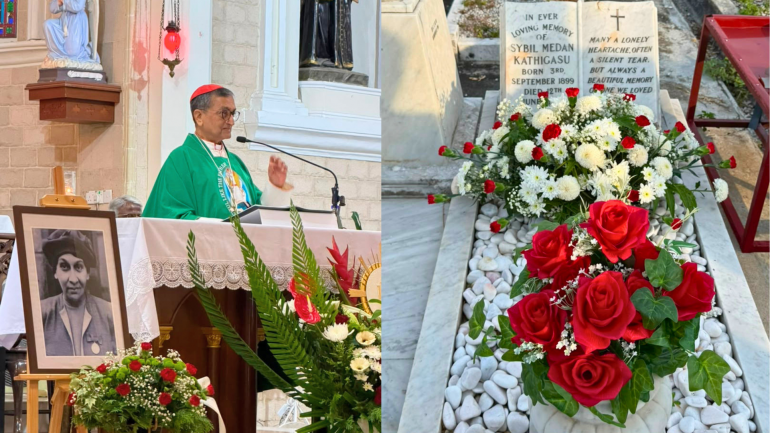
Malaysian Catholics gathered at the Church of St. Michael in the Penang Diocese on June 6, to honour wartime heroine Sybil Kathigasu as the Catholic Church advances her cause for beatification and eventual canonisation.
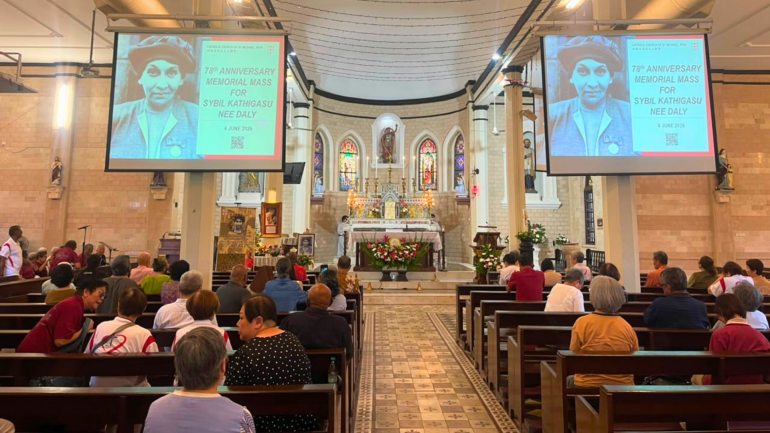
The commemoration, held in conjunction with the 78th anniversary of her death, included prayers, a visit to her grave, a memorial Mass and a presentation by Brigadier General Fitzgerald Augustin (Retired) titled “I Will Pay the Supreme Sacrifice My Lord, I Promise This in Thy Name.”
The presentation highlighted the extraordinary life of Kathigasu, a nurse and midwife whose resistance to the Japanese occupation of Malaya during World War II has made her one of the country's most revered figures.
Born Sybil Daly, she secretly aided Allied resistance fighters from her home in Papan, Perak, providing medicines, medical treatment and support to those opposing Japanese rule. Her activities eventually led to her arrest by the Kempeitai military police.
Despite being subjected to severe torture and prolonged interrogation, Kathigasu refused to reveal the identities of those she had helped. Her wartime ordeal was later documented in her memoir, “No Dram of Mercy”, which remains a powerful account of suffering, resilience and unwavering faith.
The injuries she sustained during her imprisonment left lasting physical scars. One of the most poignant stories associated with her life occurred after the war when, suffering from serious spinal injuries, she asked to be carried to St. Joseph's Church in Batu Gajah and left at the entrance so she could crawl to the tabernacle to pray before the Blessed Sacrament.
For many Catholics, the episode reflects a faith that remained steadfast despite immense pain and suffering.
Participants in the June 6 event paid their respects at Kathigasu's grave. Cardinal Sebastian Francis, Bishop of Penang, celebrated a memorial Mass following the visit to her gravesite.
In his homily, Cardinal Sebastian reflected on St. Paul's words to Timothy: "I have run the race to the finish. I have kept the faith. It is time for me to be gone."
He invited the faithful to consider whether those words could be applied not only to St. Paul, but also to Sybil Kathigasu and, ultimately, to themselves.
Cardinal Sebastian described Kathigasu as a witness whose example transcends religious, ethnic and cultural boundaries.
The Catholic Church in Malaysia took a significant step towards recognising her sanctity on July 1, 2024, when Cardinal Sebastian formally announced the advancement of her cause for beatification and canonisation.
Although she survived the war, Kathigasu never fully recovered from the injuries inflicted during her captivity. Seeking further medical treatment, she travelled to Britain, where she died on June 12, 1948, in Lanarkshire, Scotland, at the age of 49.
Her remains were later returned to Malaya and interred at St. Michael's Church in Ipoh. Today, her grave remains a place of pilgrimage for Catholics and others inspired by her witness.
For many Malaysian Catholics, Kathigasu represents more than a wartime heroine. She is remembered as a woman whose faith remained unbroken under persecution and whose example continues to inspire believers to live lives of courage, compassion and fidelity to God.
"Sybil's life reminds us that courage rooted in faith can withstand even the darkest moments of history," Christopher Kushy, personal assistant to Cardinal Sebastian Francis, told Radio Veritas Asia.
Nearly eight decades after her death, her story remains one of the most compelling chapters in Malaysian Catholic history.
Radio Veritas Asia (RVA), a media platform of the Catholic Church, aims to share Christ. RVA started in 1969 as a continental Catholic radio station to serve Asian countries in their respective local language, thus earning the tag “the Voice of Asian Christianity.” Responding to the emerging context, RVA embraced media platforms to connect with the global Asian audience via its 21 language websites and various social media platforms.
Latest News