A People’s Tribunal on Violence Against Christians in India heard testimonies from survivors, community leaders, researchers, lawyers, and human rights advocates who documented what they described as a growing pattern of violence and discrimination against Christians in several parts of the country.
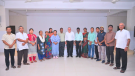
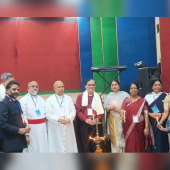
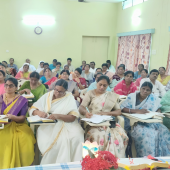
The tribunal, convened by Karwan-e-Mohabbat and a collective of concerned citizens, was held at the Constitution Club in New Delhi, India’s capital, on June 2.
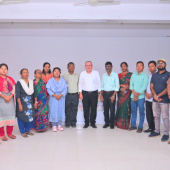
The hearing marked the culmination of a broader inquiry that included field visits and fact-finding exercises in two Indian states. Tribunal members met hundreds of affected individuals and documented accounts of violence, social exclusion, and alleged violations of constitutional rights experienced by Christian communities.
Representatives and survivors from multiple states presented evidence detailing attacks on churches and prayer gatherings, assaults on pastors and priests, social and economic boycotts, denial of burial rights, expulsions from villages, and concerns about the response of local authorities and political leaders.
Opening the proceedings, veteran journalist and human rights activist John Dayal placed contemporary anti-Christian violence within a broader historical context. He recalled the 1999 killing of Australian missionary Graham Staines and his two young sons in the eastern Indian state of Odisha, as well as the large-scale violence against Christians in Kandhamal district, Odisha, in 2008, which displaced thousands of people and destroyed churches and homes.
The tribunal also screened a documentary film highlighting incidents of violence against Christians in Madhya Pradesh, a central Indian state, based on firsthand testimonies from approximately 15 affected families.
Historian Tanika Sarkar reflected on the wider social and political implications of the testimonies presented. She cautioned against what she described as the normalization of majoritarian intolerance and the shrinking space for religious freedom and democratic citizenship.

Former Planning Commission member Syeda Hameed expressed particular concern over repeated reports of Christians being denied burial rights, describing such incidents as among the most degrading forms of discrimination documented during the hearings.
Concluding the proceedings, author and peace activist Harsh Mander said the cases presented before the tribunal should not be viewed as isolated incidents. Rather, he argued, they reflected a systematic pattern of exclusion that threatens India’s constitutional commitment to equal citizenship.
Referring to testimonies involving denial of burials, social boycotts, forced displacement, and attacks on worship, Mander urged citizens, institutions, and governments to take action to safeguard fundamental rights and religious freedom.
Karwan-e-Mohabbat is a citizens’ initiative founded by Mander that works in solidarity with survivors of hate crimes and promotes justice, peace, and social harmony.
Radio Veritas Asia (RVA), a media platform of the Catholic Church, aims to share Christ. RVA started in 1969 as a continental Catholic radio station to serve Asian countries in their respective local language, thus earning the tag “the Voice of Asian Christianity.” Responding to the emerging context, RVA embraced media platforms to connect with the global Asian audience via its 21 language websites and various social media platforms.
Latest News