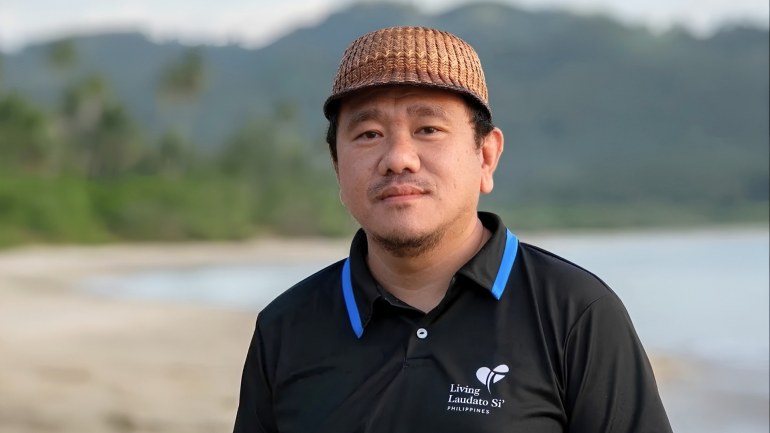
Philippine environmental advocate Rodne Galicha believes ecological care begins not with grand campaigns or international conferences, but with learning to love a particular place and the people who call it home.
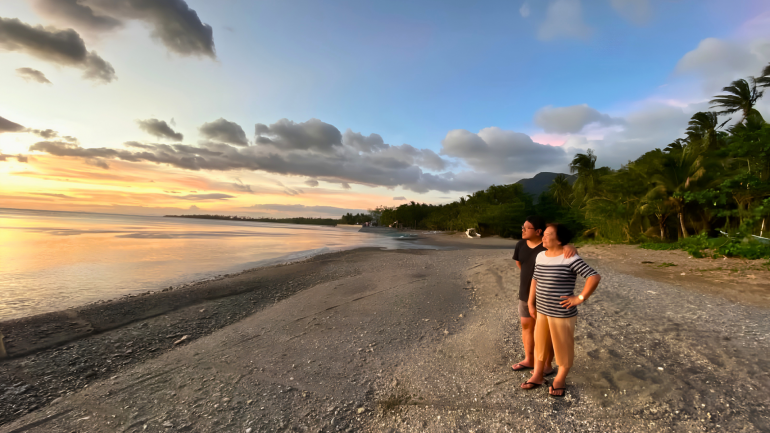
For Galicha, that place is Sibuyan Island in the central Philippines, where his understanding of creation began through childhood encounters with the sea, mountains, forests and rivers.
His grandfather was a fisherman. As a child, Galicha helped pull a baruto, a small outrigger boat, ashore and watched fishermen weave bobo, traditional bamboo fish traps. He also joined panayap, a communal fishing practice in which people worked together to bring nets toward shore.
When a gataw, or school of fish, appeared in shallow waters, a budyong, or conch-shell horn, summoned people to the shore.
“I did not know the words ecology, equity or interdependence then. My hands learned them before my mind found the concepts,” Galicha recalled.
Those experiences later shaped his environmental advocacy as Sibuyan became the focus of mining interests. In 2006, while helping run a small computer and communications shop, Galicha encountered mining maps and documents and began investigating their implications for his island.
His involvement deepened after anti-mining activist Armin Marin was killed during a protest in 2007.
“The struggle acquired blood,” Galicha said.
Environmental advocacy consequently became more than protecting forests or opposing mining. For Galicha, it became a question of human dignity, community, responsibility and faith.
“Creation is not something outside us. It is the world from which our own lives come,” he said.
His experience reflects a wider reality across Asia, where coastal communities, farmers and Indigenous Peoples face environmental degradation and climate change while often having fewer resources to absorb their impacts.
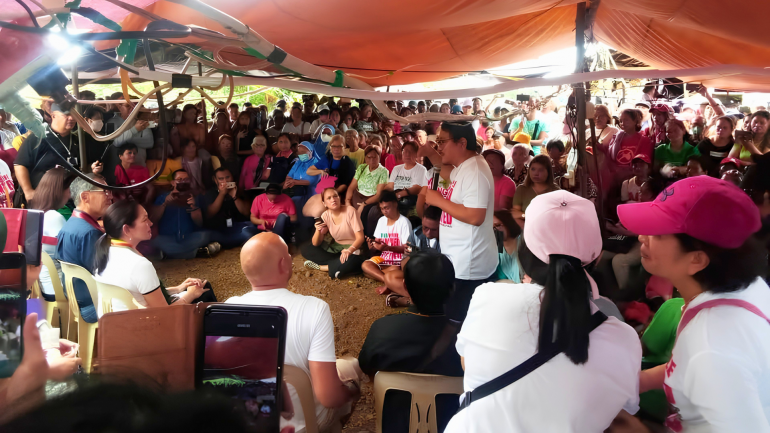
Years of working with affected communities have convinced Galicha that local knowledge must be taken seriously.
“Knowledge is also carried in memory,” he said.
A fisher understands changing currents and seasons; farmers recognize shifts in rainfall; elders remember landscapes, springs and forests as they were decades ago. Technical terms such as “loss and damage” and “resilience” take on a human meaning in these communities. Loss can mean a home, farm, fishing ground or ancestral landscape.
“Before we speak for people, we have to listen,” Galicha said.
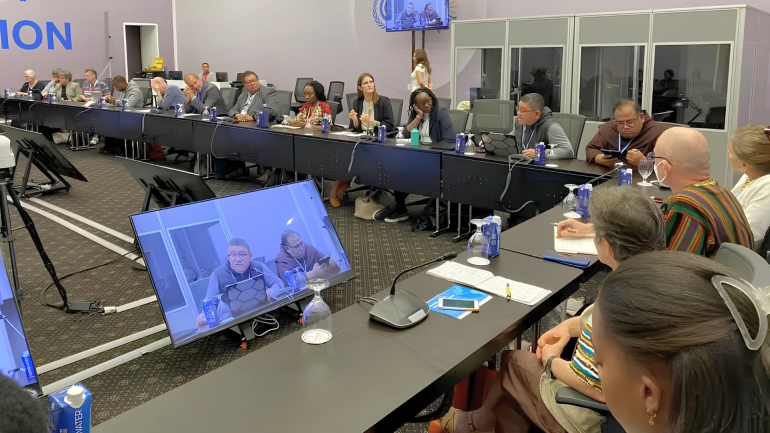
His ecological vision is closely connected with Pope Francis’ call in Laudato Si’ to hear both “the cry of the Earth and the cry of the poor.” For Galicha, the two cannot be separated.
“Mountain, river, forest, farm, mangrove, reef and sea may be placed in separate categories in government plans, but they are not separate in life,” he said.
When forests are damaged, rivers and farms suffer. When mangroves and reefs deteriorate, fishing communities lose livelihoods and protection from storms.
Galicha therefore sees ecological conversion as more than changing individual habits. Parishes, schools, dioceses, businesses and governments must also examine how their decisions affect land, water, energy and communities.
“Gratitude creates responsibility,” he said.
Two decades of advocacy have also taught him that environmental work can bring exhaustion, anger and disappointment. His response is to remain rooted in prayer and the purpose of the mission.
“Anger can become identity. Conviction can become reaction,” he said.
For Galicha, hope is not certainty that every struggle will be won.
“Hope is fidelity.”
This conviction also shapes Arbores Gratiarum, or Trees of Thanksgiving, an initiative of Living Laudato Si’ Philippines. Galicha began questioning tree-planting campaigns that counted seedlings without asking whether they survived.
“Where are those trees now?” he asked.
A tree requires years of care and protection. For Galicha, caring for one becomes an act of intergenerational responsibility.
“You are caring for someone who has not yet arrived,” he said.
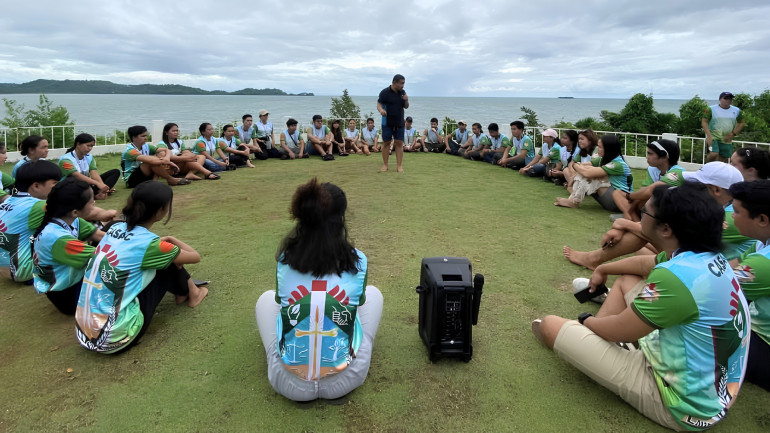
His message to young people is similarly simple: they do not have to save the entire planet. They can begin by knowing and loving a particular place, its water, rivers, forests, food and people.
“Do not begin by trying to save the world. Begin by loving a part of it.”
For Galicha, that place was Sibuyan. His journey from an island community to national and international environmental advocacy reflects his conviction that ecological mission begins with relationships, with God, with other people and with creation.
“We are not outside nature, and we do not live alone.”
Radio Veritas Asia (RVA), a media platform of the Catholic Church, aims to share Christ. RVA started in 1969 as a continental Catholic radio station to serve Asian countries in their respective local language, thus earning the tag “the Voice of Asian Christianity.” Responding to the emerging context, RVA embraced media platforms to connect with the global Asian audience via its 21 language websites and various social media platforms.
Latest News