


Philippine Indigenous Catholic Teacher Receives Metrobank Award, Credits SVD Priests and Holy Spirit Sisters

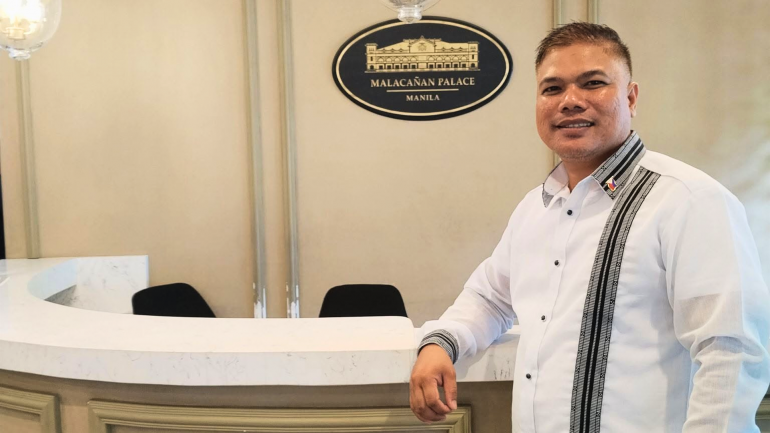
An Alangan Mangyan Catholic teacher from Oriental Mindoro in the central Philippines has been named one of the 2026 Metrobank Foundation Outstanding Filipinos, recognizing his 17 years of work promoting indigenous culture, education and community development in remote Mangyan communities.
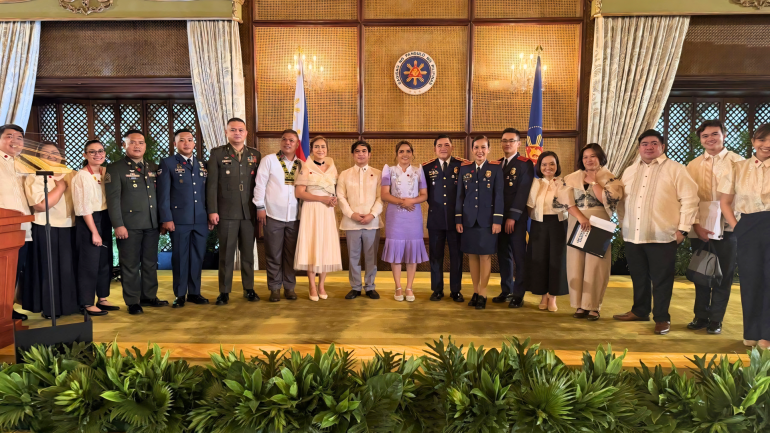
Emmanuel Guarde, Master Teacher III at Cornelio Lintawagin Memorial Elementary School in Naujan, Oriental Mindoro, was formally recognized by Philippine President Ferdinand R. Marcos Jr. during ceremonies at Malacañang Palace on September 29.
Guarde, a member of the Alangan Mangyan indigenous community, credited his achievement to his faith, family and the Catholic missionaries who helped open educational opportunities for Mangyan communities, particularly the Sisters Servants of the Holy Spirit and Society of the Divine Word (SVD) priests.
The Mangyan are a group of indigenous peoples who have lived for generations in the island province of Mindoro. The Alangan are one of several Mangyan ethnolinguistic groups, with communities primarily in northern Oriental Mindoro.
For Guarde, the award represents more than an individual achievement. He said it reflects the contribution of missionaries, his family and the Mangyan people who have worked to make education accessible to indigenous communities.
The Metrobank Foundation Outstanding Filipinos awards recognize Filipino professionals for significant contributions in their respective fields. Each of the 2026 awardees received 1 million Philippine pesos, about US$16,000, together with a Flame trophy and Medallion of Excellence.
Guarde has worked to make education more relevant to Alangan Mangyan children. He developed localized early-grade learning resources and the Mangyan Alangan Community-Based Competencies framework, incorporating indigenous knowledge, traditions and values into education.
He also helped establish a primary school, solar lighting and basic facilities in the remote community of Sitio Begnay. In addition, he initiated an Adult Education and Livelihood Strategy Management Plan to provide community members with functional literacy and vocational skills.
“I believe that quality education must be both accessible and meaningful,” Guarde said.
“Through my extensive research on the traditions and values of the Alangan Mangyan, I seek to contribute to the integration of indigenous knowledge into the curriculum so that education can become more inclusive, relevant and respectful of cultural diversity,” he said.
Guarde said the Holy Spirit Sisters played a foundational role in providing educational opportunities for many Alangan Mangyan, including himself, through education, community organizing and catechesis.
“The Holy Spirit Sisters remain the foundation for why many Alangan Mangyan, including myself, have been able to attain higher levels of education and gain opportunities in life,” he said.
He also acknowledged the contribution of SVD priests and Holy Spirit Sisters in bringing education, catechesis and community development initiatives to Mangyan communities.
Guarde recalled an Alangan expression, “Wala po akong mata,” literally meaning “I have no eyes.” He explained that the phrase refers not to physical blindness but to the inability to read and understand written information.
“For me, the meaning is very deep. Even though I have eyes, if I had not been given education, there would still be many things I could not see and understand,” he said.
Guarde grew up accompanying his parents in the Mangyan Mission, where they were involved in education, community organizing and catechesis. His mother served as a catechist, while Guarde was an altar boy for many years.
He said his faith consequently became closely connected with his childhood, family, indigenous identity and commitment to serving others.
While recognizing the role of missionaries in bringing Christianity to Mangyan communities, Guarde said his Catholic faith and indigenous identity have strengthened rather than diminished each other.
“For me, their mission did not mean that we had to erase our being Mangyan,” he said. “I learned that it is possible to have a deep faith while respecting the culture, traditions and identity of an indigenous person.”
Guarde said the recognition has encouraged him to continue working for the education of Mangyan children.
“The education they helped me receive became a bridge and today, I hope to become that same bridge for the next generation of Mangyan children,” he said.
Radio Veritas Asia (RVA), a media platform of the Catholic Church, aims to share Christ. RVA started in 1969 as a continental Catholic radio station to serve Asian countries in their respective local language, thus earning the tag “the Voice of Asian Christianity.” Responding to the emerging context, RVA embraced media platforms to connect with the global Asian audience via its 21 language websites and various social media platforms.
Comments
Latest News


- Reply
Permalink