“The Poor are the Fifth Gospel,” says renowned Indian theologian Fr Jerry Rosario, SJ

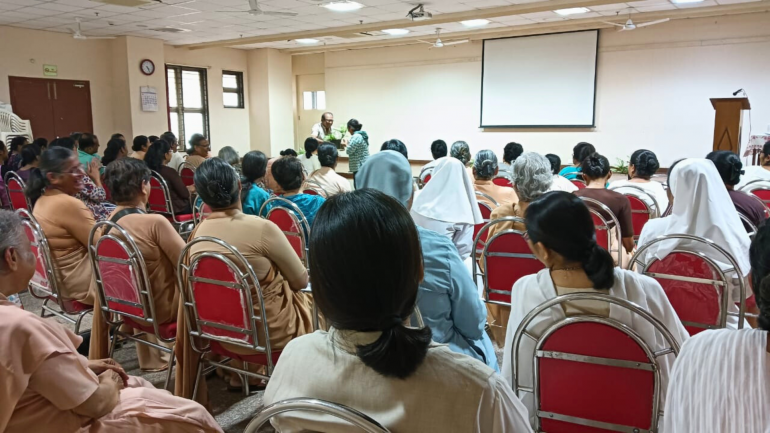
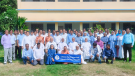
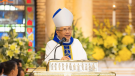
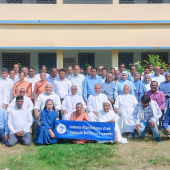
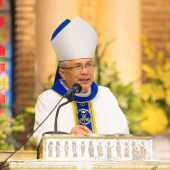
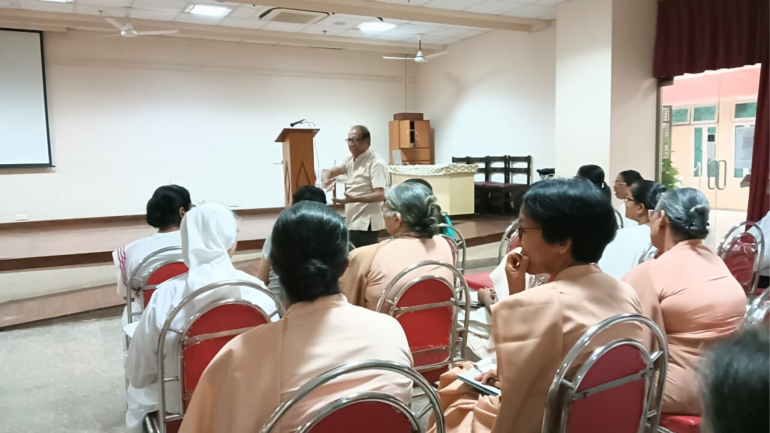
At a recent seminar hosted by the Daughters of St Paul in Bandra, Mumbai, western India, renowned Indian theologian Fr Jerry Rosario, SJ, invited participants to re-examine Christian life and attitude through the lens of Pope Leo’s stirring words Dilexit Te, calling the poor the “Fifth Gospel” in the Bible.
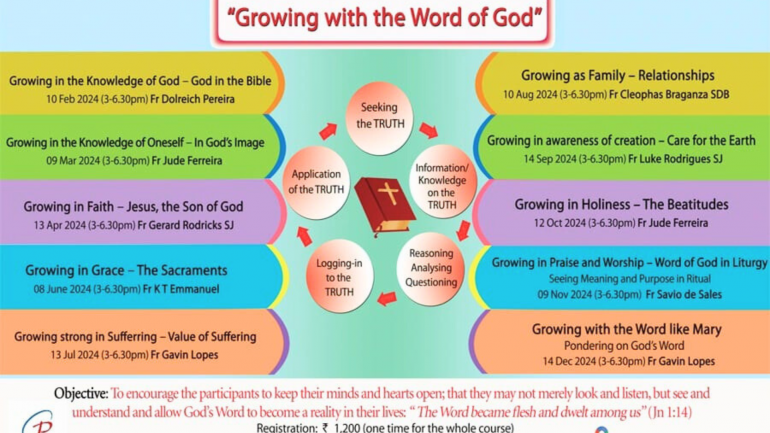
The seminar was part of the certificate course titled Growing with the Word of God, offered by the Daughters of St Paul. The three-year course, open to both lay faithful and religious, is designed to help participants gain an in-depth understanding of the Bible.
In an age of widening social divides between the rich and the poor, Fr. Jerry posed a radical question: What are we doing for the poor today? For him, “the poor” includes the least, the forgotten, and the voiceless in society.
With his characteristic clarity and prophetic challenge, and using the English alphabet A–J, Fr. Jerry offered ten key lessons from the Gospel concerning our engagement with the poor.
A – Another Jesus
Fr. Jerry reminded the audience that Christian life is more than admiration; it is imitation. We are called to become “another Jesus.” This means moving toward those who are sidelined, healing what is broken, and embodying the values Jesus lived: compassion, courage, and constant outreach.
B – Bend Down
To truly welcome the poor, one must bend down, both in attitude and in action. Solidarity with the poor is not a concept but a posture. Fr. Jerry urged the Church to rediscover humility as the pathway to genuine encounter.
C – Creative
Recalling Pope Leo’s courage, he stressed the need to be “critical yet creative.” Some traditions, he noted, have become burdens rather than sources of freedom. Like Jesus, the Church must critique unhealthy scrupulosity and read the “signs of the times.” If the Church fails to reform itself, he warned, the poor will raise their voices against the Church.
D – Discipleship
Fr. Jerry drew a sharp distinction between devotion and discipleship. Devotees admire from a distance; disciples follow with commitment. True discipleship demands imitation of Christ’s mission, not merely affection for His image.
E – Enlightenment
Modern times face new kinds of vulnerability, digital illiteracy, mental health struggles, economic dependency, displacement, and trafficking. The Church, he insisted, must awaken to these emerging forms of poverty and respond with compassion and structural support.
F – Fifth Gospel
Fr. Jerry echoed a powerful insight: the poor themselves are the Fifth Gospel. Their stories teach resilience, faith, and truth. Christians must read the Gospel written in their struggles and allow ourselves to be evangelized by them.
G – Give Away
Accumulation, he observed, is incompatible with Gospel living. Instead of storing goods we do not need, we are called to give them away, letting simplicity become a form of evangelization.
H – Human Rights
Standing with the oppressed is not optional; it is a Gospel mandate. The Church is called to defend human dignity wherever it is threatened.
I – Inclusivity
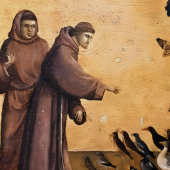
Fr. Jerry urged the community to cultivate an inclusive consciousness that embraces all, the marginalized, the poor, and the least in society. We must fight for rights and justice not only for human beings but also for nature, echoing St Francis of Assisi’s beloved dictum Fratelli Tutti: “All are my family.”
J – Justice
Justice, not mere charity, must shape the Church’s mission in every sphere, economic, political, religious, and cultural. Liberation begins when structures change, when voices unite, and when believers take an active stand for the oppressed.
Fr. Jerry concluded with three concrete pathways:
• Be a Jesus to the poorest: Love, learn from, and accompany those who are forgotten.
• Be a Pilgrim of Hope: Share unused goods and become signs of God’s providence.
• Be a Prophet of Justice: Partner with social and political movements that pursue liberation for the oppressed.
Fr. Jerry summed up the heart of his message with a profound truth: “Doctrinal vigor and rigor without mercy for the poor is empty.”
In a rapidly modernizing world, love for the poor must remain the pulse of the Church.
Radio Veritas Asia (RVA), a media platform of the Catholic Church, aims to share Christ. RVA started in 1969 as a continental Catholic radio station to serve Asian countries in their respective local language, thus earning the tag “the Voice of Asian Christianity.” Responding to the emerging context, RVA embraced media platforms to connect with the global Asian audience via its 21 language websites and various social media platforms.
Latest News