“The Broken World Cannot Be Healed Without Breaking Oneself,” Says Indian Theologian at Formation Seminar

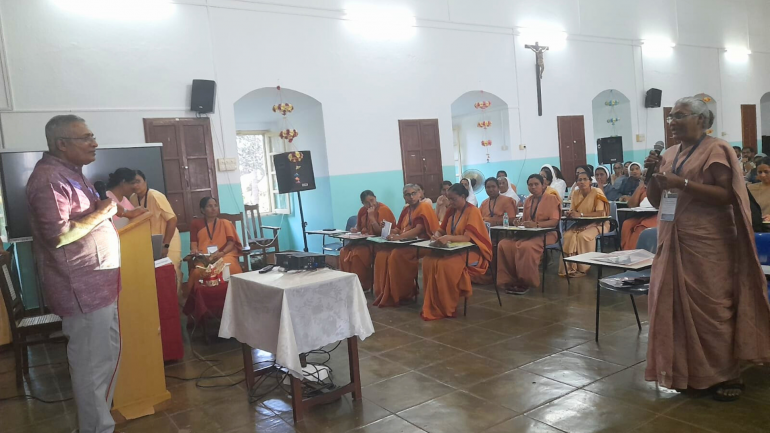
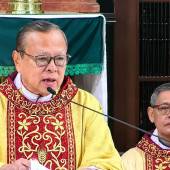
At the National Seminar on formation held at the Institute Mater Dei, Old Goa, southwest India, Fr. Joseph Lobo, SJ, Head of the Department of Dogmatic Theology and Chairperson of the Doctoral Committee at Jnanadeepa Vidyapeeth (JDV), Pune, called for a deeper theological response to fragmentation in Church and society.
He urged formators to move beyond treating symptoms and focus on addressing root causes that hinder relational connectedness.
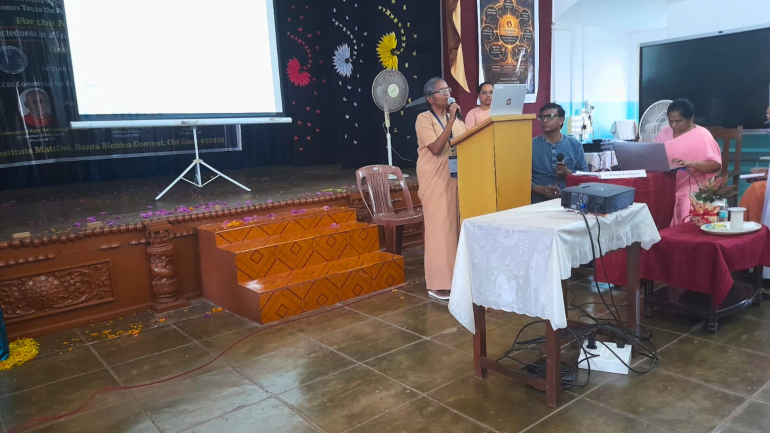
Fr. Lobo presented a paper titled “Theological Perspective (Pastoral Approach) of Building Connectedness in a Fragmented Society for a Fruitful Mission 2035” during the two-day seminar (February 27–28), organized in collaboration with the CCBI Commission for Vocations, Seminaries, Clergy and Religious.
The session was moderated by Fr. Donato Rodrigues, Rector of the Patriarchal Seminary of Rachol, with group discussions facilitated by Fr. Charles Leo, Executive Secretary of the CCBI Commission.
Tracing the roots of fragmentation to Scripture, Fr. Lobo cited the Tower of Babel and the fall of Adam and Eve, where the desire “to make a name” and “to be like God” broke relationships with God, others, and creation. He emphasized that fragmentation begins in the human heart. Quoting Pope Francis’ Laudato Si’, he observed, “The external deserts in the world are growing because the internal deserts have become so vast” (LS 217), linking inner emptiness and greed to social breakdown, poverty, environmental destruction, and violence. “Authentic pastoral formation must address both internal and external deserts,” he stressed.
He further noted that uncritical use of digital technology aggravates fragmentation, creating what he called “lonely crowds.” Overreliance on artificial intelligence in education, he warned, risks producing “uneducated, uncritical, and uncreative individuals who only appear smart.”
Central to Fr. Lobo’s reflection was relational anthropology. Human beings, created in the image of a relational God, are oriented toward communion. Citing St Paul’s image of the Church as one body (1 Corinthians 12:12), he affirmed that fragmentation contradicts Christian identity.
Vulnerability, he said, is key to restoring connection. Drawing on the parable of the Prodigal Son, Fr. Lobo explained that the father’s vulnerable love restores relationships, showing that “living by our vulnerability integrates fragmented existence.” He concluded with the Cross as the supreme expression of redemptive vulnerability: Christ chose self-giving love over power, demonstrating that “the broken world cannot be healed without breaking oneself.”
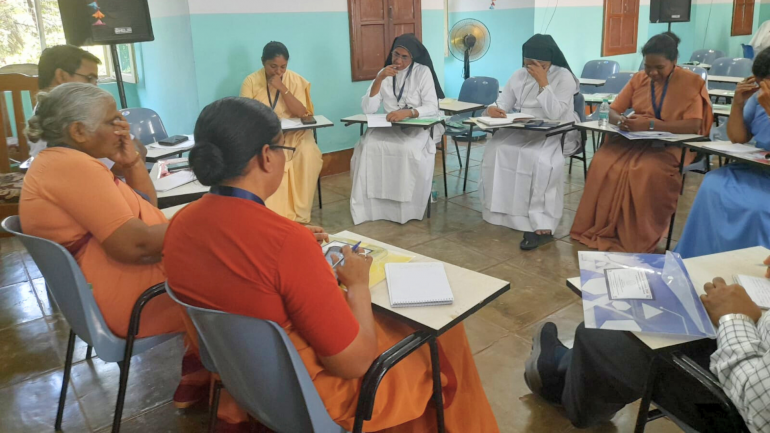
Following the presentation, participants engaged in group discussions on promoting connectedness in formation houses, religious congregations, and parish communities. Fr. Lobo noted that most responses identified symptoms—such as individualism, careerism, ethnic divisions, and over-institutionalization, rather than the root causes underlying them. He urged formators to probe deeper, emphasizing that issues like digital addiction or structural rigidity often mask inner emptiness, insecurity, or confusion between role identity and core identity.
Using Jesus’ encounter with Zacchaeus (Luke 19:1–10) as a paradigm, Fr. Lobo highlighted “Jesus the formator.” Christ begins not with correction but with unconditional acceptance: “I must come and stay in your house.” Only when Zacchaeus experienced this relational encounter did transformation follow. “Behavioral change is the outcome of inner transformation,” he emphasized.
He concluded by calling formators to cultivate depth, discernment, and creativity, asserting that genuine connectedness and communion can emerge only when formation addresses inner fragmentation and nurtures rootedness in Christ.
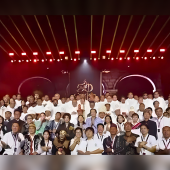
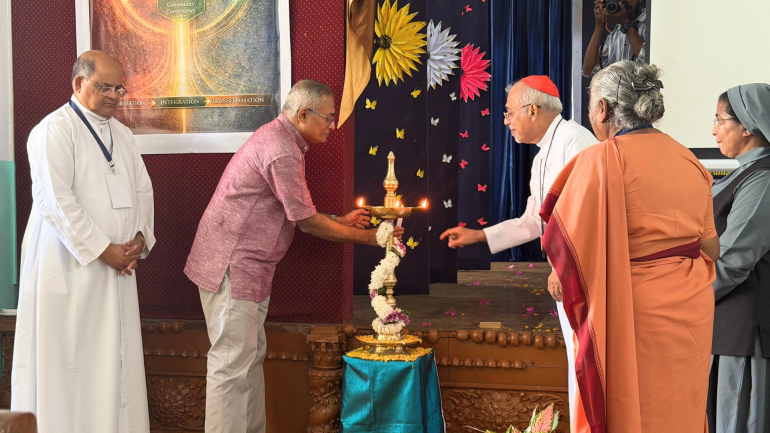
The seminar brought together bishops, rectors, religious, and formators from across India to explore pathways for integral formation and communion in preparation for the Church’s mission in 2035.
Radio Veritas Asia (RVA), a media platform of the Catholic Church, aims to share Christ. RVA started in 1969 as a continental Catholic radio station to serve Asian countries in their respective local language, thus earning the tag “the Voice of Asian Christianity.” Responding to the emerging context, RVA embraced media platforms to connect with the global Asian audience via its 21 language websites and various social media platforms.
Latest News