



Religious Freedom Is Not Absolute, Says Mumbai Law Professor and Constitutional Expert at Sadbhav Sammelan

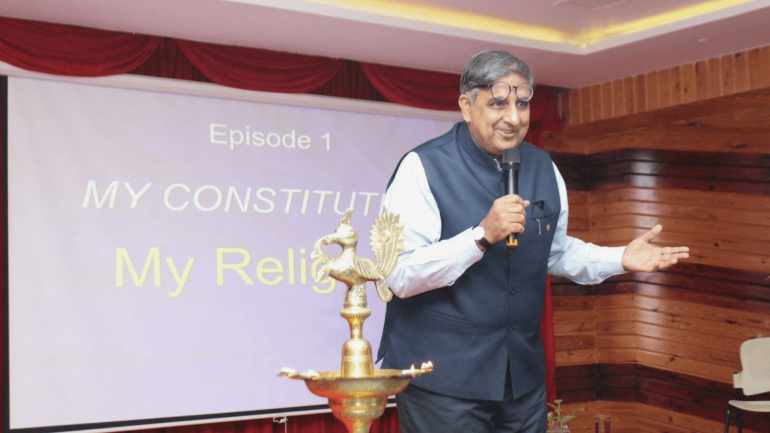
An interactive session on “Balancing Religious Morality with Constitutional Morality” was led by Prof. Kishu Daswani of Government Law College and St. Xavier’s College, Mumbai, during the 4th edition of the Society of Pilar’s Sadbhav Sammelan 2026.
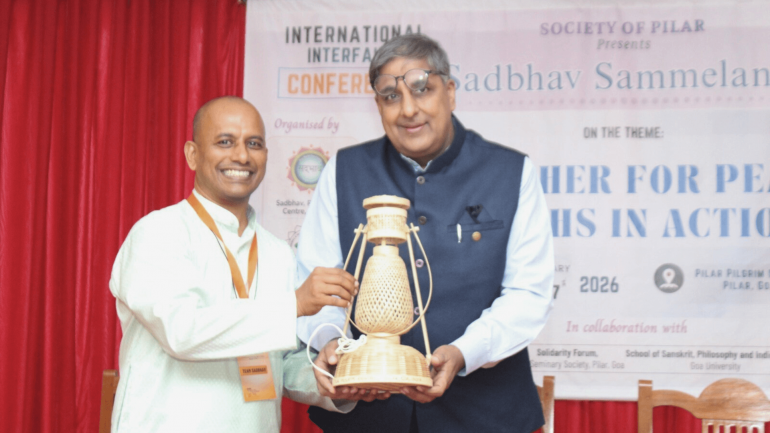
The international interfaith conference, held in Goa on Feb 6-7, is jointly organised by Sadbhav, Pilar; Fr. Agnel College, Pilar; and Nirmala Institute of Education, Panaji, in collaboration with several other institutions.
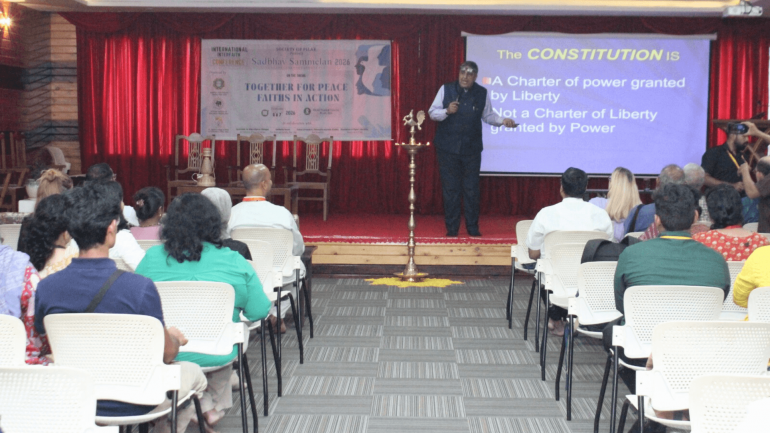
In his address, Prof. Daswani underscored that the Indian Constitution is a charter of liberty, with power flowing from the people to the State, not the other way around. Citizens first secured fundamental rights—including religious freedom—before authorising the government to govern. He emphasised that democracy is not merely majority rule, but the rule of law, as enshrined in the Constitution.
Explaining secularism in the Indian context, Prof. Daswani noted that it differs from the Western model. Instead of excluding religion from public life, the Constitution ensures space for all religions to flourish while maintaining principled distance from any one denomination.
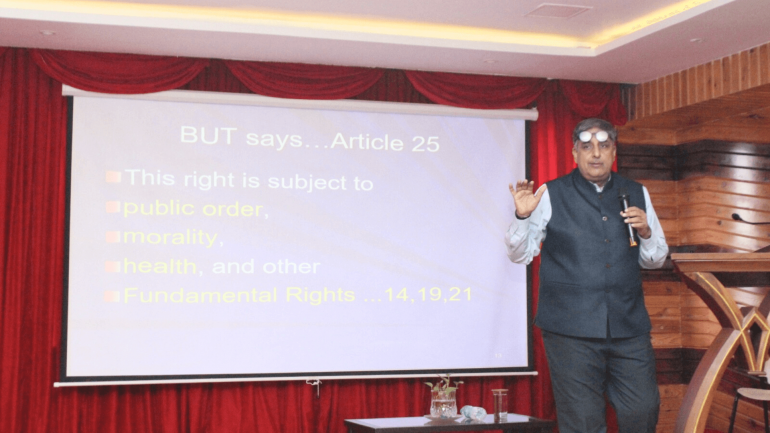
A key focus of the session was Article 25, which guarantees freedom of conscience and the right to profess, practice, and propagate religion to all persons—not just citizens. Prof. Daswani explained that while this protects personal faith and public expression, religious freedom is not absolute. The State may regulate practices in the interests of public order, morality, health, and the protection of other fundamental rights, ensuring a balance between individual liberty and societal well-being.
He also highlighted how constitutional jurisprudence distinguishes core religious beliefs from practices of a secular, economic, or administrative nature, which may be regulated by the State—an essential safeguard in a religiously diverse society like India.
Throughout the session, educators and students were encouraged to reflect on how constitutional morality upholds dignity, equality, and freedom while respecting religious traditions. Prof. Daswani stressed that dialogue, discernment, and constitutional literacy are crucial in navigating tensions between faith and law in a pluralistic democracy.
The session concluded with an invitation to ongoing reflection as courts and institutions continue to interpret the delicate relationship between religious conscience and constitutional values in contemporary India.


