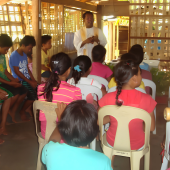
As the Catholic Church in Asia prepares for the 12th Plenary Assembly of the Federation of Asian Bishops' Conferences (FABC) in Jakarta, Indonesia, from July 20–26, the Church in Sri Lanka offers a unique perspective on the assembly's call to "Synodal Conversion and the Mission of Being Bridges and Bridge-Builders in Asia."
In the island nation, where Buddhists form the majority alongside Hindu, Muslim, and Christian communities, bridge-building is both an internal and external mission. The Church seeks to strengthen communion within its own community while fostering dialogue and cooperation with other Christian denominations and religious traditions.
Sri Lanka has a long history of promoting ecumenical and interreligious dialogue. During the 1980s and 1990s, the movement gained momentum through the work of the late Jesuit theologian Fr. Aloysius Pieris, SJ. Today, organizations such as Caritas Sri Lanka (SEDEC), the Centre for Society and Religion (CSR) in Maradana, and the Episcopal Commission for Ecumenism and Interreligious Dialogue, headed by Bishop Jude Nishantha Silva, continue that mission.
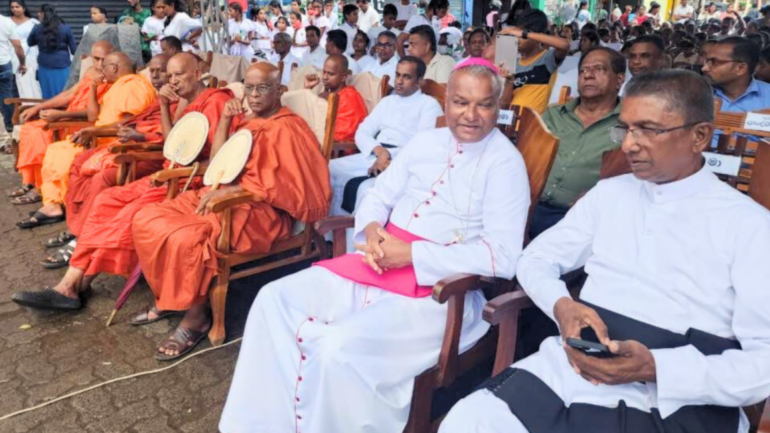
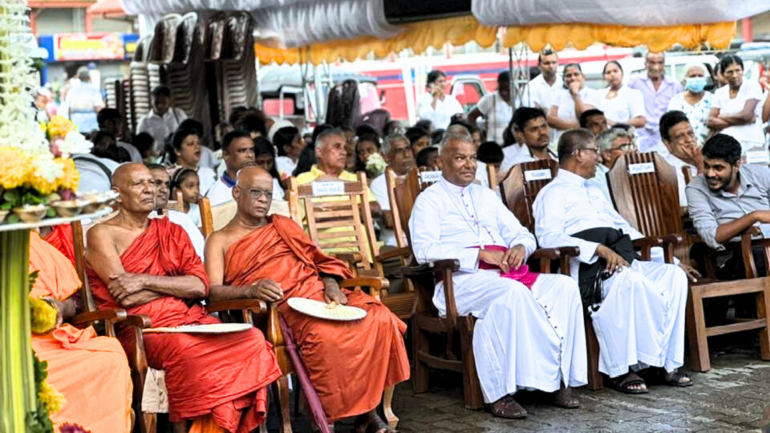
Building bridges, however, remains challenging in a country where religion and national identity are closely intertwined. Christian communities have at times been portrayed by nationalist groups as representatives of Western influence, making interreligious engagement a sensitive undertaking.
Despite these challenges, several Catholic figures have become enduring symbols of dialogue. Oblate missionary Fr. Michael Rodrigo lived and ministered among Buddhist communities in Buttala and was killed while celebrating Mass in 1987. Another Oblate, Fr. Marcelline Jayakody, earned national recognition for promoting Sri Lankan culture and Buddhist-Christian understanding, receiving the Ramon Magsaysay Award for his contribution.
Catholic schools have also played a significant role in fostering social harmony by educating students from different religious backgrounds, helping form generations of national leaders committed to coexistence.
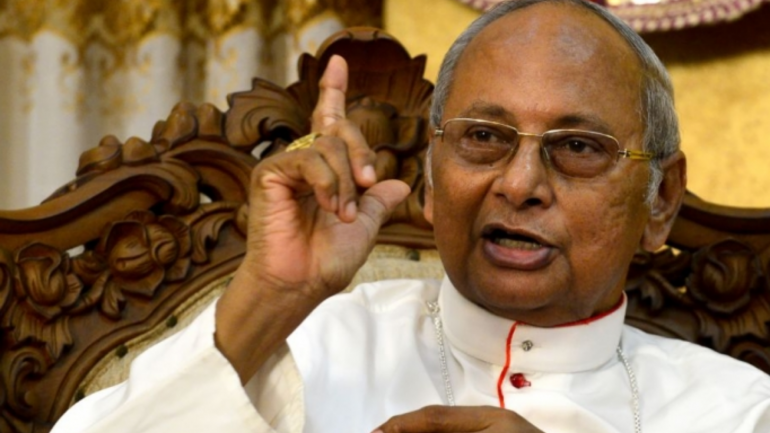
One of the Church's most significant contributions to national reconciliation came after the Easter Sunday terrorist attacks of April 21, 2019. As fears of retaliatory violence spread, Cardinal Malcolm Ranjith, Archbishop of Colombo, together with clergy and lay leaders, appealed for calm and restraint. Their efforts helped prevent large-scale communal violence and preserved relations with the Muslim community during a time of national trauma.
At the local level, bishops and priests in dioceses such as Badulla, Galle, Anuradhapura, and Kandy—where Catholics are a small minority—have maintained cordial relationships with Buddhist, Hindu, and Muslim religious leaders. Church leaders acknowledge, however, that translating these relationships into deeper grassroots cooperation remains an ongoing challenge. They stress that authentic bridge-building must be rooted in shared spiritual values rather than political interests or symbolic gestures.
The upcoming FABC assembly is expected to encourage local Churches to deepen synodality alongside dialogue with society.
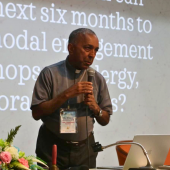
Reflecting on this theme, Dr. Sr. Rasika Pieris said a synodal Church must be inclusive and participatory, where all the baptized share responsibility for the Church's mission. She emphasized that dialogue, listening, and bridge-building are essential to achieving greater participation, particularly for women, and called for the Church to move beyond clericalism toward a model that recognizes the equal dignity and vocation of all the faithful.
Lay theologian Prof. Shirley Lal Wijesinghe of the University of Kelaniya also sees synodality as requiring practical pastoral reforms. He called for renewed parish life, greater involvement of trained lay leaders in ministry, updated catechetical programs, stronger parish participation in decision-making, financial transparency, and a greater emphasis on investing in people rather than infrastructure.
As bishops from across Asia prepare to gather in Jakarta, Sri Lanka's experience illustrates both the opportunities and the challenges of becoming a Church that builds bridges—within its own community and across the diverse religious and cultural landscape of Asia.
Radio Veritas Asia (RVA), a media platform of the Catholic Church, aims to share Christ. RVA started in 1969 as a continental Catholic radio station to serve Asian countries in their respective local language, thus earning the tag “the Voice of Asian Christianity.” Responding to the emerging context, RVA embraced media platforms to connect with the global Asian audience via its 21 language websites and various social media platforms.
Latest News