If 2025 left us worried, 2026 doesn’t yet give much reason for comfort. Across nations and communities, a question lingers: Where is the world going? Is peace still possible? Are we witnessing the birth of a new global order, or the slow erosion of a shared moral identity? Some argue that the world is not losing its bearings but merely shifting toward a multipolar reality.
Yet beneath political analysis lies a more unsettling concern: have we lost our moral compass? And are we forgetting what it truly means to live with justice, compassion, and peace?
A World That Hurts
It is hard to deny the uncertainty and wounds around us. Armed conflicts continue, economies clash, and communities struggle to survive under policies and ideologies that often ignore the most vulnerable. Migration, borders, and national identity have become hotly contested. Yet at the heart of these debates are real human lives, people who suffer quietly while headlines move on.
At the same time, institutions meant to promote global peace, encourage international cooperation, and safeguard human rights are increasingly being pushed aside. The once-clear boundaries between capitalism and communism, democracy and dictatorship, are slowly being distorted. Democracies increasingly adopt authoritarian tactics, challenging legitimate institutions. Meanwhile, authoritarian regimes incorporate capitalist strategies.
In such a world, a dangerous logic can take hold: might makes right. Decisions are justified not by justice, compassion, or the common good, but by power, influence, or military strength. When strength alone becomes the measure of legitimacy, truth is overshadowed, and moral responsibility is sidelined. Ordinary people and vulnerable communities are left at the mercy of those who wield the most power.
Social media amplifies anger, encouraging quick judgments and division. Listening becomes harder; dialogue becomes fragile. And truth, too, seems flexible, bending to fit opinions and convenience.
What is right one day is wrong the next, and even basic principles of justice can be overlooked when power is at stake. These realities leave many of us exhausted, frustrated, and afraid.
Moral Clarity
In times like this, the Church reminds us of the need for moral clarity. This does not mean judging others harshly or pretending to have all the answers. Moral clarity means having the courage to hold on to truth, even when it is uncomfortable or unpopular.
It is the refusal to apply double standards, affirming the dignity of life in some circumstances while ignoring it in others. It is the willingness to name injustice, even when silence would be easier. For Christians, this clarity is not invented; it is received through the Gospel, shaped by prayer, conscience, and courage.
Without moral clarity, peace becomes a slogan. With it, peace becomes a way of life.

Peace-making as a Vocation
This leads us to the heart of the Christian message: peace-making is a vocation. It is not just the absence of conflict or a fragile political arrangement. It is a calling, a responsibility entrusted to each of us. Jesus said, “Blessed are the peacemakers, for they shall be called children of God” (Mt 5:9). Peacemakers do not wait for the world to change; they act, humbly and faithfully, where they are. They imitate Christ, who reconciled humanity to God not with force, but with love on the Cross (Eph 2:14).
Peace begins in our hearts and radiates outward, through forgiveness, reconciliation, and small acts of justice.
A Harvest of Justice Sown in Peace
The Letter of James reminds us, “A harvest of justice is sown in peace by those who make peace” (James 3:18). Justice does not grow from fear, coercion, or domination. It grows where peace takes root, in hearts willing to listen, forgive, and seek the good of others.
Where peace is absent, justice struggles to survive. Resentment and cycles of retaliation take over. But when we commit to peace, unarmed and disarming, we create the soil for justice to flourish. It is slower work, quieter work, sometimes unseen, but it is the work that changes lives.
The Church’s Guidance
The Second Vatican Council, in Gaudium et Spes, described peace as “an enterprise of justice,” grounded in God’s love and requiring constant commitment. Peace is not automatic; it must be built.
The Council encouraged all Christians, especially the laity, to take responsibility for building peace in families, communities, workplaces, and the wider world. This responsibility includes promoting solidarity, rejecting violence, and fostering dialogue.
Even those charged with public security or defence are reminded that their work is only truly just when it protects life and dignity, never when it dominates, coerces, or destroys.
An “Unarmed and Disarming” Peace
Pope Leo XIV has reinforced this vision for our time. In his December 2025 message, Peace Be With You All: Towards an Unarmed and Disarming Peace, he reminded the faithful that peace is not a distant ideal; it is entrusted to us, here and now.
He acknowledged the difficulty of hope in what Pope Francis described as “a third world war fought piecemeal,” yet he encouraged Christians to look to Jesus, the light who overcomes darkness.
Peace is not built with weapons, deterrence, or technological threats. It is built by human hearts open to God, willing to sacrifice self-interest, and refusing to weaponize words, faith, or nationality.
The Pope urged believers to embody Christ’s peace, not only in actions but in the way they speak, listen, and live. True peace demands patience, courage, and faith; it is never easy, but it is always necessary.

Walking in the Light
The Prophet Isaiah offers a vision that continues to guide the Church: swords beaten into plowshares, nations no longer trained for war, and people walking in the light of the Lord (Isaiah 2:4-5). This is not naïve idealism; it is a call to action.
In a world addicted to power, the vocation of the Christian peacemaker remains unarmed and disarming. It starts quietly, in everyday choices, how we forgive, how we listen, how we refuse to participate in gossip, fear, corruption, or manipulation. But these small acts, multiplied by millions of believers, have the power to renew the world.
Peace begins with a decision: to disarm our hearts, to trust God’s providence, and to work patiently for justice and reconciliation. It is demanding, sometimes misunderstood, but it is the path Christ has walked. And it is the path that brings life, hope, and the harvest of justice that God promises.
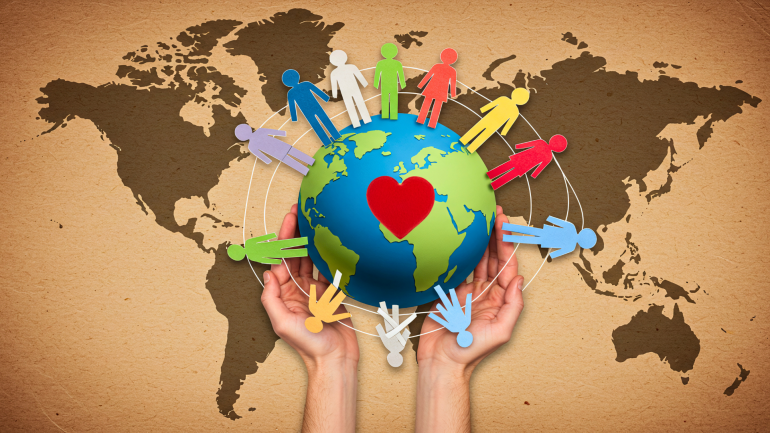
If millions of hearts choose peace over power, the world can begin to heal, starting today.