Proposed Amendments to Foreign Contributions Law Raise Concerns among Civil Society Groups in India

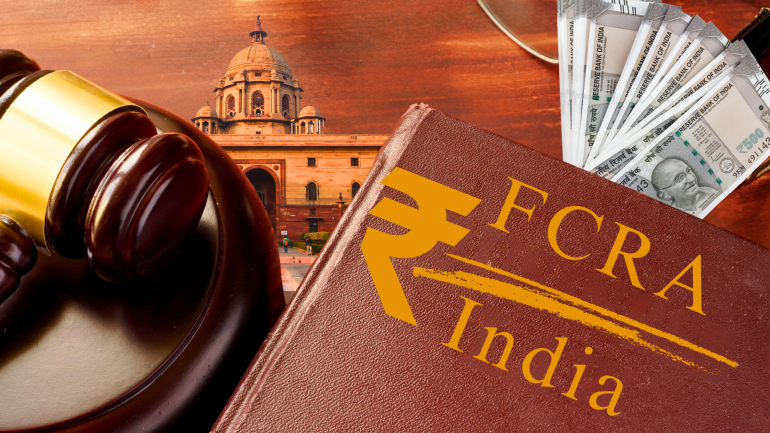
The Indian government has proposed amendments to the Foreign Contribution (Regulation) Act (FCRA), prompting concern among civil society organizations, human rights advocates, religious leaders, and opposition political parties.
The FCRA is the law that regulates foreign funding received by non-governmental organizations (NGOs), charities, educational institutions, religious organizations, and other civil society groups in India. Over the years, it has become a key regulatory mechanism governing how organizations receive and use overseas donations.
On March 25, Minister of State for Home Affairs Nityanand Rai introduced the Foreign Contribution (Regulation) Amendment Bill, 2026, in the Lok Sabha, the lower house of India's Parliament. The government says the amendments are intended to address legal gaps in the management of assets created through foreign funding and to improve accountability among NGO functionaries.
However, many organizations working in education, healthcare, social development, disaster relief, and human rights believe the proposed changes could severely restrict their ability to serve vulnerable communities.
One of the most controversial provisions is the creation of a new "Designated Authority" appointed by the central government. Under the proposal, this authority would be empowered to take provisional or permanent control of foreign-funded assets when an organization's FCRA registration is canceled, surrendered, expires, or is not renewed.
The assets covered by the provision could include schools, hospitals, community centers, hostels, and other facilities built wholly or partly with foreign funding. The authority would be able to manage, supervise, transfer, or dispose of these assets. Funds generated through the disposal of such assets could be transferred to the Consolidated Fund of India and used for public purposes.
Although the bill provides for the return of unutilized funds and assets if an organization's registration is later restored, many critics argue that the provision grants excessive powers to the government.
The proposed amendments also expand the definition of "key functionary" to include directors, trustees, partners, office-bearers of societies and trusts, and others involved in management. These individuals could be held personally liable for violations unless they can demonstrate a lack of knowledge or due diligence.
Another provision would require law enforcement agencies and state governments to obtain prior approval from the central government before initiating investigations into FCRA-related matters.
The bill also proposes fixed timelines for the receipt and use of foreign funds, automatic cessation of registration upon expiry or non-renewal, and revised penalties, including a reduction in the maximum imprisonment for FCRA offenses from five years to one year.
Critics argue that these measures come at a time when the existing FCRA framework is already highly restrictive. Since 2014, thousands of organizations have reportedly had their registrations suspended, canceled, or not renewed, significantly affecting their operations.
Many civil society groups contend that the proposed amendments could further weaken organizations engaged in public service, particularly those working in healthcare, education, rural development, women's empowerment, child protection, anti-human trafficking initiatives, environmental protection, disaster response, livelihood support, and housing for low-income communities.
They argue that the greatest impact will be felt not by the organizations themselves but by the millions of people who depend on their services, including the poor, marginalized communities, persons with disabilities, disaster victims, and other vulnerable groups.
Concerns have also been raised regarding property rights. Critics point to Article 300A of the Indian Constitution, which states that no person shall be deprived of property except by authority of law. They argue that the proposed takeover of assets developed through foreign funding raises important constitutional questions, particularly for institutions that have served communities for decades.
The bill has also drawn international attention. According to reports in Indian media, U.S. Senator James Risch, chairman of the Senate Foreign Relations Committee, criticized the FCRA framework, stating that it imposes burdensome restrictions on organizations receiving foreign funding and makes their operations difficult. Similar concerns have reportedly been expressed by lawmakers from both major U.S. political parties.
Opposition parties in India have strongly objected to the proposed amendments. On April 1, members of Parliament from several opposition parties staged a protest outside Parliament, calling for the bill's withdrawal. They argued that the amendments would give the executive excessive powers and could be used against NGOs and minority-run institutions.
The government has rejected these allegations. Parliamentary Affairs Minister Kiren Rijiju stated that the bill is intended to regulate foreign funding in the national interest and is not directed against any religion or community.
Although the government deferred discussion of the bill following opposition protests, it has not withdrawn the legislation. Many observers expect it to return during the Monsoon Session of Parliament, which begins on July 21.
For many civil society organizations, the proposed amendments represent more than a regulatory change. They are viewed as measures that could significantly reduce the capacity of NGOs and charitable institutions to serve disadvantaged communities.
As debate continues, the future of the bill will likely remain a major issue for India's nonprofit sector and for the millions of people who benefit from its work.