Reflection Date: March 6, 2026 | Friday of the Second Week of Lent
Daily Readings: Genesis 37:3-4, 12-13a, 17b-28a; Matthew 21:33-43, 45-46
Children of God:
Good news came from Pakistan!
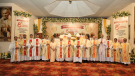
The government of Punjab announced an important support initiative aimed at more than four million low-income families ahead of the holy month of Ramadan.
The key word was inclusivity.
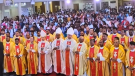
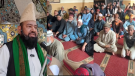
Benefits were extended not only to the Muslim majority but also to minority communities. Christians who were observing the Lenten period were included in the assistance.
In a region where minorities sometimes felt overlooked, this gesture carried deep meaning. It showed that public service could rise above religious differences.
It reminded people that governance could be compassionate.
In a season of prayer and fasting, generosity became a language everyone could understand.
In the gospel of Matthew, Jesus told the parable of a landowner who planted a vineyard, put a hedge around it, dug a wine press, built a tower, and leased it to tenants before going on a journey.
When harvest time came, he sent his servants to collect his produce, but the tenants beat one, killed another, and stoned a third.
Finally, he sent his son, thinking they would respect him, but they seized him, threw him out of the vineyard, and killed him.
Jesus then spoke of the stone rejected by the builders becoming the cornerstone, and he warned that the kingdom of God would be taken away and given to a people who would produce its fruit.
The religious leaders realized he spoke about them, yet they hardened their hearts.
What are our inspirations for today?
First, we are reminded that we are stewards.
The vineyard was never the tenants’ property. It was entrusted to them.
Yet instead of gratitude, they responded with greed, and instead of stewardship, they chose violence.
The landowner had provided everything needed for success.
The tenants were asked only to cultivate and to share the harvest faithfully.
Today we reflect on the blessings entrusted to us. Our talents, positions, families, and even our faith are not possessions to monopolize but gifts to multiply.
Do we treat them as borrowed blessings or as private empires? Are we faithful caretakers or silent betrayers?
Second, God’s work moves forward even with resistance.
The son was rejected and killed, yet Jesus declared that the rejected stone became the cornerstone.
Rejection did not cancel God’s plan. The kingdom was not destroyed by unfaithful tenants; it was entrusted to those willing to bear fruit.
Now we are invited to examine our response to Christ.
Do we welcome his authority in our vineyard, or do we push him out of our decisions? Do we bear fruits of justice, mercy, and inclusivity like the example we saw in Punjab? Are we building on the cornerstone, or stumbling over it?
Children of God:
The Son has already been sent, rejected, and raised.
The cornerstone has already been set in place.
The question is whether we align our lives with that foundation.
May we produce fruits worthy of the vineyard we have received.
Radio Veritas Asia (RVA), a media platform of the Catholic Church, aims to share Christ. RVA started in 1969 as a continental Catholic radio station to serve Asian countries in their respective local language, thus earning the tag “the Voice of Asian Christianity.” Responding to the emerging context, RVA embraced media platforms to connect with the global Asian audience via its 21 language websites and various social media platforms.
Latest News