


Reflection Date: February 11, 2026 Wednesday of the Fifth Week in Ordinary Time
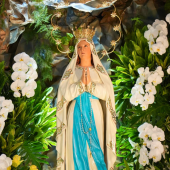
Memorial of Our Lady of Lourdes
Daily Readings: 1 Kings 10:1-10, Mark 7:14-23
Children of God: The story of the Lady of Lourdes began in 1858 in a small town in southern France, where a poor fourteen-year-old girl named Bernadette Soubirous experienced a series of Marian apparitions.
The Blessed Virgin Mary appeared to her in a grotto near the Gave River, a place considered insignificant and even dirty by the people of the town.
During one apparition, Mary asked Bernadette to dig the ground, and from that spot a spring of water began to flow. Many who washed in or drank from the water later reported physical healings.
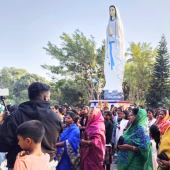
Lourdes soon became a place of pilgrimage, especially for the sick and suffering.
The apparitions emphasized humility, prayer, and conversion.
Mary identified herself as the Immaculate Conception, affirming a deep spiritual truth through a simple village girl.
Over time, Lourdes became known not only for miraculous cures but also for inner healing and peace.
Up until today, the waters of Lourdes continue to draw millions seeking healing of body and soul.
In the gospel of Mark, Jesus speaks to a crowd about what truly makes a person clean or unclean, shifting attention away from external practices to the inner life.
He teaches that defilement does not come from what enters the body but from what comes out of the heart, where intentions and desires are formed (Mark 7:14–15).
This teaching challenges religious mindsets that reduce faith to rules and rituals without inner conversion.
Just as Lourdes reminds people that healing comes from God’s grace rather than magical waters, Jesus reminds his listeners that holiness begins within.
External actions matter only when they reflect an inner relationship with God.
This invites reflection on what truly needs cleansing in our lives.
What are our inspirations for today?
First, real purity begins with the conversion of the heart.
Jesus explains that evil thoughts, greed, deceit, envy, and pride come from within and are what truly defile a person (Mark 7:21–23).
He names the heart as the source of both sin and goodness, making inner conversion essential to authentic faith.
This teaching disturbs those who rely solely on outward religious observance for a sense of righteousness.
It asks us to examine motives, attitudes, and hidden habits rather than appearances.
The story of Lourdes reflects this truth because Mary did not begin with grand rituals or moral lectures.
She invited Bernadette and the people to pray, to repent, and to approach God with humility.
The physical healings that followed were signs pointing to deeper spiritual renewal. Many pilgrims testify that even without a physical cure, they experienced forgiveness, reconciliation, and peace of heart.
This same emphasis shaped the establishment of the World Day of the Sick.
In 1992, Saint John Paul II instituted the World Day of the Sick, and was first celebrated in 1993, choosing February 11, the feast of Our Lady of Lourdes.
He wanted the Church to reflect on illness not only as a physical condition but as a moment of grace and solidarity.
His message highlighted compassion, prayer, and the dignity of the suffering.
Healing, in this vision, is not only the removal of sickness but the transformation of the heart through love.
Second, God’s healing mission calls believers to care for both inner wounds and human suffering with compassion.
Jesus’ teaching moves faith away from judgment and toward responsibility, reminding listeners that evil actions harm relationships and communities (Mark 7:22–23).
By identifying what comes from the heart, he calls people to accountability and mercy.
Faith is about allowing God to purify one’s own heart. This shifts religious life from control to care.
The World Day of the Sick continues this mission globally.
Each year, popes issue messages encouraging the Church to accompany the sick, especially the poor and forgotten. It calls communities to examine healthcare, justice, and pastoral care as expressions of faith.
The day reminds believers that tending to suffering bodies is inseparable from caring for wounded hearts. True discipleship means becoming instruments of God’s healing presence.
Children of God: Faith is not measured by what we avoid touching but by what we allow God to change within us.
The feast of the Lady of Lourdes teaches that God chooses humble places and wounded people to reveal his mercy.
The World Day of the Sick invites the Church to remain close to those who suffer in body and spirit.
They also affirm that God desires wholeness. Healing may come through miracles or through quiet endurance.
What matters is openness to God’s grace.
Radio Veritas Asia (RVA), a media platform of the Catholic Church, aims to share Christ. RVA started in 1969 as a continental Catholic radio station to serve Asian countries in their respective local language, thus earning the tag “the Voice of Asian Christianity.” Responding to the emerging context, RVA embraced media platforms to connect with the global Asian audience via its 21 language websites and various social media platforms.
Latest News