



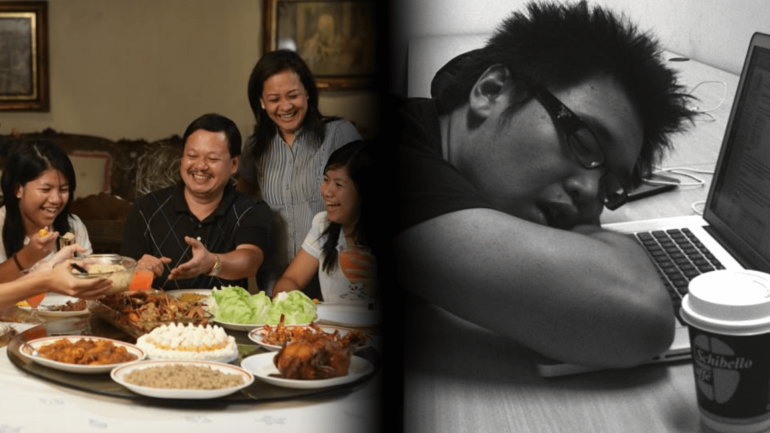
Modern life often asks us to divide ourselves neatly: work here, family there, faith somewhere in the margins. Yet lived experience tells a different story. Life does not come in compartments. It arrives tangled — work shaping family life, family shaping belief, belief shaping how one survives the demands of work.
For most people, the struggle is not about faith in the abstract. It is about coherence — how to live meaningfully when time is scarce, costs are rising, and responsibilities overlap without mercy.
It is at this intersection — of labour, love, and longing — that many quietly wrestle with the deepest questions of purpose.
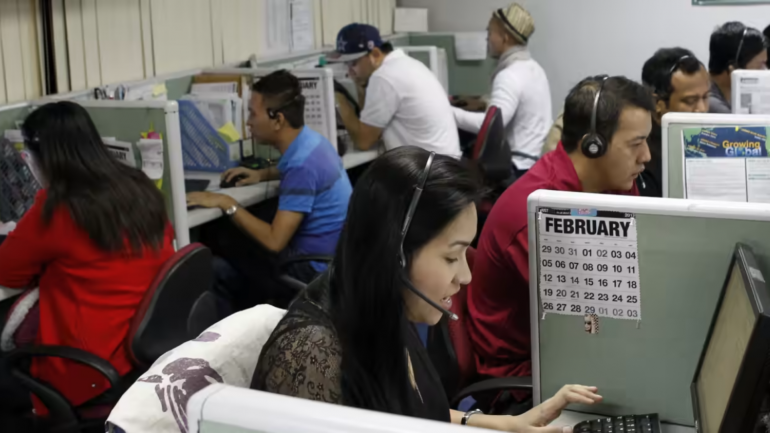
Work and Family: Where Values Are Lived Under Pressure
Across cultures and traditions, work has always been more than a way to earn a living. It is inextricably linked to dignity, responsibility, and identity. Pope Francis once put it simply: “Work gives dignity to the person.” Similar sentiments echo elsewhere — in Islam’s emphasis on honest labour (amal salih), in Hindu ideas of dharma, and in Confucian ethics that link work to moral character.
Yet modern economies often demand more than effort. They demand availability, speed, and sacrifice — frequently at the expense of family life. When work consumes time meant for relationships, rest, and reflection, it begins to hollow out the very dignity it claims to provide.
Family, meanwhile, remains the first place where values are learned — and tested. Whether understood as the “domestic church”, the “keluarga” (Malay for family), the extended household, or simply home, family life is where patience, forgiveness, and care are practised daily, often imperfectly.
Pope Francis observed with disarming honesty: “No family drops down from heaven perfectly formed.” The same insight is also found in other traditions: families grow through struggle, not idealisation. Love matures under pressure.
Most families today are not failing morally; they are stretched materially and emotionally. Long hours, caregiving across generations, and financial anxiety — these realities leave little space for idealised religious observance. Yet values persist quietly: in sacrifices made without recognition, in care offered despite exhaustion, in love that continues even when energy does not.
As the ancient Christian teacher John Chrysostom once said, “Make your home a church.” Read more broadly, the wisdom is universal: make your home a place where values are lived, not merely spoken.
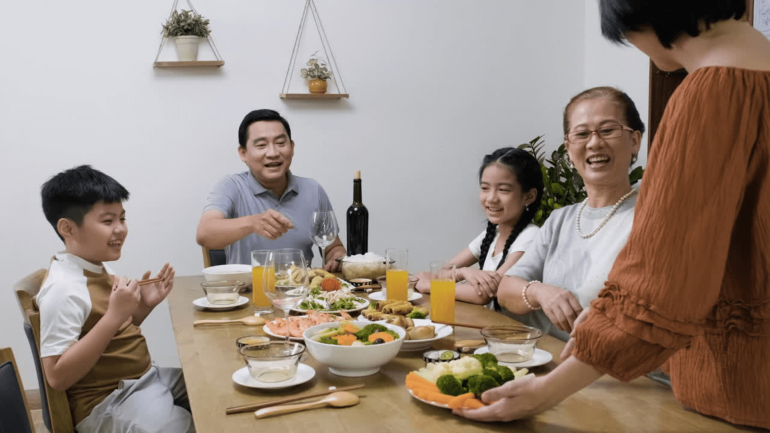
Spiritual Practice as Rhythm, Not Escape
Across faiths, there is a shared misunderstanding that spiritual practice is something added on — an extra discipline for those with time and energy to spare. In truth, authentic spirituality has always sought to shape the rhythm of life, not burden it.
Jewish philosopher Abraham Joshua Heschel famously described the Sabbath as “a sanctuary in time.” In a world that prizes productivity, rest becomes resistance. The same impulse is found in Islamic prayer rhythms, Buddhist mindfulness, and Hindu daily rituals — practices that interrupt haste and remind human beings that they are more than what they produce.
Spiritual wisdom consistently returns us to the ordinary. St Teresa of Ávila wrote, “God walks among the pots and pans.” A Zen saying offers a similar truth: “Before enlightenment, chop wood, carry water. After enlightenment, chop wood, carry water.” Meaning is not found by escaping daily life, but by inhabiting it more fully.
The tension at the intersection of work, family, and faith is real. Religious expectations sometimes fail to account for lived realities. Many carry quiet guilt — not because they have abandoned belief, but because they can no longer practise it in ideal forms.
Here, Pope Francis offers a principle that resonates beyond Christianity: “Realities are more important than ideas.” When belief ignores reality, it becomes abstraction. When it honours reality, it becomes humane.
What is needed today is not a perfect balance — an illusion few can achieve — but integration. Work done with integrity rather than obsession. Family loved with presence rather than perfection. Spiritual practice that nurtures meaning rather than imposes guilt.
In such a life, cooking becomes mindfulness. Honest labour becomes service. Forgiveness at home becomes moral philosophy in action.
An early Christian thinker, St Irenaeus, expressed a truth that transcends tradition: “The glory of God is the human person fully alive.” Read interfaithfully, it affirms a shared conviction — that the highest expression of belief is not withdrawal from life, but fuller participation in it.
In Malaysia’s plural society and in other Asian capital cities, where long working hours, rising costs, multigenerational families, and strong religious identities coexist, this integrated vision is not idealistic — it is necessary. Many live deeply ethical lives unseen by institutions, guided less by formal observance than by responsibility, care, and endurance.
Perhaps the question we need to ask is not how to fit spirituality into crowded lives, but how to recognise that meaning is already present at the intersection — in work that sustains, in families that endure, and in values quietly lived when no one is watching.
That, across all traditions, may be wisdom enough.