




On the night before He died, Jesus did something disarmingly simple. He took bread, gave thanks, broke it, and gave it. “This is my body, given for you… Do this in memory of me” (Luke 22:19).
With these words, the Church has long understood that Christ instituted the Eucharist. But just as profoundly, He entrusted it to human hands. In that entrustment lies the origin of the priesthood: not as status or elevation, but as participation in His self-giving.
Holy Thursday, then, is not mere commemoration. It is a return to something fragile and immense - a mystery placed into the care of men who remain, unmistakably, human.
Before the Altar, a Towel
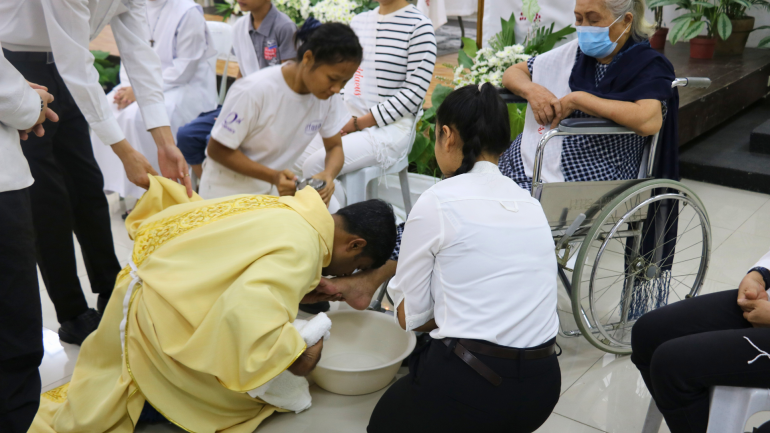
St John’s Gospel offers a strikingly different emphasis. Instead of the words of institution, we are given the image of a basin and a towel.
Jesus kneels. He washes feet.
“If I, your Lord and Teacher, have washed your feet, you also ought to wash one another’s feet” (John 13:14).
Before the priest is given the authority to consecrate, he is shown how to serve. The sequence matters.
The perennial temptation is to view the priesthood through the lens of power. Yet Christ reframes it entirely: the hands that will one day lift the Host must first learn to touch what is lowly, hidden, and unglamorous.
Anointed, Yet Unfinished
At ordination, the priest's hands are anointed with sacred chrism. It is a moment dense with meaning.
These hands will bless, absolve, and consecrate. Through them, the Church believes,
Christ continues His work - quietly, sacramentally, faithfully.
And yet, they remain human hands.
They tire. They tremble. They sometimes forget the wonder of what they hold.
This is why Holy Thursday matters not only as an origin but also as a correction. It draws the priest back to the night before the Cross - before the applause fades, before routine sets in, before the long silence that ministry can bring.
For there comes a time when the joy of ordination dims, when prayer feels dry, and when the weight of expectation presses heavily. The Church does not ignore this. Instead, she offers remembrance as renewal.
I first wrote this poem in 1993, and it has since been published in various Catholic media. I revisit it here as a Holy Thursday meditation.
O Priests of Christ, Look Upon Your Blessed Hands
When joy of ordination fades away,
And silent hours weary all the day,
When thou art lone, with none but self to see,
Turn then thine eyes upon thy hands - and be.
Behold those hands - not thine alone they be,
But sealed with grace and Heaven’s mystery.
For these are hands by Christ Himself once claimed,
Anointed, set apart, and ever named.
Hands that pour balm where wounded hearts lie low,
And lift the soul bowed down by guilt and woe.
Hands that absolve, in whispered mercy’s grace,
And make the sinner whole in Love’s embrace.
Hands that do bless, consecrate, and heal,
That lifts the Host and make the Presence real.
O worthy hands, at altar bright and fair,
That raise to Heaven both bread and earnest prayer.
When thou art spent, and weary from the field,
When prayers seem dry and little fruit they yield,
Take heart, brave priest—thy labour is not vain,
For things unseen shall bloom in heaven’s gain.
Though crown or cross the morrow may bestow,
Though praise or scorn be thine to know,
Time is the judge, and time shall make it clear:
Christ crowns not rank, but hearts that persevere.
For thou art wed to Bride the world disdains,
The Church, for whom the Lord was bound in chains.
Through thee, His living Word is still made known,
Through thee, the bread and wine are His alone.
So tarry on, O shepherd of the fold,
Thy chalice full, thy Gospel ever bold.
Though days be dark and comforts may be few,
Thou stand’st where saints are formed - and souls made new.
And when thy race is run, thy labour ceased,
Thou shalt behold the hands of Christ, the Priest—
Once known in silence, bread, and humble sign,
Now raised in glory, drawing thee divine.
Fragile Vessels, Living Mysteries
The poem gives voice to a truth the Church holds, sometimes more in practice than in words: that priesthood is both gift and burden.
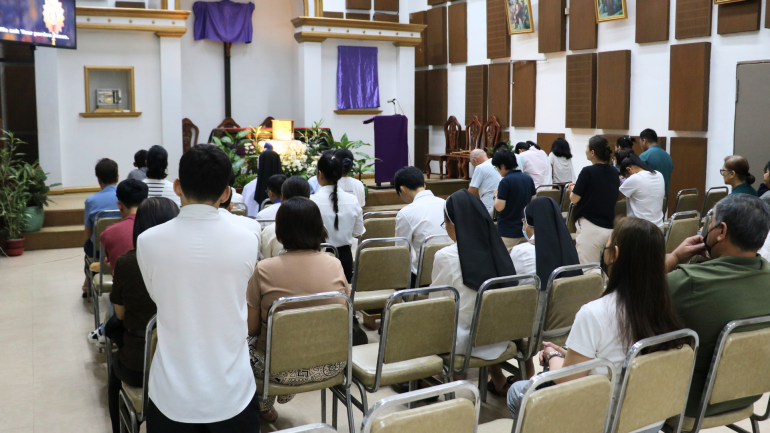
At every Eucharist, something extraordinary unfolds. Through the words of the priest, Christ becomes present—not as symbol, but as sacrament.
And yet, the priest does not cease to be human. He remains capable of fatigue, discouragement, and even failure.
This is not a flaw in the system. It is the mystery.
God chooses to work through what is fragile, so that grace, not personality, remains central. The priest is not the source, but the servant of the source. Not the light, but the lamp.
A Church That Must Also Remember
Holy Thursday belongs not only to priests, but to the entire Church.
It is a night to recover balance: to resist both the idealisation that ignores human limits and the cynicism that forgets the sacred.
For every priest who struggles, there are countless acts of quiet fidelity—hospital visits unnoticed, confessions heard in patience, Masses offered in near anonymity.
These do not trend. But they endure.
And so the Church is called, on this night, to pray with clarity and compassion—for those who carry the weight of this calling, often unseen.
Back to the Upper Room
In the end, everything returns to that room. A table. A towel. A command.
“Do this in memory of me.”
Not only the breaking of bread, but the breaking of self. Not just the lifting of the chalice, but the pouring out of a life.
Here, the priest remembers who he is.
And here, the Church remembers what has been entrusted to human hands - still anointed, still fragile, still carrying the quiet work of Christ in the world.
Let us know how you feel!
Comments


- Reply
Permalink