




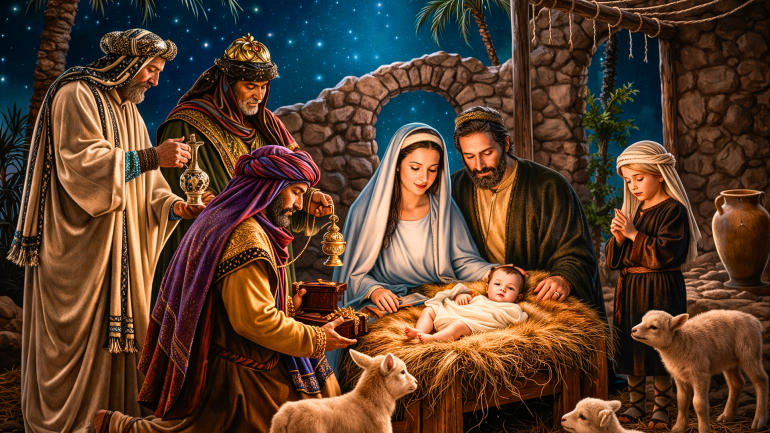
Christmas is more than a sacred birthday; it marks God's decisive entry into human history. When the Church celebrates Jesus' birth, it proclaims that hope has a human face in a world filled with uncertainty and fear.
During the Jubilee Year, a time for renewal and grace, Christmas powerfully reminds us that hope is alive and new beginnings are possible. This sacred context invites believers to reflect on their faith, as Christmas embodies the heart of the Jubilee message: where Christ is welcomed, hope is reborn, relationships are restored, and life is renewed.
The Night That Changed History
The birth of Jesus occurred in a humble setting amid political oppression and economic hardship. The Roman Empire held power, and many longed for divine intervention. God chose to enter this fragile world not in grandeur, but in simplicity.
That quiet night in Bethlehem changed history. A child in a manger showed a God who embraces vulnerability and love over force. Hope entered the world quietly yet powerfully, reminding us that God's most significant actions often begin in hiddenness. Jesus' birth signifies that no moment or place is insignificant to God.
Hope Arises
The setting of Jesus’ birth carries a profound message. There was no royal palace, no triumphant welcome, only a stable, animals, and a few humble witnesses. This choice reveals a God who stands with the poor, the excluded, and the unseen. Hope, as revealed in Christmas, is not dependent on comfort or security; it is born precisely where human strength ends.
In today’s world, many people live amid darkness, conflicts, displacement, poverty, loneliness, and environmental destruction. Christmas speaks directly to these realities. It proclaims that despair does not have the final word and that God enters even the most broken situations.
The manger becomes a sign that hope is resilient. It grows not by denying suffering, but by transforming it from within.
A Sacred Season of Hope
The Jubilee Year has deep roots in biblical tradition. It was a time when debts were cancelled, slaves were freed, land was restored, and justice was renewed. The Jubilee was God’s invitation to society to reset its values and rediscover compassion.
For the Church today, the Jubilee is a call to spiritual awakening. It invites believers to cross thresholds of mercy, to seek reconciliation, and to open their hearts anew to God’s grace. It challenges both individuals and communities to let go of burdens that enslave and to rediscover the joy of belonging to God.
Celebrating Christmas during a Jubilee Year enriches its meaning. The birth of Jesus becomes the ultimate Jubilee event, God offering humanity a fresh beginning, not earned by merit, but gifted through love.
The Fulfilment of the Jubilee Promise
Jesus does not merely announce the Jubilee; He embodies it. His mission, to bring good news to the poor, freedom to captives, and healing to the broken, is already present in His birth. The infant in the manger is the same Christ who will later restore dignity to the marginalized and forgiveness to sinners.
Christian hope, therefore, is not naïve optimism. It is rooted in the Incarnation, the reality that God has fully embraced human life, including its pain and fragility. The hope born at Christmas will pass through the cross before reaching resurrection. It is a hope tested by suffering and made stronger by love.
In the Jubilee light, Christmas reminds the Church that hope is both a gift to receive and a mission to live.
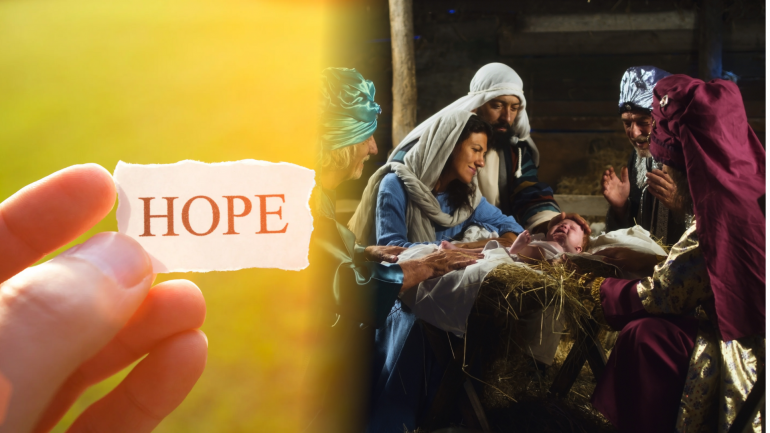
Hope for the Church Today
The Church in the modern world often finds herself vulnerable, facing declining faith practice, internal divisions, and external criticism. In some contexts, she experiences misunderstanding or hostility. Yet, Christmas invites the Church to return to Bethlehem and rediscover her true strength.
The Church is strongest when she is:
-
Simple in spirit, like the stable,
-
Close to the poor, like the shepherds,
-
Open to God’s surprises, like Mary, and
-
Faithful in uncertainty, like Joseph.
The Jubilee Year calls the Church not to seek security in power or prestige, but to renew her trust in the Gospel. When the Church mirrors Christ's humility, she becomes a beacon of hope in a restless world.
Hope for a Wounded World
Christmas hope cannot remain confined to rituals and celebrations. The Jubilee challenges believers to translate faith into action. A world fractured by violence, inequality, and indifference longs for credible witnesses of hope.
Celebrating Christmas authentically during the Jubilee means:
-
Choosing peace over revenge,
-
Practicing forgiveness in everyday life,
-
Sharing resources with the needy, and
-
Caring responsibly for creation.
Hope becomes real when it is lived. Each small act of kindness, justice, and compassion continues the Christmas story.
Christ’s Birth – A Ray of Hope
For the Christian community in India, faith is often lived out amid tension and uncertainty: social pressures, cultural misunderstandings, and occasional hostility present significant challenges. Nevertheless, amid these difficulties, the birth of Christ stands as a steadfast beacon of hope. This hope is not founded on privilege or protection, but rather on a faith shaped by history. From its earliest days, Christianity in India has flourished through acts of service and sacrifice. Schools, hospitals, and social initiatives continue to showcase the living impact of the Gospel.
Hope glimmers when Christians choose courage over fear, love over resentment, and service over self-interest. It is visible in young people who embody their faith with integrity, in families that pray together, and in communities that serve selflessly.
The Christmas message reassures believers that light ultimately triumphs over darkness. The darker the night, the more brightly the light shines. Christ’s birth reminds the Church in India, and around the world, that hope is not only attainable; it is already present, alive in faith, and poised to be shared.




- Reply
Permalink