



The Hands that Hold the Messiah: A Christmas Story from Indonesia to the Vatican

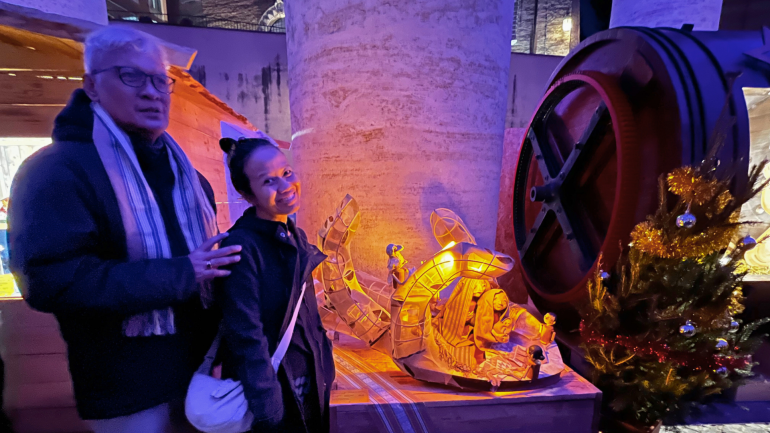
Amidst the marble grandeur of Bernini’s colonnade and the ancient cobblestones of St. Peter’s Square, a silent dialogue is taking place. In Rome, where history is usually measured in centuries and stone, a new voice has arrived from the tropical highlands of Indonesia. It speaks not with gold or jewels, but through the warmth of handwoven tenun cloth and the honest grain of wood.
This is the "100 Presepi in Vaticano," a prestigious exhibition commomerating the Jubilee Year 2025. Among the hundred depictions of Nativity from across the globe, the Indonesian entry stands distinct. It marks 75 years of diplomatic relations between Indonesia and the Holy See, yet its roots go far deeper than politics.
It begins with a simple, radical question posed by renowned Indonesian theatre artist and puppeteer, Maria "Ria" Trisulistiani: If the Messiah were to be born today, where would He lay His head?
A Manger in the Mountains
Six months ago, when the invitation arrived for Ria, founder of the Papermoon Puppet Theatre, she didn't immediately sketch a stable. Instead, she looked at the world around her.
"Two thousand years ago, Jesus was born in a place no one expected, among shepherds, simple people on the margins," Ria reflected. "Who are the shepherds of today?"
Her mind traveled to Molo, n Indigenous people, in the interior of Timor, East Nusa Tenggara. She thought of the "Mama-Mama" (mothers) of Molo, whose stories she had learned from activist Diki Senda.
These are women who sit before their looms not just to weave cloth, but to weave a defense line for their environment, protecting their mountains and forests from destruction.
"If Jesus were born today," Ria realized, "He would feel safest here. He would be cradled by these mothers who are the guardians of God’s creation."
The Theology of Touch
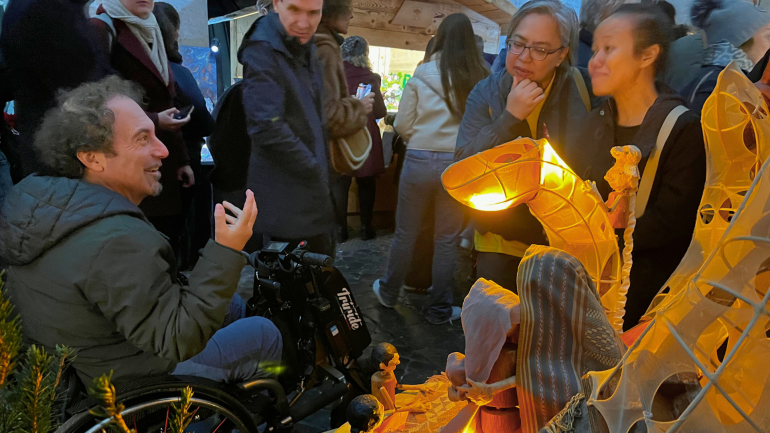
The installation now standing in the Vatican is dominated by a pair of massive hands encompassing the Holy Family. For Ria, this imagery carries a dual theology.
Divine Providence: "First, these are the Hands of God," she explained. "Our lives exist entirely within the providence of the Almighty."
Human Stewardship: "But," she added, pointing to the structure, "they also symbolize Human Action. We cannot simply wait for a new Messiah to fix the climate crisis. The fate of nature is in our hands."
Inside this embrace, the figures are wrapped in traditional Molo textiles. The woven stars on the fabric represent ancient agricultural technology, celestial markers used by ancestors to determine planting and harvest seasons.
Jesuit priest and curator Father Budi Subanar sees this as a profound spiritual bridge. "Nature does not need humans, but humans desperately need nature," he said. "In this Nativity, nature is not a backdrop; it is the very thing supporting the Holy Family."
When Art Becomes "Home"
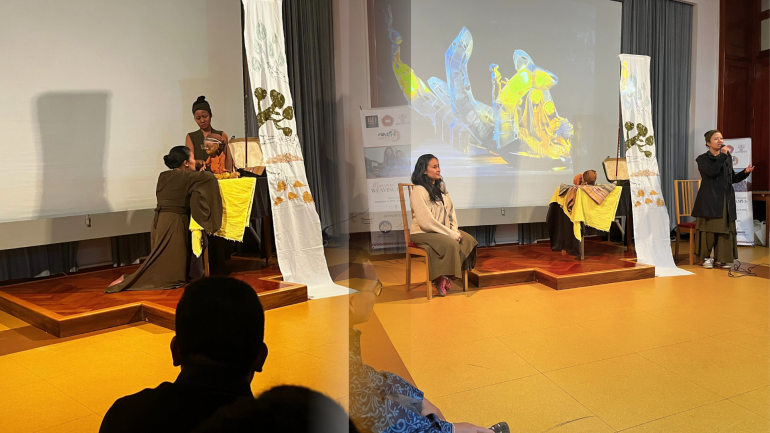
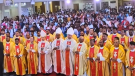
While the exhibition is a triumph of cultural diplomacy, the true climax of this journey happened during a quiet Mass with IRRIKA, the association of Indonesian religious men and women serving in Rome.
Ria presented the narrative of her work to Indonesian priests and nuns. The reaction was visceral.
"I felt completely undone," Ria confessed. "I saw tears in their eyes. One sister told me that the story of the Molo mothers reminded her of her own silent struggles in the remote corners of Kupang."
In that moment, the wooden figures and woven cloths ceased to be objects; they became a mirror for every missionary feeling small and unseen. "I traveled far from home," Ria said, "only to find 'home' again right here."
A Message for the World
Today, visitors walking through the Vatican exhibition will stop before the Indonesian Presepe. They will see the Baby Jesus, not lying on hay, but held securely by the earth’s wisdom and human courage.
It is a silent reminder from the world's largest archipelago: Christmas is not just a memory of the past. It is an active invitation to weave hope and to realize that the hands of God are often working through our own.
Let us know how you feel!
Comments


- Reply
Permalink