A Bishop for the whole Church: Cardinal Tagle on Mission, Authority, and Communion

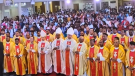
The episcopal ordination of Bishop Samuel Naceno Agcaracar on January 17, 2026 was more than a local celebration for the Diocese of San Jose in Nueva Ecija, northern Philippines. It was a moment that involved the life and mission of the universal Church, bringing together clergy, religious, and lay faithful in prayer and thanksgiving.
Presiding over the Eucharistic celebration, Cardinal Luis Antonio Tagle reminded the assembly that the episcopal office must be understood within the wider mission of the Church. “Today’s celebration is not only a local event,” he said, “it is one that involves the whole Church, the universal Church.”
Throughout his homily, Cardinal Tagle reflected on the nature of episcopal ministry, drawing from Scripture, Church teaching, and pastoral experience to outline three essential dimensions of being a bishop.
Bishop is Sent to Continue the Mission of the Apostles
Cardinal Tagle began by situating the episcopal office within the Gospel account of Jesus sending the apostles to make disciples of all nations. Bishops, he explained, do not inherit prestige or privilege, but a mission that flows directly from Christ’s command.
“The episcopal office is not just an honor,” he said. “It is not a reward for good performance, nor a promotion to a more prestigious rank. It is a mission.”
He emphasized that apostolic succession should be understood as succession to mission rather than succession to status. Bishops stand in continuity with the apostles precisely because they are sent, just as the apostles were sent by Christ.
“Apostles are people who are sent,” Cardinal Tagle explained, adding that every bishop must live the tension between remaining with Jesus and being sent by Him. “You remain by going, and you go still remaining with Jesus.”
Authority Comes from Christ and is Lived in Weakness
Turning to the question of authority, Cardinal Tagle stressed that all power belongs to Jesus Christ alone. Bishops and apostles act not on their own authority, but in service to Christ’s authority, which cannot be replaced or competed with.
“We are not called to supplant the authority of Jesus,” he said. “We are not called to compete with it, but to make the authority of Jesus shine and be more effective.”
Reflecting on the weakness of the first disciples, Cardinal Tagle noted that it was precisely through their fragility that Christ’s power transformed them into missionaries. He reminded the faithful that weakness does not diminish episcopal ministry, but can deepen it.
“Embracing your weakness will not diminish your episcopal mission and authority,” he told Bishop Agcaracar. “In fact, it will enhance it, if you allow Jesus’ power to work its wonders.”
He added that a bishop who cannot empathize with the weakness of others risks misusing authority. “The bishop who cannot empathize with the weakness of others usurps the authority of Jesus,” he warned.
Sign of Communion for All Nations
In the final part of his homily, Cardinal Tagle highlighted the universal scope of the bishop’s mission. Bishops, he said, are not sent to a single culture, nation, or social group, but to all peoples, reflecting the inclusive reach of the Gospel.
“They should go and make disciples of all the nations,” he said, stressing that the Gospel must shine for everyone, especially in a world marked by division and fragmentation.
He described the bishop as a visible sign of communion, one who links the local Church to the universal Church and helps build unity among diverse peoples. This communion, he explained, mirrors the life of the Trinity itself.
“The Church of all nations is a people made one through the unity of the Father, the Son, and the Holy Spirit,” Cardinal Tagle said, pointing to the urgent need for reconciliation in both society and the Church.
Addressing Bishop Agcaracar personally, Cardinal Tagle acknowledged that moments of doubt, waiting, and uncertainty will come in episcopal ministry. In those moments, he encouraged the new bishop to return to prayer and listening.
“When those moments come,” he said, “calm down, pray, listen, and then go.”
The ordination of Bishop Agcaracar thus marked the beginning of a pastoral mission rooted in humility, communion, and trust in Christ’s enduring presence, a mission sustained by the promise of the Risen Lord: “I will be with you until the end of the age.”