




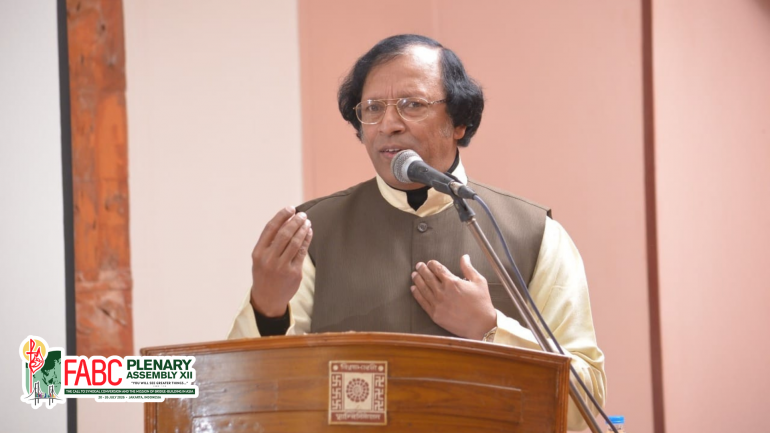
As the Federation of Asian Bishops' Conferences (FABC) prepares for its Plenary Assembly in Jakarta under the theme "Synodal conversion and the mission to be bridges and bridge-builders in Asia," the life and ministry of Indian priest Fr. M. D. Thomas offer a compelling example of what that vision looks like in practice.
For more than four decades, Fr. Thomas has dedicated himself to building bridges among people of different religions through dialogue, education, and personal encounter. In a region as religiously diverse as Asia, where communities of different faiths live side by side, his ministry reflects the conviction that lasting peace is built not through division but through mutual understanding, respect, and friendship.
Fr. Thomas has many firsts to his credit. He was among the first members of the Missionaries of St. Thomas (MST), the first Christian priest to earn a doctorate in Hindi from Banaras Hindu University in Varanasi, one of India's oldest and most prestigious public universities, and the first National Secretary of the Catholic Bishops' Conference of India (CBCI) Commission for Religious Harmony, a position he held for nine years.
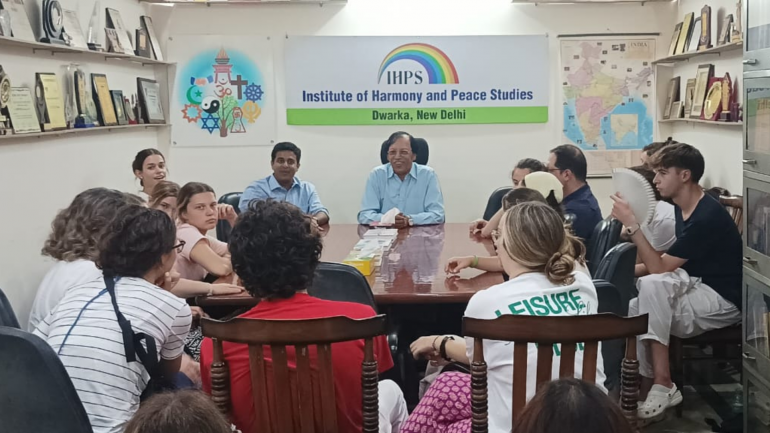
Since 2014, the 73-year-old priest has served as founder-director of the Institute of Harmony and Peace Studies (IHPS) in New Delhi.
Over the decades, he has devoted his life to fostering dialogue among followers of Hinduism, Islam, Christianity, Sikhism, Buddhism, Jainism, the Baha'i Faith, Judaism, the Ahmadiyya community, and other religious traditions.
"In a world where hatred and killings are taking place in the name of religion, dialogue among different faiths is the need of the hour," Fr. Thomas said.
"The mission of harmony and peace that I have pursued for decades keeps me happy and united with the divine source of this mission. Pope Francis' encyclical Fratelli Tutti has strongly emphasized this vision," he added.
His work closely mirrors the vision of Pope Francis, whose commitment to interreligious dialogue was exemplified by the signing of the Document on Human Fraternity for World Peace and Living Together with Sheikh Ahmed el-Tayeb, Grand Imam of Al-Azhar, in Abu Dhabi in 2019.
Reflecting on the roots of his mission, Fr. Thomas credits his family upbringing.
"I wanted to work for the larger good of the Christian community. I owe this to my upbringing at home," he said.
After completing school, he entered the seminary in 1969. During his years of formation, his commitment to interfaith harmony gradually took shape.
Later, while serving as a priest in central India, he encountered people from different religions and ideologies. Realizing that his limited knowledge of Hindi restricted his ministry, he chose to specialize in Hindi literature.
"Realizing the demands of the mission field, I decided to specialize in Hindi literature, setting aside several other possibilities," he recalled.
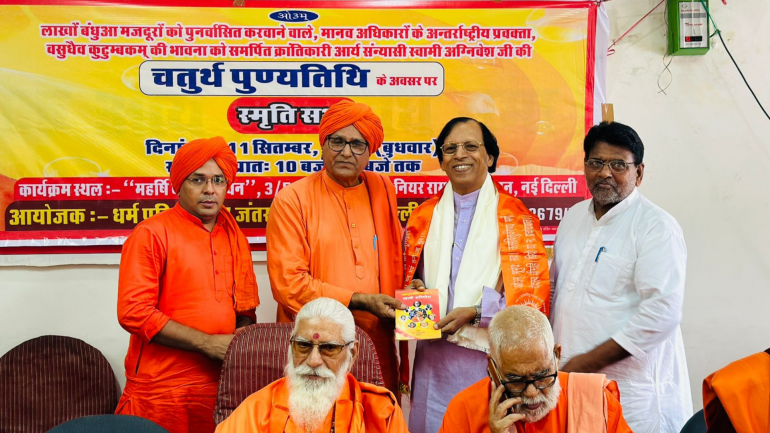
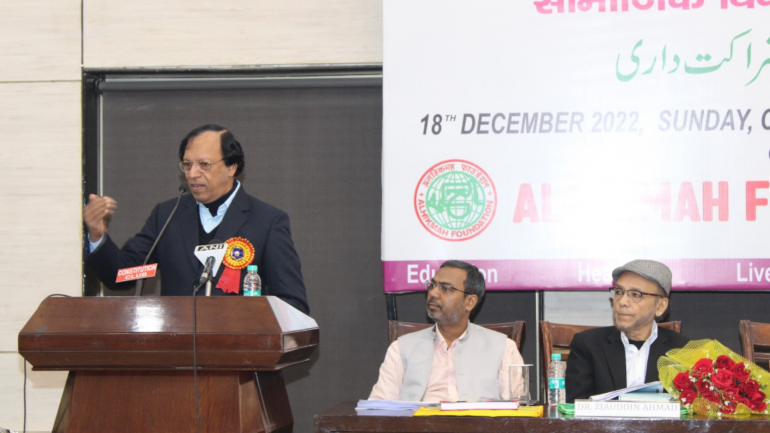
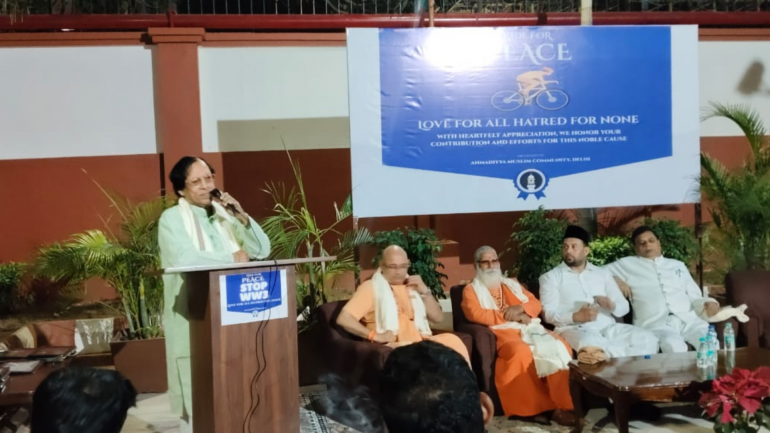
His study of Hindi enabled him to engage more deeply with local communities. During this period, he organized multi-faith devotional music programs and pioneered a rural literacy initiative in which school students taught children in villages to read and write.
He later earned a doctorate from Banaras Hindu University, becoming the first Christian priest to receive a PhD in Hindi from the institution.
"My research focused on 'Kabir and Christian Philosophy,'" he said.
His research examined the teachings of the 15th-century poet-saint Kabir alongside Christian philosophy, highlighting shared spiritual values across religious traditions.
After completing his doctorate in 1994, Fr. Thomas returned to the Institute of Religion and Culture as director, where he promoted interreligious dialogue, intercultural education, multilingual learning, and multidisciplinary studies.
He later studied Urdu at Aligarh Muslim University in the northern Indian state of Uttar Pradesh,enabling him to engage more effectively with Muslim communities.
His appointment as National Secretary of the CBCI Commission for Religious Harmony provided a wider platform to promote dialogue and peace across India's religiously diverse society.
His doctoral thesis was later published in Hindi as Kabeer aur Eesaayee Chintan (Kabir and Christian Thought), which received the Sahityik Kriti Samman from the Hindi Academy.
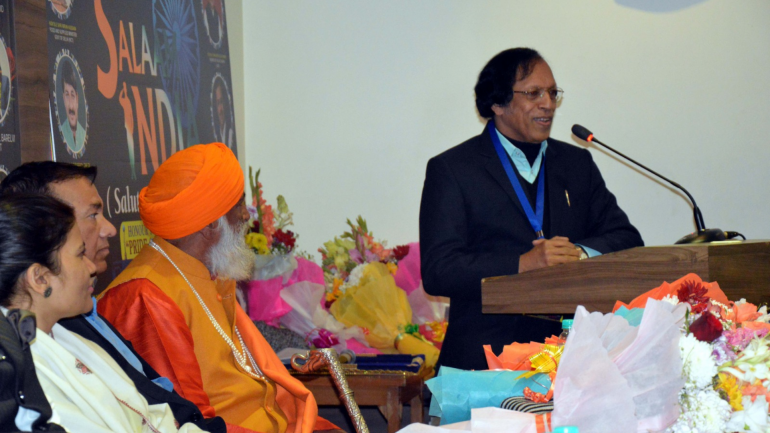
Beyond his pastoral ministry, Fr. Thomas has lectured at universities and colleges in India and abroad, addressed academic conferences, interfaith gatherings, and civil society forums, supervised doctoral research, and served as a visiting professor at several institutions.
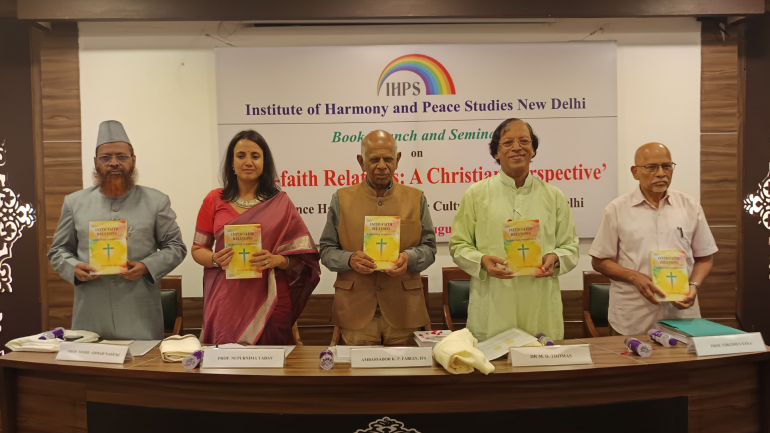
He has authored 12 books—seven in English and five in Hindi—on interfaith dialogue, religious harmony, and peacebuilding. His articles have appeared in numerous publications, and he has also released two music albums.
As the FABC gathers to reflect on how the Church in Asia can become a more effective bridge-builder, the ministry of Fr. Thomas stands as a living witness to that calling. Through scholarship, dialogue, and decades of patient engagement with people of different faiths, he has shown that bridges are built one relationship at a time, creating spaces where understanding can overcome suspicion and peace can flourish.


- Reply
Permalink