



For Monica Wago, a mother of five, the sound of rain used to be the sound of terror. In the low-lying plains of District Badin, located in the southern Sindh province of Pakistan, a heavy cloud didn't just mean a storm; it meant the potential end of everything she owned. For decades, her life was defined by the precarious nature of "katcha" (mud) housing and the uncertainty of seasonal labor. Like thousands of others across the country, Monica’s family spent years trapped in a cycle of displacement, huddled in fragile wooden and mud huts that offered little more than a suggestion of shelter against the increasingly violent whims of climate change.
Today, however, that fear has been replaced by the solid feel of brick and the steady hum of electricity. Following a two-year journey of restoration led by the Catholic Diocese of Hyderabad, a new model village has risen from the silt of the 2022 floods.
Completed in December 2025, the project titled Recovery and Rehabilitation of Flood 2022 Affected Communities Vulnerable to Climate Change has officially handed over permanent, disaster-resilient homes to 50 Christian families who were once among the most vulnerable in Pakistan's rural heartland.
As one of Pakistan’s most climate-vulnerable areas, District Badin bore the brunt of the 2022 monsoon season, which brought unprecedented destruction.
During that period, Sindh province endured nearly 426% above-normal rainfall, a catastrophe that inundated over 1.7 million hectares of agricultural land and destroyed more than two million homes across Pakistan. In Badin, stagnant water remained for months, wiping out the rice and cotton crops and killing tens of thousands of livestock.
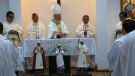
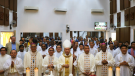
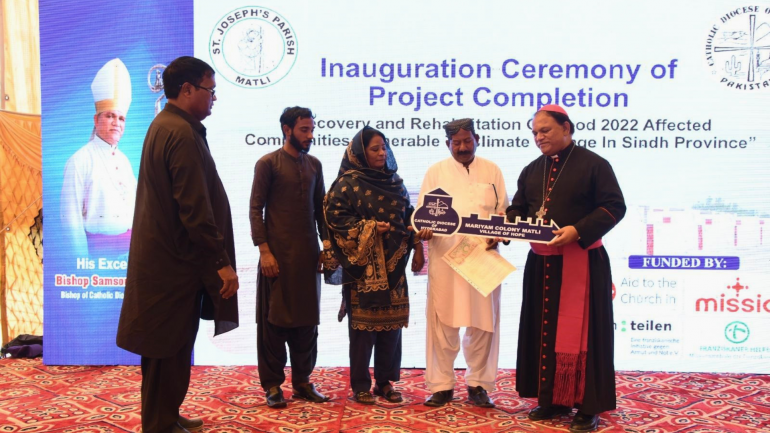
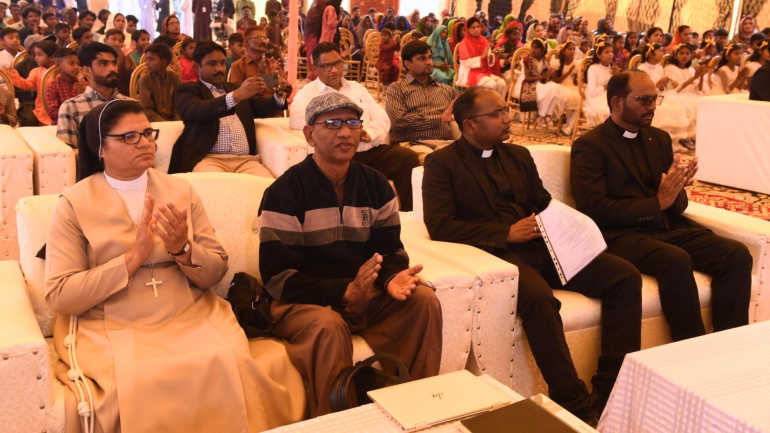
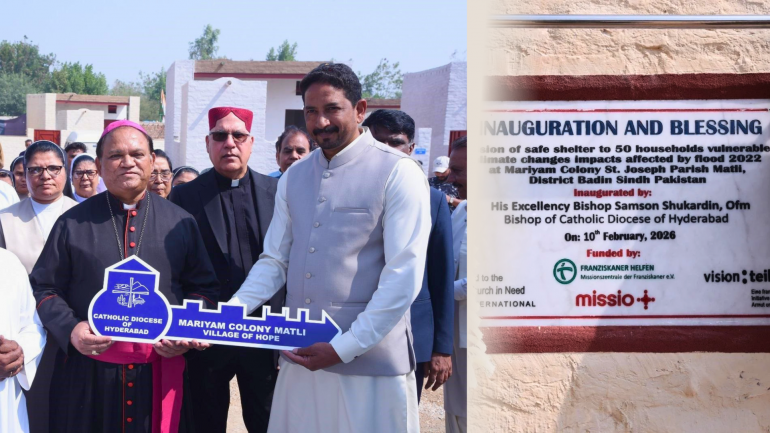
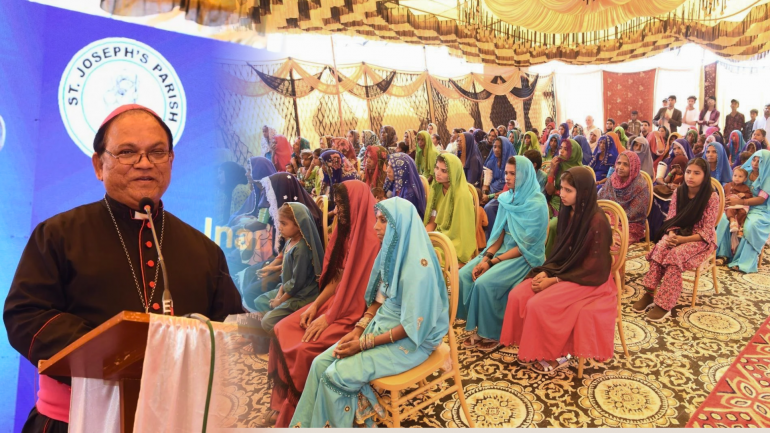
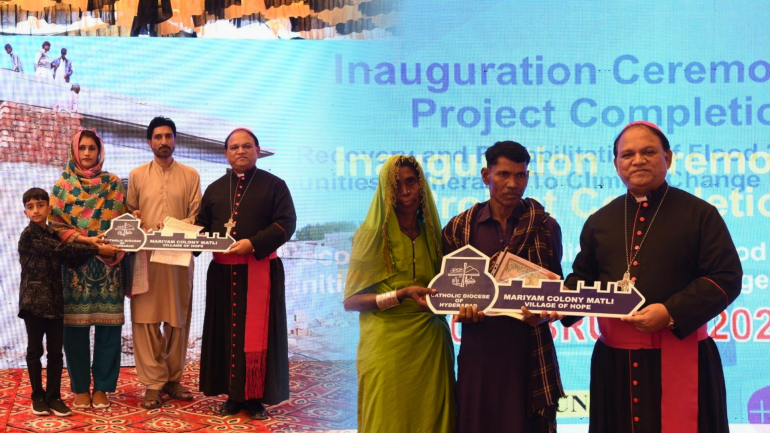
The handover of the completed house on Feb 16 was a meaningful gathering where an encouraging number of clergy, religious sisters, and laity were present to witness the event.
Bishop Samson Shukardin, who spearheaded the initiative, emphasized that the mission was driven by a deep sense of pastoral responsibility toward the marginalized.
"Our people have endured unimaginable hardships, living in fear of the next rain and struggling to protect their children in fragile mud huts," Bishop Samson remarked during the ceremony. "This village is not just a construction site; it is a sanctuary where families can finally sleep in peace. We are not merely building walls; we are restoring the shattered dignity of our brothers and sisters who were left behind by the tides of climate change."
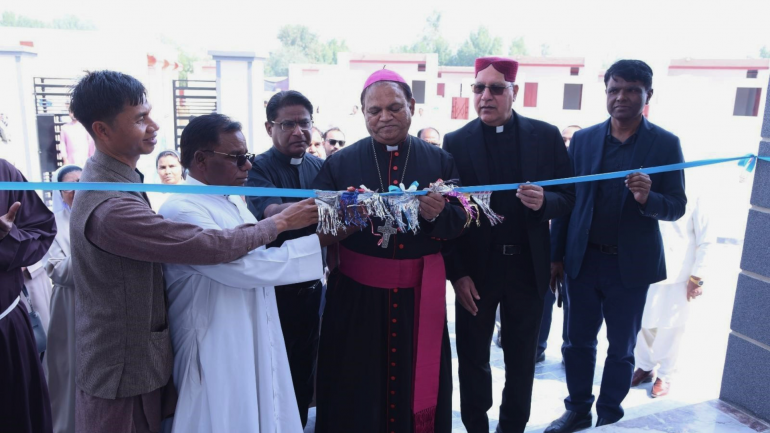
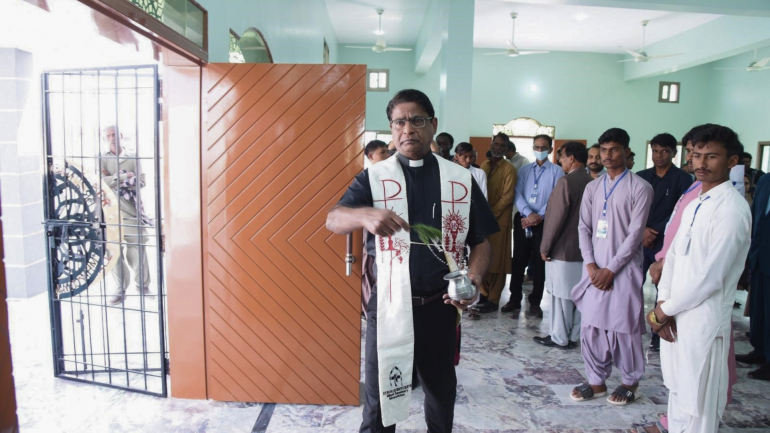
The infrastructure reflects this commitment to long-term resilience. Unlike the mud huts of the past, these 50 homes, each accommodating 6 to 8 family members, are engineered to withstand future environmental shocks. The village features four new hand pumps for clean water, integrated sanitation, and a multipurpose hall designed for community gatherings and vocational training.
"Our vision extends beyond the physical structures," the bishop added. "By creating space for training, we are specifically focusing on empowering the women of this village. We want the mothers to have skills and the children to have a stable environment where they can grow and study without the fear of their roof collapsing. We are building lives and securing the future of our youth."
The Diocese has also incorporated livelihood support into the village’s design. Seven families have been granted small shops within the settlement, sparking a micro-economy that allows them to move away from the uncertainty of seasonal farm labor.
"True rehabilitation means giving a person the tools to feed their family with pride," Bishop Samson noted. "By providing shops and stable housing near markets, we are helping these families transition from being victims of a natural disaster to being self-reliant contributors to society."
While the project operated without local government funding, its success is a testament to international ecclesiastical cooperation. Supported by global partners such as Missio, Vision Teilen, Missionszentrale der Franziskaner, and Aid to the Church in Need (ACN), the Diocese utilized its own land at St. Joseph Parish to ensure a smooth and professional implementation.
The community is grateful for the second, made possible by the Church's dedicated service.
"Today, I feel a weight lifted off my shoulders," says Monica Wago, standing in the doorway of her new home. "This is a new beginning, and a sign that we have not been forgotten."