Seventy-Five Years On, Holy Cross Oriental Institute Reflects Church’s Changing Mission in Bangladesh

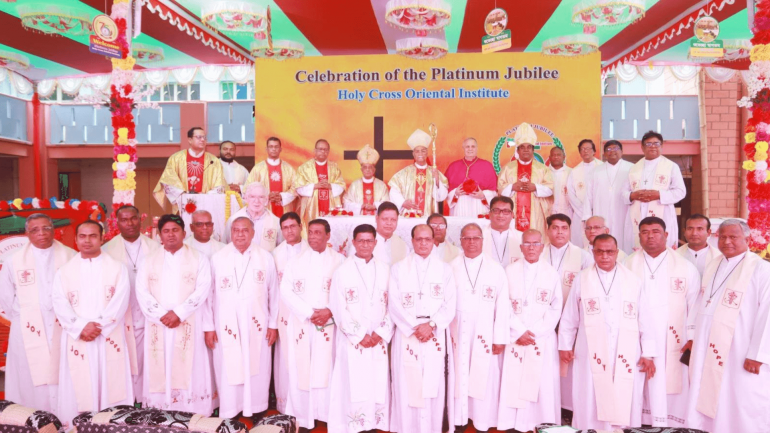
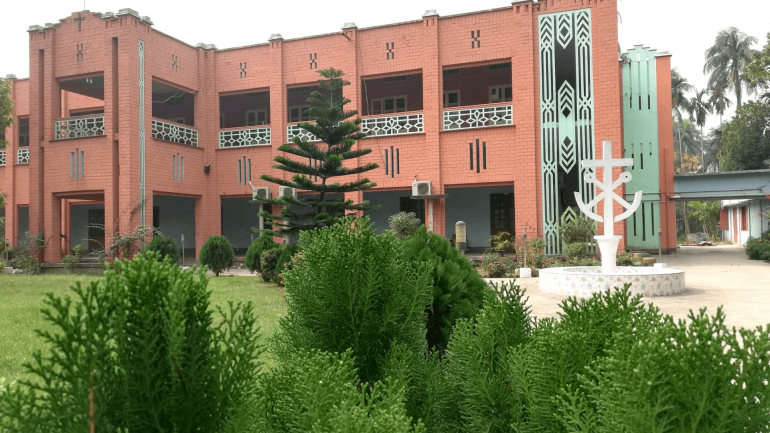
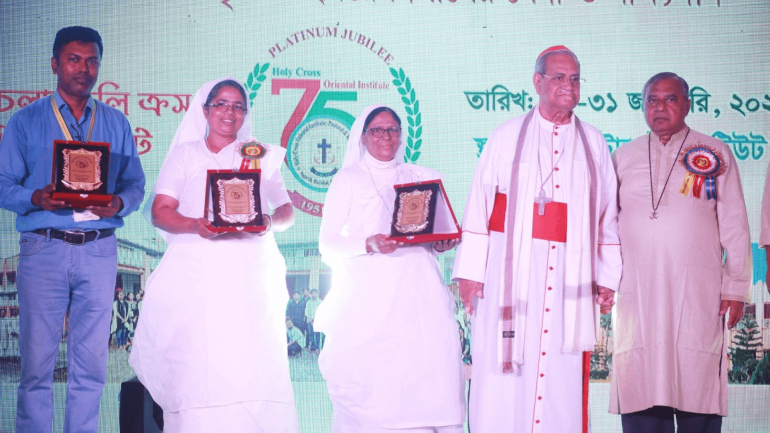
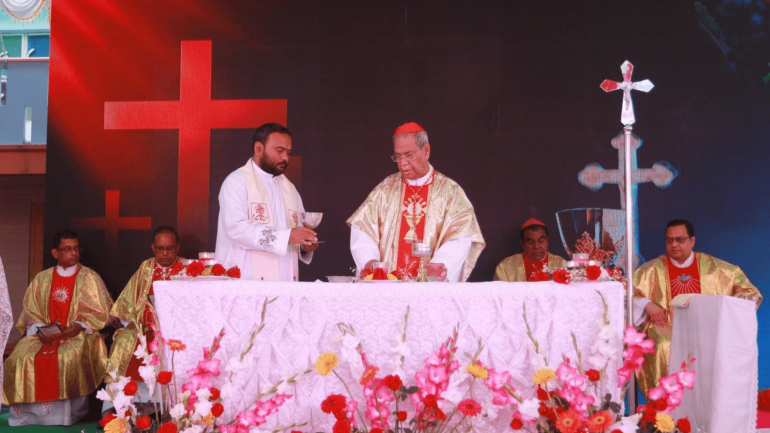
On January 31, the Holy Cross Oriental Institute (HCOI) in Barishal marked 75 years of service to the Church in southern Bangladesh, evolving from a humble language school into a vibrant pastoral and spiritual formation center.
Founded in 1960 by missionaries of the Congregation of Holy Cross, the institute grew out of a vision first discussed in 1954. Missionaries working in then East Bengal recognized the need for a center dedicated to cultural formation and dialogue.
Fr. Roger Maroi, CSC, and Fr. Guy Breault, CSC, emphasized the importance of preparing missionaries through serious engagement with the country’s language, history, and culture. Under their leadership, the Oriental Institute was formally inaugurated on October 13, 1960.
At the opening ceremony, Fr. L. M. Lecavlier, CSC, then Superior of the Society, declared: “Together we have written a history of the Bengal Mission today. Our aspiration is to become more efficient missionaries, to fulfill the expectations that the Pope has expressed to the Society of the Holy Cross.”
A vision of dialogue and formation
The institute began with three main objectives: to inform missionaries about the religious, cultural, and social realities of East Bengal; to encourage research and foster mutual understanding; and to provide a meeting place where individuals could exchange views on important religious and social issues.
From its earliest days, HCOI was more than a language school. It became a center where missionaries deepened their understanding of local traditions and where research and reflection were encouraged for the spiritual growth of the local Church.
Today, the institute serves as a pastoral formation house, a spiritual renewal center, and an ecclesial service hub for clergy, religious, and lay faithful in the Chattogram region.
Holy Cross Brother Ripon James Gomes, Provincial Superior of St. Joseph Province, Bangladesh, said the jubilee was “a moment of reflection and renewed purpose.” He noted that the founders believed meaningful dialogue between cultures enriches humanity and that the study of languages, histories, and traditions is essential for fostering understanding and peace.
A milestone in inculturation
The institute also played a significant role in developing Bangla Catholic liturgy.
Holy Cross priest Fr. Edmond Cruze recalled: “There was a time when this institute played a very important role in composing liturgical hymns. The first Bangla liturgical hymn book, Geetabali, was published from the Oriental. Canadian priests, religious, and some local lay people were involved in this project.”
The publication of Geetabali marked a milestone in the inculturation of the Catholic faith in Bangladesh. Extensive research was carried out at the institute, which once housed a rich and respected library.
Fr. Cruze described the institute’s long journey as part of God’s providential plan guiding the local Church toward maturity.
A center for pastoral planning and spiritual renewal
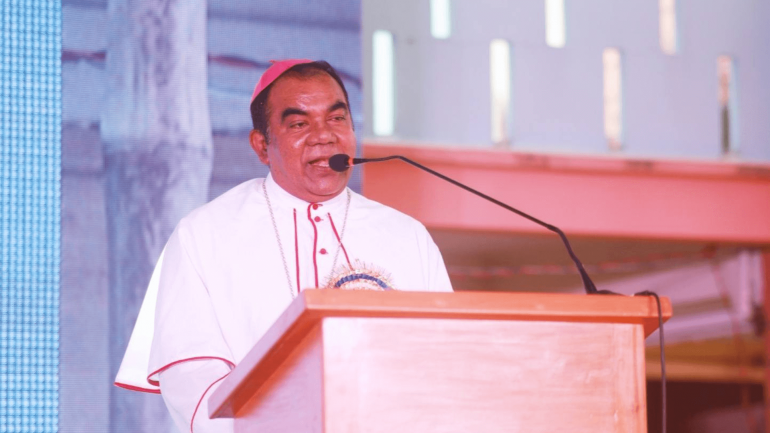
Bishop Emmanuel K. Rozario of Barishal praised the institution’s contribution to the Church’s mission.
“The Pastoral Service Center and Meditation Center have made an important contribution as a suitable center for Christian formation training, meditation for spiritual development, and pastoral work planning in an effective manner,” he said.
Over the decades, the center has hosted major pastoral workshops on issues concerning the Catholic Church in Bangladesh. It continues to offer training programs related to diocesan initiatives, national projects, and NGO activities.
According to the bishop, the institute has become “a suitable and ideal center for the propagation of Christianity and the message of God.” He added that the light of Christian faith continues to spread through its activities.
A place where prayer meets life
Fr. Rabi Gomes, CSC, a former director of the institute, described HCOI as “a traditional institution for building people,” situated amid nature and quietly witnessing history.
“Where the sound of prayer mixes with the wind, and love, compassion, and respect among people are renewed every day,” he said.
Reflecting on his experience, he added: “Many people come here. Sometimes it seems that human stories are the biggest book in the world. The more I listen, the more amazed I am. Through the sincerity developed with participants, I have come to know myself anew. Oriental is a great blessing from God in my life.”
As Bangladesh’s Catholic Church increasingly sends missionaries abroad, the story of HCOI mirrors the Church’s own journey — from receiving missionaries to forming them, from learning the language to speaking with a mature and confident voice of faith.