
If you had wandered into a Roman church in the mid-sixteenth century and seen a priest wearing his coat inside out, or noticed a distinguished churchman who had shaved only half his beard before receiving important visitors, you might have assumed something had gone terribly wrong. You would have been in the presence of Philip Neri, and something had gone magnificently right.
Neri is known, when he is known at all, as the cheerful one. The jolly saint. The one who laughed. But this reputation, pleasant as it is, tends to flatten something far more interesting and far more subversive. Philip Neri did not deploy humour as a kind of spiritual seasoning, a way of making the medicine go down. He used it as a precision instrument, a deliberate, theologically grounded practice for dismantling the ego, breaking open the defended heart, and creating the conditions in which genuine encounter with God became possible. In this, he was centuries ahead of what psychology would eventually come to understand about laughter, trust, and human transformation.
The Mystic Behind the Jokes
What most accounts of Neri leave out is the intensity of his interior life, and the strange, almost alarming physical effects it produced. In 1544, while praying in the catacombs of San Sebastiano on the eve of Pentecost, Neri experienced what he described as a globe of fire entering his mouth and penetrating his heart. He felt an overwhelming rush of love and collapsed. From that night forward, he experienced violent palpitations during prayer, so powerful that they could reportedly be heard by those nearby, and so physically forceful that two of his ribs were eventually cracked and displaced.
When his body was examined after he died in 1595, physicians found that his heart was significantly enlarged and that the displaced ribs had formed a kind of protective arch around it. Whatever one makes of this theologically, the psychological reality it points to is striking: here was a man whose inner life was so intense, so tidal, that it threatened to overwhelm him in public. His famous eccentricities, the jokes, the songs, the deliberate absurdities, were, in part, a strategy for managing mystical experience in the middle of ordinary life. He made people laugh to buy himself a moment to breathe.
Laughter as Pastoral Technology
Neri arrived in Rome at eighteen, a layman, and spent eleven years working among the poor and the pilgrims of the city before he was persuaded to become a priest at the relatively late age of thirty-six. During those years, he developed an approach to accompaniment that was, by the standards of Counter-Reformation Rome, almost scandalous in its informality. He met people where they were, in the streets, in the workshops, in the early-morning gatherings he organised that blended scripture, music, and open discussion into something entirely new.
What he understood intuitively, modern therapeutic psychology has confirmed empirically: laughter is one of the fastest routes through a person's psychological defences. Humour activates the parasympathetic nervous system, lowers cortisol, and creates what researchers call a safe container, a relational environment in which people feel sufficiently unthreatened to be honest. Neri used this with the precision of a gifted therapist. He would wrong-foot the proud with a joke, disarm the scrupulous with a story, and then, in the gap that opened, speak directly to the soul. His confession was famously crowded. People waited hours. He had a reputation, unnerving to some, for knowing what his penitents had done before they spoke.
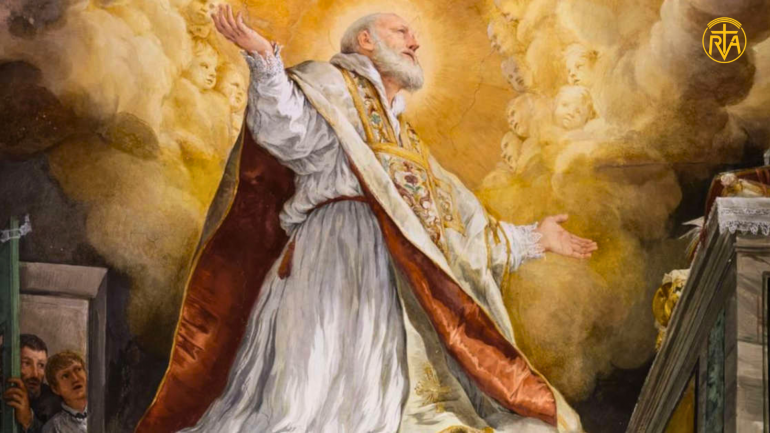
What Rome Still Needs
He founded the Oratory, regular gatherings of laypeople and clergy for prayer, sacred music, conversation, and community, and in doing so created something the twenty-first century is desperately hungry for: a third space, neither church in its formal sense nor private life, where people could belong without performing, question without being condemned, and encounter the sacred without leaving their humanity at the door.
We are living through a loneliness crisis of historic proportions. Mental health services are overwhelmed. Institutional religion is haemorrhaging trust. Into this moment, Philip Neri's model speaks with quiet urgency, not the model of the solitary mystic or the crusading reformer, but the model of the man who created a room where people wanted to come, and kept the door open.
He laughed, and the room filled. There is a lesson there that no algorithm has yet improved upon.