While the Church still echoes with Christmas carols and the image of the Christ Child rests gently in the manger, the Feast of the Holy Innocents confronts us with the harsh reality. A day when sorrow quietly enters the heart of Christmas. On December 28, the Church remembers a tragedy that jars the sweetness of the season, the Feast of the Holy Innocents.
The Biblical Foundation
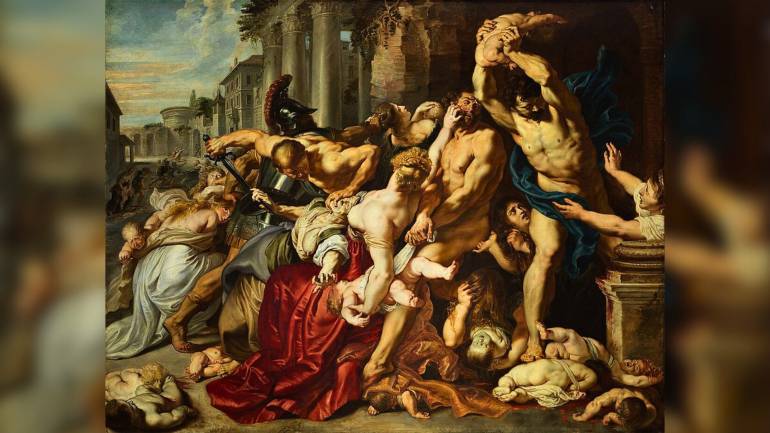
The Feast of the Holy Innocents is rooted in the Gospel according to Matthew (2:16–18). After the visit of the Magi, King Herod, threatened by the news of a “newborn king of the Jews,” orders the massacre of all male children in Bethlehem and its surrounding region who were two years old and under. Matthew writes that Herod was “infuriated” when he realised he had been deceived by the Magi and responded with ruthless brutality.
Matthew interprets this tragedy through the lens of prophecy, quoting Jeremiah 31:15: “A voice was heard in Ramah, wailing and loud lamentation, Rachel weeping for her children; she refused to be consoled, because they are no more.” Rachel, the symbolic mother of Israel, becomes the image of all grieving mothers whose children are taken unjustly.
Though the Gospel does not specify the number of children killed, scholars suggest that Bethlehem, being a small village, may have seen the deaths of a few dozen infants at most. Yet the number is less important than the meaning: these children died not for anything they did, but because of Christ. They are the first witnesses, martyrs of the Incarnation.
Who Were the Holy Innocents?
The Church honours these children as martyrs, even though they could not consciously profess faith. Saint Augustine famously described them as those who “were not yet able to speak, but already confessed Christ.” They died in place of Christ, targeted because of Him, and thus share in His redemptive mission.
Unlike later martyrs who chose suffering for the sake of faith, the Holy Innocents represent unconscious martyrdom, suffering that is not chosen, yet deeply meaningful. For this reason, the Church refers to them as martyrs by blood, not by will.
Liturgical and Traditional Observances
This Feast has been observed since at least the fourth century and is one of the oldest feasts associated with the Nativity. In the Roman Catholic liturgical calendar, it is celebrated on December 28, while some Eastern Christian traditions commemorate the event on December 29.
Traditionally, the liturgical colour for the feast is red, symbolising martyrdom. However, because it falls within the Christmas Octave, elements of joy remain. This unique combination of sorrow and hope is reflected in the prayers and readings of the day.
In medieval Europe, the feast was sometimes marked by symbolic customs involving children, such as processions or playful role reversals, intended to highlight the dignity of children and the injustice of their suffering. While some of these customs have faded, the core message remains powerful: children matter deeply in the eyes of God.
Innocent Suffering: A Timeless Reality
The Feast of the Holy Innocents compels us to confront one of the most troubling questions of faith: Why do the innocent suffer? The massacre at Bethlehem reminds us that evil often reacts violently when confronted with truth and light. Herod’s fear mirrors the fear of every system or power that feels threatened by God’s reign of justice and peace.
Even today, the cry of Rachel echoes loudly. Children continue to suffer through war, poverty, abuse, trafficking, abortion, hunger, and neglect. The Holy Innocents are not merely figures of the past; they are painfully present in refugee camps, broken homes, and conflict zones across the world.
By commemorating this feast, the Church refuses to spiritualise suffering away or ignore its reality. Instead, she names it, mourns it, and places it before God.
Redemptive Meaning in the Light of Christ
What gives this feast its enduring hope is not the tragedy itself, but its place within the story of salvation. The blood of the Holy Innocents is mysteriously united with the mission of Christ, who Himself will one day become an innocent victim of violence on the Cross.
Their deaths foreshadow the Cross, just as the manger foreshadows the tomb. Yet, just as the Cross leads to Resurrection, innocent suffering is not meaningless in God’s economy. The Holy Innocents remind us that God does not stand distant from human pain. In Jesus, God enters into the vulnerability of childhood, the danger of displacement, and the reality of political violence.
The Catechism of the Catholic Church affirms that God can bring good even from the gravest evil (CCC 312). While suffering is never willed by God, it can be transformed when united with Christ’s own sacrifice.
To all who suffer innocently under the weight of power misused and voices silenced, the Church speaks a word of hope that crosses every culture and boundary. Your pain held in God’s hand is neither unseen nor forgotten. As the Christmas lights continue to glow, the Church stands beside every child, every woman and man, every community wounded by injustice, proclaiming that innocent suffering is never meaningless. As Pope Francis reminds the world, “the cry of the innocent always reaches God.”
Radio Veritas Asia (RVA), a media platform of the Catholic Church, aims to share Christ. RVA started in 1969 as a continental Catholic radio station to serve Asian countries in their respective local language, thus earning the tag “the Voice of Asian Christianity.” Responding to the emerging context, RVA embraced media platforms to connect with the global Asian audience via its 21 language websites and various social media platforms.
Latest News