In Asian family life, where relationships often come before ideas, a Buddhist parent is more likely to be moved by a Catholic child's peace in suffering, patience, generosity and joy than by theological debate.
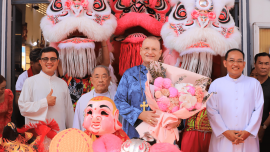
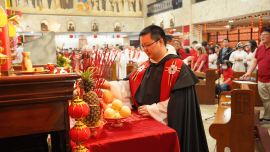
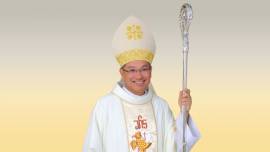
The Apostolic Vicariate of Phnom Penh observed the Chinese New Year with a solemn Mass presided over by Bishop Olivier Schmitthaeusler on February 19. The Mass was held at St. Joseph’s Parish in Chrey Thom, Kandal Province, part of the Bassac Pastoral Center within the Apostolic Vicariate of Phnom Penh. The celebration drew a large number of faithful.
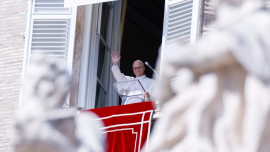
Pope Leo XIV extended his warm wishes to millions across Asia ahead of the Lunar New Year, expressing hope that the celebration will strengthen family bonds, deepen friendships, and foster peace and prosperity.
As Chinese-Filipino communities across the country celebrate Chinese New Year today, the occasion offers more than festive gatherings and symbolic traditions.
On the first day of the Lunar New Year in 2026—the Year of the Fire Horse—families across the globe prepare to celebrate this vibrant festival steeped in tradition and rich history. While the Lunar New Year is primarily a cultural celebration, it also provides an extraordinary opportunity for spiritual reflection, particularly for those of the Catholic faith. But how do we integrate the principles of seeking God’s favor, blessing, and grace into our Lunar New Year celebrations?
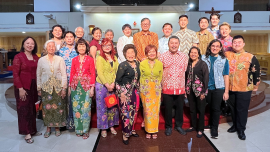
Around 200 Peranakan Catholics gathered at the Church of the Holy Family in Singapore on January 28 for the annual Peranakan Chinese New Year Eve Mass, a celebration rich in spirituality and culture.
“The focus of both celebrations is different. CNY is about Thanksgiving and family reunions, while Lent calls us to the discipline of fasting, abstinence, sacrifice, prayer, and almsgiving,” Archbishop Simon Poh said.
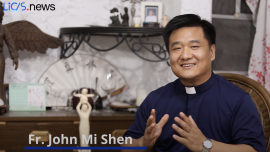
Chinese Catholic priest John Mi Shen, a pastoral communications expert, discusses with LiCAS.news’ Joe Torres the significance and meaning of the celebration of the Chinese New Year for Christians in the midst of the pandemic.