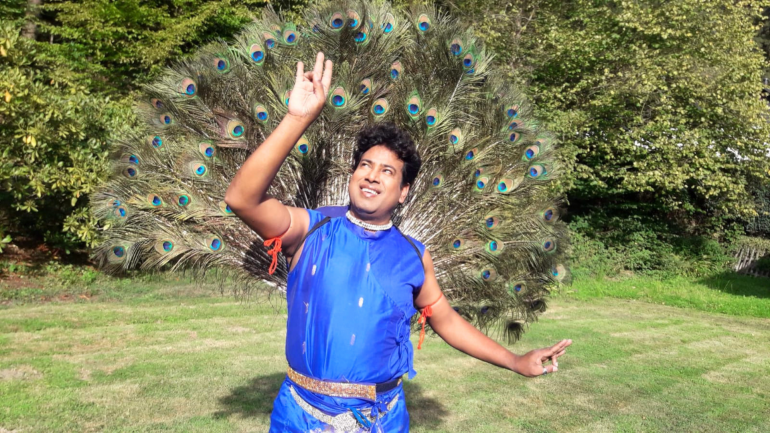
As the world marked World Dance Day on April 29, the life of Bangladeshi Catholic dancer Jhoton Silvester Serao offers a perspective shaped by faith and cultural engagement.
Now 50, Serao has spent more than three decades in dance, building a career in a field where male participation remains limited in Bangladesh. His work extends beyond performance, using movement to address social issues and express spiritual themes. Today, he teaches the child of a former student, a continuity that reflects both personal legacy and the transmission of artistic practice across generations.
In Bangladesh, dance is often associated with female performers, particularly in cultural programs. Opportunities for men in professional dance have historically been fewer.
Serao entered the field despite these constraints and has worked as a full-time dancer for over 25 years, gradually establishing recognition within the country’s cultural sector.
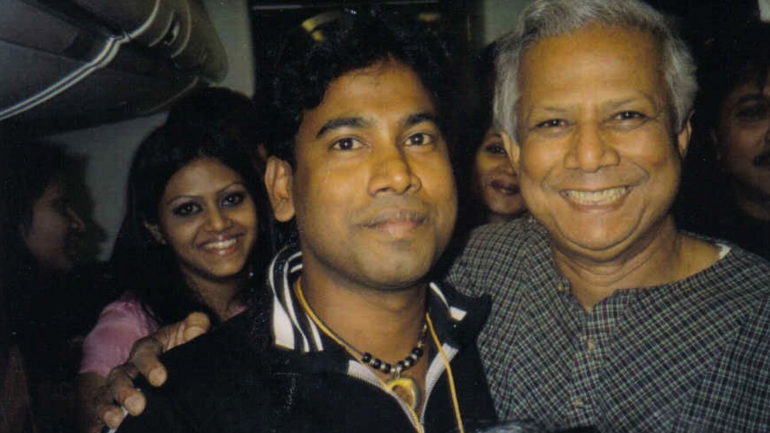
His career includes international exposure. In 2006, he traveled to Norway as part of a Bangladeshi delegation accompanying Nobel laureate Muhammad Yunus to the Nobel Peace Prize ceremony. He performed on the same platform where Yunus received the award. “We represented Bangladesh on an international stage,” Serao said, describing the experience as a defining moment in his career.
His performances have been broadcast on major television platforms in Bangladesh and neighboring India, including Bangladesh Television and Zee Bangla. One of his most notable performances, however, took place during the 2017 visit of Pope Francis to Bangladesh.
“When the Pope arrived, I performed with a group at the airport reception,” Serao said. “There were 40 of us. He paused and watched the performance.” For Serao, the moment reinforced his view that dance can be an instrument to bear witness to faith.
His interest in dance began in childhood. Raised in a family with a strong cultural background, he was exposed to music early on. “My grandfather sang Baul songs, and my uncle played the harmonium,” he said. He first performed on stage at the age of five or six while studying at St. Ritus School in Pabna, northwestern Bangladesh. Although his family expected him to pursue a conventional career, he chose dance as a profession.
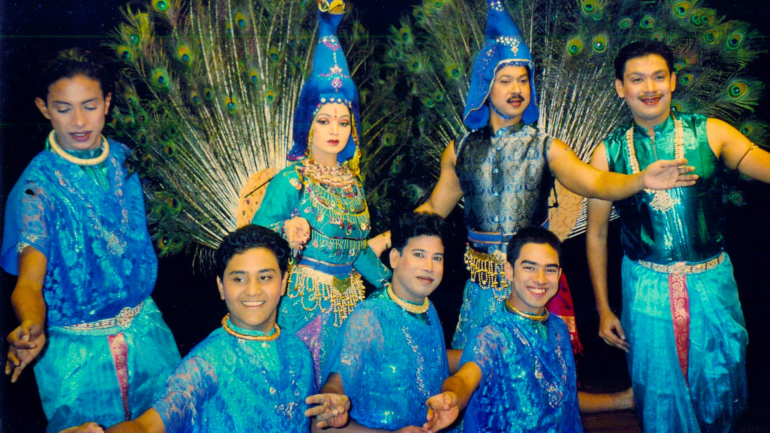
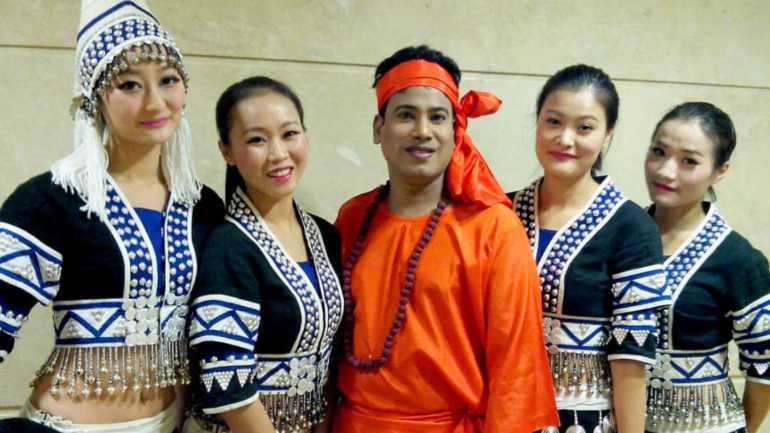
Recognition followed over time. In 2000, he was named Best Dancer by Bangladesh Television. In 2016, he received an award as Best Cultural Personality from a local arts organization. While he acknowledges these recognitions, he describes them as secondary to his work.
“I don’t work for awards, but it feels good when they come,” he said.
Serao’s performances often engage with social issues. Through choreography, he has addressed themes such as acid violence, child marriage, dowry practices, and violence against women. “Dance allows us to communicate without words,” he said. “Through movement, people understand the message.”
He also points to structural challenges in the sector. “There is potential for dance in Bangladesh, but recognition and support are still limited, especially for male dancers,” he said. He noted that while the situation is gradually improving, professional opportunities and institutional backing remain uneven.
Reflecting on the history of dance in South Asia, Serao highlighted the contribution of Uday Shankar, a pioneering Indian dancer of Bengali heritage, who helped establish dance as a formal artistic discipline. He said social and economic factors have long influenced who is able to pursue the art form professionally.
Today, Serao teaches around 400 students. His focus extends beyond technique to include discipline and personal development. “Students need structure and responsibility,” he said, describing these as essential to both performance and daily life.
For Serao, dance remains a form of communication shaped by both culture and belief. As Bangladesh observes World Dance Day, his work reflects how artistic practice can intersect with faith and social engagement in a changing cultural landscape.
Radio Veritas Asia (RVA), a media platform of the Catholic Church, aims to share Christ. RVA started in 1969 as a continental Catholic radio station to serve Asian countries in their respective local language, thus earning the tag “the Voice of Asian Christianity.” Responding to the emerging context, RVA embraced media platforms to connect with the global Asian audience via its 21 language websites and various social media platforms.
Latest News