From Diversity to Communion: FABC Official Highlights Key Outcome of Table Conversations

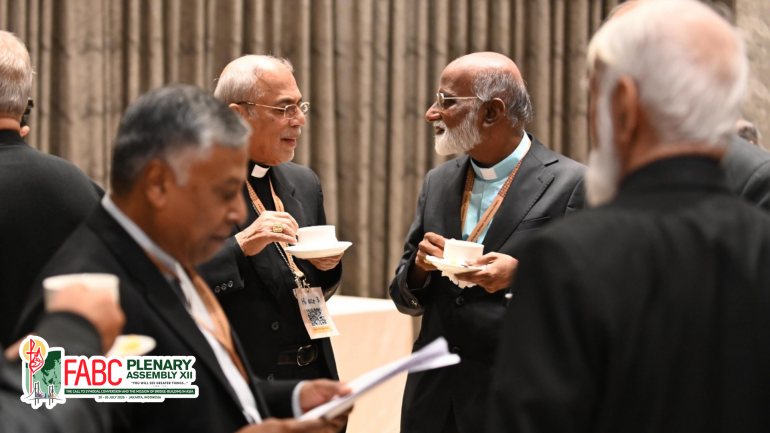
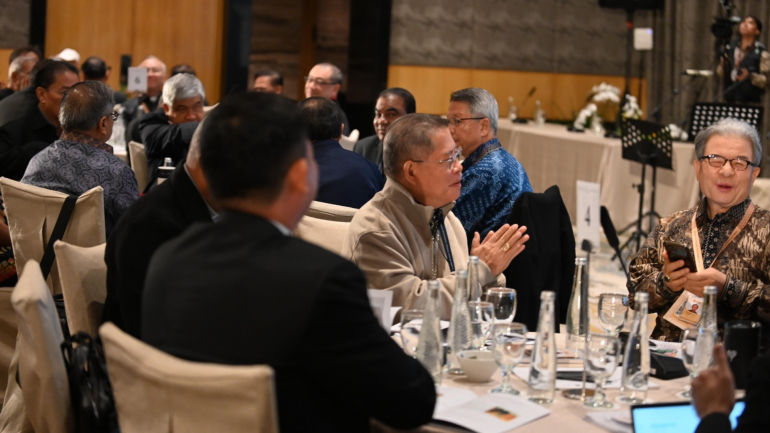
The table conversations at the 12th Plenary Assembly of the Federation of Asian Bishops' Conferences (FABC) revealed a striking conclusion: despite the vast diversity of Asia, local Churches share a common vision for the future—one rooted in communion, participation, and mission.
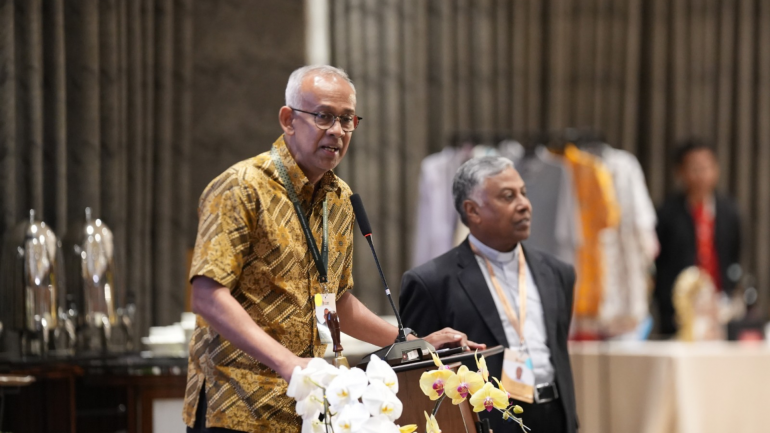
That was the key insight offered by Fr. Clarence Devadass, Associate Secretary of the FABC and Executive Secretary of its Commission for Synodality, following the July 25 regional discernment sessions known as the Emmaus Experience.
"The conversations revealed that although our contexts differ, the aspirations of the Churches across Asia are remarkably similar," Fr. Devadass said. "What stood out was not the differences but the convergence."
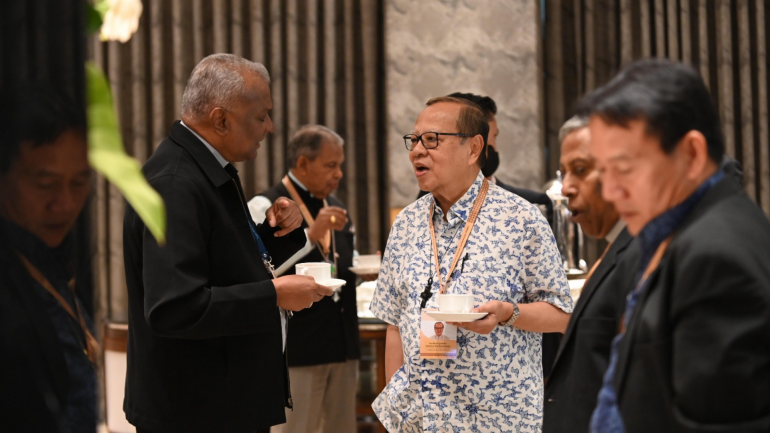
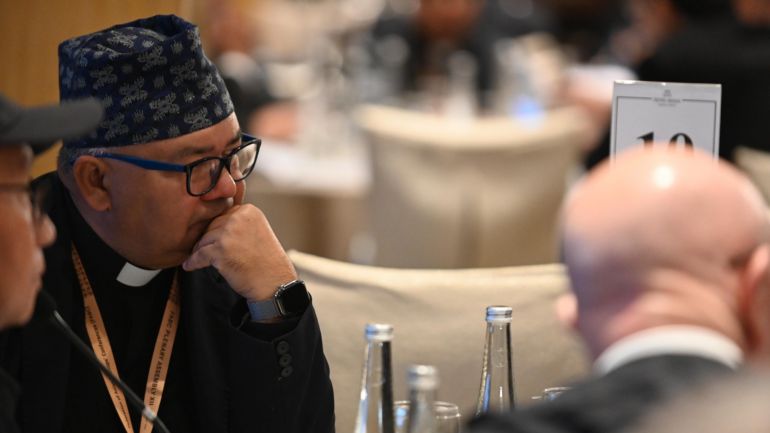
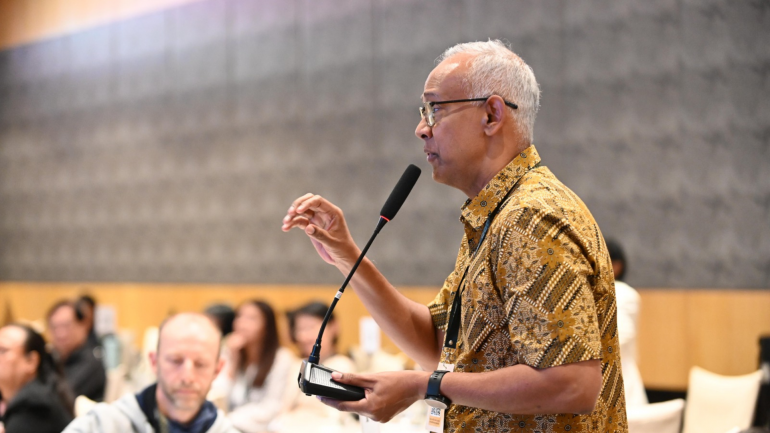
The table conversations formed part of the Assembly's stages of discernment. Building on several days of spiritual conversations among delegates, participants also gathered in regional groups—Southeast Asia, South Asia, and Central and East Asia—to prayerfully reflect on the realities of their local Churches and identify practical priorities for strengthening synodal life.
Diversity That Builds Communion
Rather than seeing Asia's cultural, linguistic, ethnic, and religious diversity as an obstacle, delegates consistently identified it as one of the Church's greatest gifts.
"The delegates recognized that communion does not require uniformity," Fr. Devadass said. "Instead, diversity becomes the very place where the Gospel is lived and where bridges are built."
The conversations affirmed that evangelization in Asia continues to flourish primarily through relationships. Listening, accompaniment, hospitality, and everyday witness were repeatedly described as the Church's most credible forms of proclaiming the Gospel.
Delegates also highlighted the increasing participation of laypeople in the Church's mission, envisioning a more collaborative model in which women, young people, families, and lay leaders play a fuller role in discernment and pastoral life.
Education and interreligious dialogue, likewise, emerged as enduring strengths that continue to foster peace and human development across the continent.
Honest About the Challenges
The conversations also demonstrated a willingness to confront the realities facing the Church.
Participants across the three regions cited growing polarization in society, ideological divisions, and social fragmentation as major challenges. Internally, clericalism emerged as one of the most frequently identified obstacles to synodality.
"One of the strongest themes was the need for conversion within the Church itself," Fr. Devadass said. "Participants repeatedly said synodality cannot flourish unless we move beyond clericalism toward shared responsibility rooted in baptism."
Migration remained another recurring concern, reflecting the lived experience of millions of people across Asia. The discussions also addressed the rapid growth of artificial intelligence and digital culture alongside concerns surrounding family life, demographic change, poverty, inequality, environmental degradation, and the marginalization of vulnerable communities.
A Shared Direction
While the challenges were diverse, the conversations consistently moved toward common solutions.
"The delegates were very clear that synodality is first a spirituality before it becomes a structure," Fr. Devadass said. "Without ongoing conversion, no structural reform will be sustainable."
Participants also called for enabling every baptized person to exercise their missionary vocation more fully through greater formation, participation, and shared responsibility.
They also recommended renewing pastoral structures, investing in leadership formation, and providing ongoing accompaniment so that synodal practices become embedded in the everyday life of dioceses and parishes.
One Church, One Vision
For Fr. Devadass, the significance of the regional conversations lies not only in the practical proposals they produced but also in the unity they revealed.
Whether delegates spoke about migrant ministry in Southeast Asia, religious nationalism in South Asia, or the realities of small and scattered Churches in Central and East Asia, they consistently returned to the same vision of a Church that walks together.
"The regional conversations confirmed that synodality is no longer seen as simply a theme for reflection," Fr. Devadass said. "Across Asia, it is increasingly understood as a way of being Church—one that equips us to become authentic bridge-builders in societies marked by diversity, complexity, and hope."
As the FABC Plenary Assembly prepares its final recommendations and completes the drafting of the Synodality Vademecum for Asia, the regional conversations have demonstrated that the continent's greatest diversity may also be the foundation of its deepest communion.
Radio Veritas Asia (RVA), a media platform of the Catholic Church, aims to share Christ. RVA started in 1969 as a continental Catholic radio station to serve Asian countries in their respective local language, thus earning the tag “the Voice of Asian Christianity.” Responding to the emerging context, RVA embraced media platforms to connect with the global Asian audience via its 21 language websites and various social media platforms.
Latest News