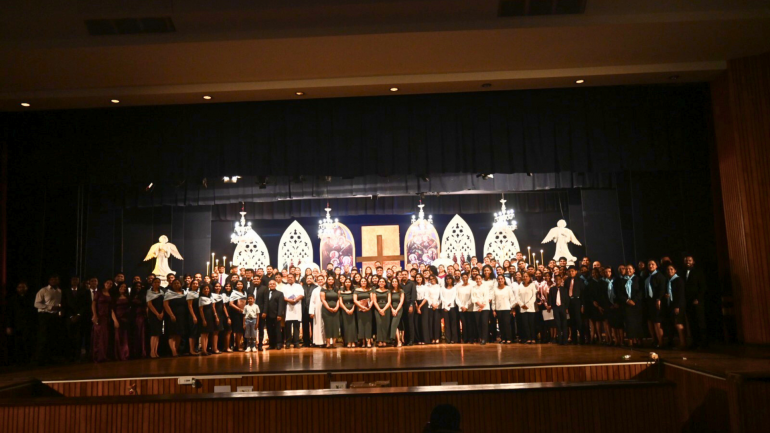
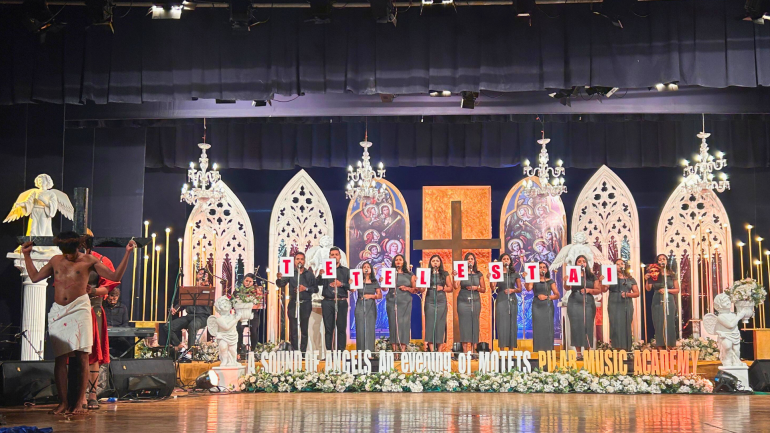
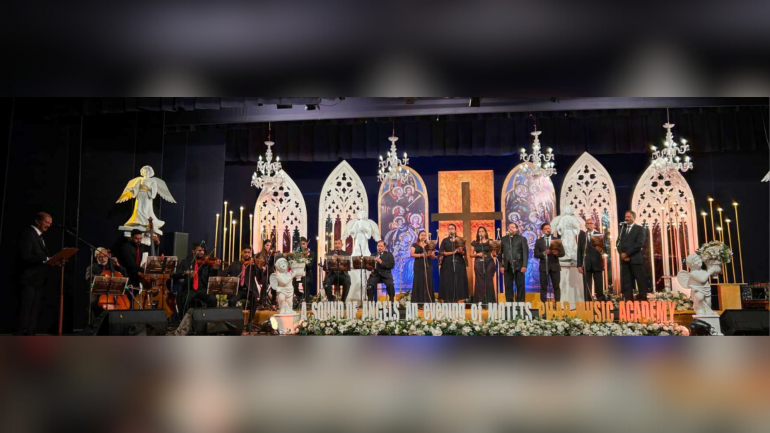
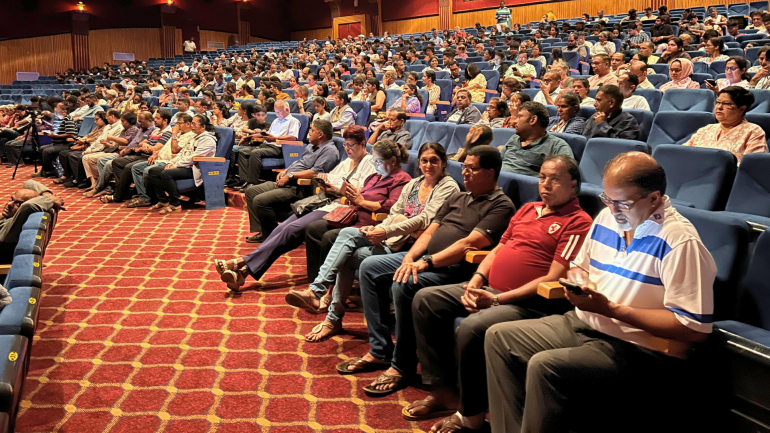
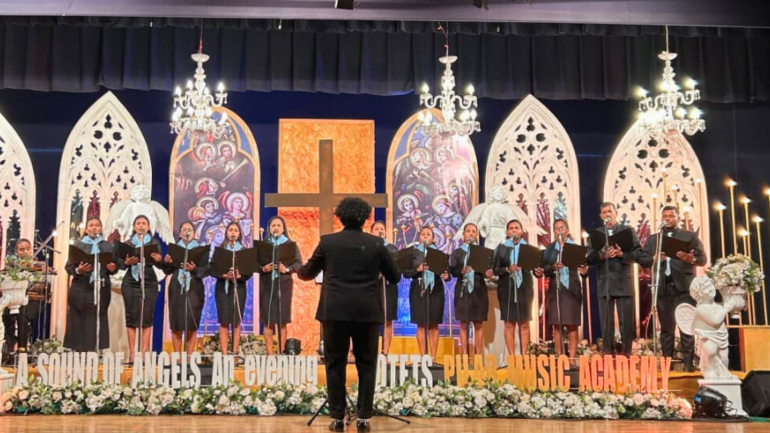
The Pilar Music Academy of the Society of Pilar organized an evening of traditional Lenten motet singing titled “A Sound of Angels” at Ravindra Bhavan in Margao, Goa, southwest India, on March 2, 2026. The programme brought together choirs from across the state in an effort to sustain a form of sacred music historically associated with the Lenten season in Goa.
Ten choir groups participated, presenting traditional motets that were once widely sung in parishes during Lent, particularly during the Sacred Triduum, Maundy Thursday, Good Friday, and Holy Saturday.
The programme opened with a Lenten presentation by the staff of the Pilar Music Academy. They performed “Nixttur Monzati,” arranged and set to music by Fr Peter Cardoso, SFX.
Motets originated in Europe during the medieval and Baroque periods and developed through composers such as Giovanni Pierluigi da Palestrina and Wolfgang Amadeus Mozart. In Goa, the form took root from the 19th century onward, combining Western choral structure with local devotional themes. The compositions are typically marked by measured melodies and repetitive passages intended to support reflection during the penitential season.
The participating choirs were Savourites of Loutolim, led by Seby Fernandes; St Joseph’s Parish Choir, Dramapur, led by Sebastião Soares; The Golden Voices Choir, led by Selwyn J. C. Braganza; Carmel Chorals, Ponda, led by Anoushka Maria Dias; Crescendo Faith Choir, Margao, led by Concy Miranda; Mae De Deus Church Choir, Saligão, led by Joseph Ribeiro; Se Cathedral Choir, Old Goa, led by R. Valente da Costa; St Anne’s Choir, Agonda, led by Vera Cruz; Symphonia (Don Bosco College of Engineering, Fatorda), led by Alric Antão; and Youth Savourites of Saviour of the World Parish, Loutolim, led by Ronnie Fernandes.
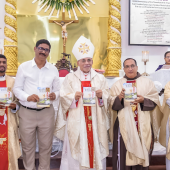
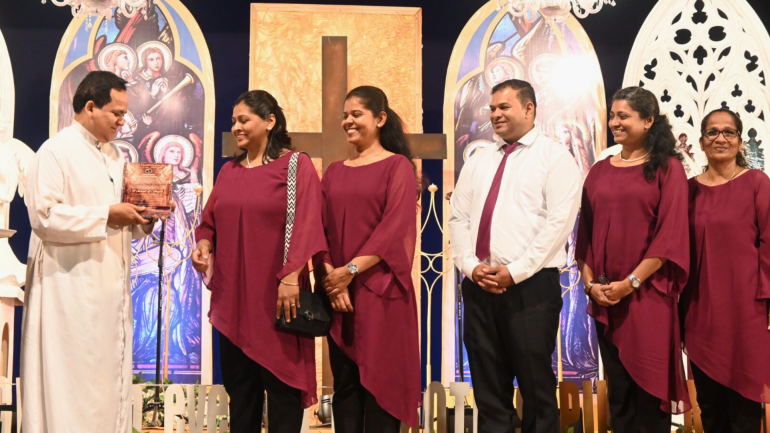
Three groups, Savourites of Loutolim, St Joseph’s Parish Choir, Dramapur, and The Golden Voices Choir, were acknowledged for their performances. All participating choirs received certificates and mementos.
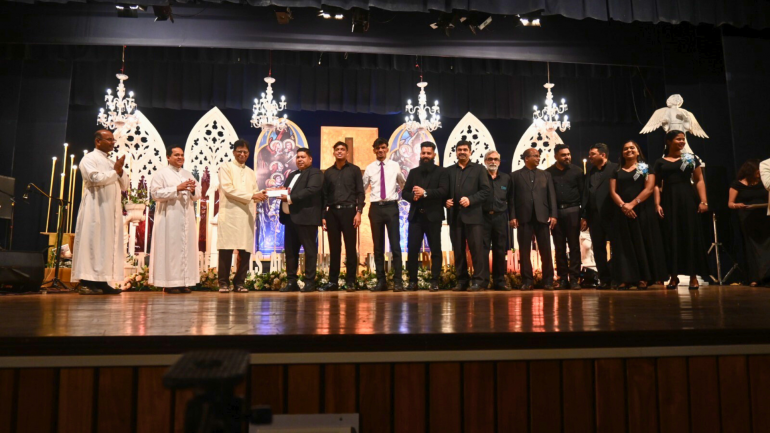
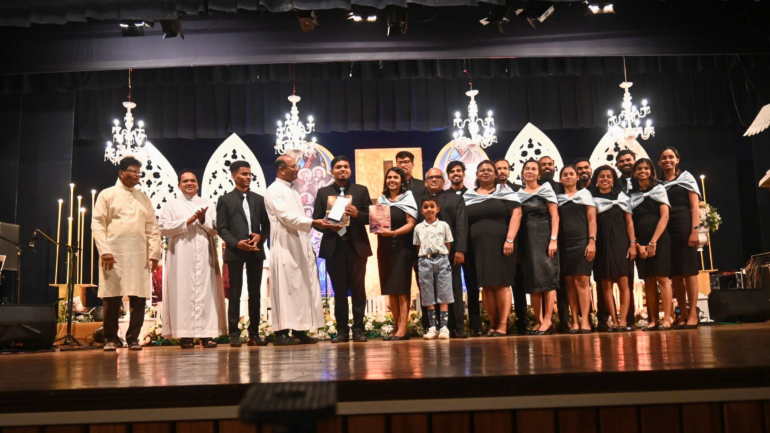
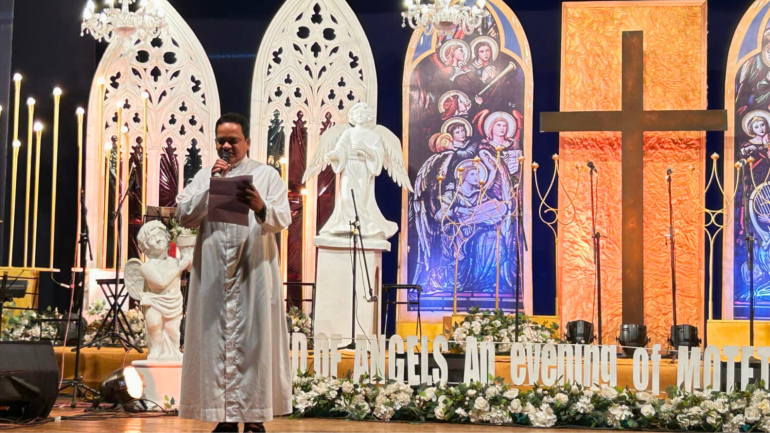
Fr Lino de Sá, known for his role in promoting Goan liturgical music, attended as chief guest. Fr Steevan D’Souza, SFX, Vicar General of the Society of Pilar, was the guest of honour.
In his welcome address, Fr Joaquim Rebello, SFX, Provincial Superior of the Goa Province, said the event was intended as a collective offering of musical talent rather than a competition.
Ashley Fernandes served as anchor for the programme. Fr Joe Rodrigues, Minguel Cota, and Telma Costa Gracias were evaluators.
Speaking to Radio Veritas Asia, Fr Myron Siqueira, SFX, Director of the Pilar Music Academy, said the initiative aimed to preserve an important element of Goa’s liturgical heritage and encourage continuity across generations. He noted the importance of involving younger singers alongside experienced choir members to sustain the tradition.
Participants and attendees described the programme as an opportunity to revisit music closely linked with Lenten observances. Deepti Coutinho, who attended the event, said she valued the chance to introduce members of the Dramapur parish choir to a tradition she had grown up with. She also noted the participation of younger singers.
Selwyn Braganza, who led one of the choirs, said the experience combined musical preparation with reflection on the Passion of Christ. Jerry Cardozo, another participant, said the programme provided space for prayer through music. Cruz Misquita from Saligão described the evening as an occasion to reconnect with Goan Christian musical heritage.
The event formed part of ongoing efforts by the Society of Pilar to document, promote, and transmit traditional forms of sacred music within the local Church context.
Radio Veritas Asia (RVA), a media platform of the Catholic Church, aims to share Christ. RVA started in 1969 as a continental Catholic radio station to serve Asian countries in their respective local language, thus earning the tag “the Voice of Asian Christianity.” Responding to the emerging context, RVA embraced media platforms to connect with the global Asian audience via its 21 language websites and various social media platforms.
Latest News