Nuns Highlight Struggles and Resilience of Filipino women on International Women’s Day

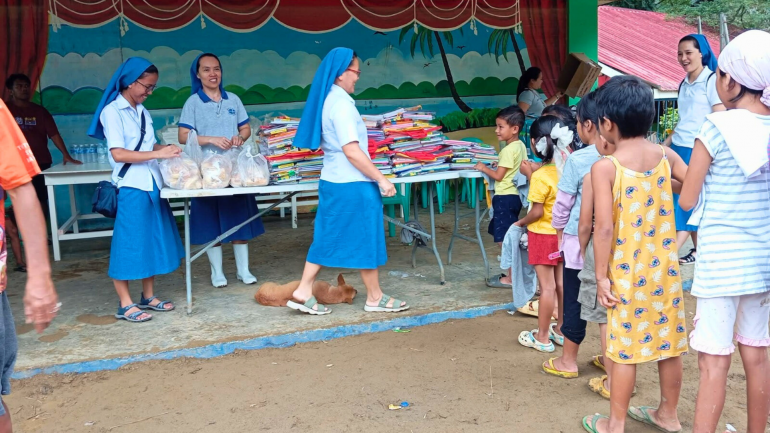
Across many poor communities in the Philippines, women quietly carry some of the heaviest responsibilities of family and society, raising children amid poverty, protecting their families from abuse, and, in many cases, leaving home to work abroad.
On International Women’s Day, religious sisters working with vulnerable communities say these realities reveal both the struggles and the resilience of Filipino women whose sacrifices sustain families and communities.
Sr. Ruth Baguinon of the Sisters of the Divine Savior said poverty remains one of the most pressing challenges faced by women in marginalized communities.
“Many women carry the heavy responsibility of caring for their families while having limited access to stable employment, education, healthcare, and social protection,” she said.
These difficult conditions often push women into informal work, leaving them vulnerable to exploitation and economic insecurity.
At the same time, women frequently bear the emotional burden of protecting children from risks such as neglect, abuse and exploitation.
Through their ministry, the Salvatorian Sisters work with dioceses and communities to promote pastoral care programs that safeguard children and vulnerable adults.
The initiative includes formation and awareness programs that encourage parishes and communities to create safe and supportive environments for children.
Sr. Baguinon said these efforts also support mothers and caregivers who struggle to raise families amid difficult circumstances.
Another reality affecting many Filipino women is migration. In many communities, mothers leave home to work overseas as Overseas Filipino Workers in order to provide for their children’s education and daily needs.
While migration can bring financial support to families, it also creates emotional challenges for both mothers and the children left behind.
“Many mothers experience deep homesickness and emotional strain from being separated from their children for long periods of time,” Sr. Baguinon said.
For children, the absence of a parent can affect family relationships and emotional development, especially when grandparents or relatives take on caregiving roles.
Despite these challenges, women continue to play vital roles in building compassionate communities.
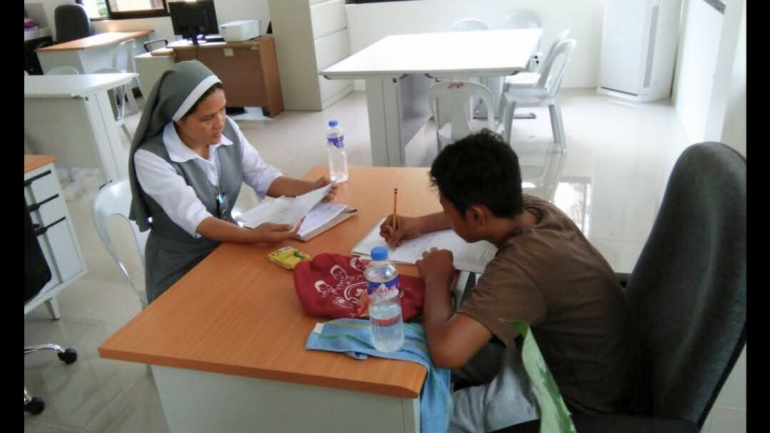
Sr. Marie Ingkie Veloz Taboclaon, the first Filipina superior of the Congregation of the Sisters of Charity of Our Lady of Good and Perpetual Help, said women in poor communities continue to face multiple challenges, including poverty, unstable employment and the responsibility of caring for their families.
“Many women also face domestic violence, health concerns and the pressure to provide for their children despite limited opportunities,” she said.
Sr. Taboclaon said religious congregations respond through ministries that support women and families, including affordable education, livelihood programs, counseling and spiritual accompaniment.
“Through our presence in communities, we try to accompany women, empower them and help them build hope despite difficult circumstances,” she said.
Speaking about migration, Sr. Taboclaon noted that many Filipino women work abroad in order to support their families.
“While working overseas helps families financially, it also brings emotional challenges,” she said.
“Some children grow up without the daily presence of their mothers, and families may experience loneliness and distance.”
“In the communities we serve, migration reflects both sacrifice and resilience,” Taboclaon added. “It reminds us of the deep love of mothers who endure separation so their families can have a better future.”
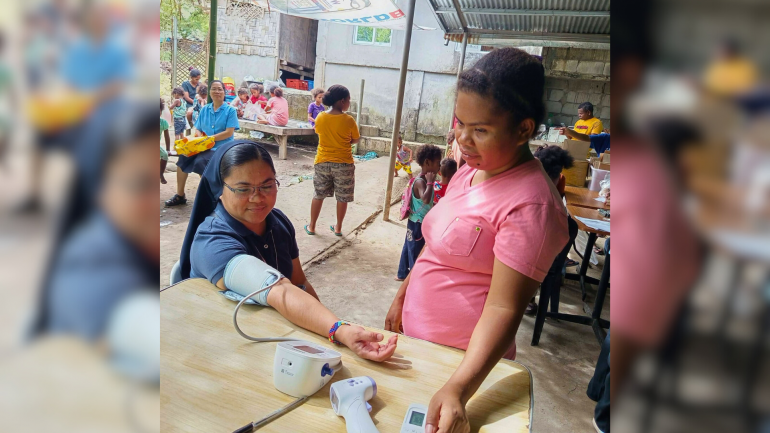
Sr. Flor Montojo Manga of the Adorers of the Blood of Christ said Filipino women have long demonstrated leadership through service to families, communities and the Church.
“Leadership for me is in the blood of Filipinos, and Filipino women live this out in many ways today,” she said.
From guiding families through hardship to serving as educators, catechists and community organizers, women often step forward to care for others and bring people together, she said.
“They lead with a heart that listens, nurtures and builds community,” Montojo said. “Rooted in our culture of malasakit (compassionate concern for others) and bayanihan (communal solidarity), Filipino women help create communities that are more compassionate, just and hopeful.”
She also encouraged young Filipino women who wish to serve society and the Church not to be afraid to offer their gifts.
“Our history and culture show us that courage, compassion and faith run in our blood,” she said. “Do not be afraid to step forward and serve.”
“When you lead with a heart for others,” Sr. Montojo added, “you become a source of hope and a sign of God’s presence in the world.”
Radio Veritas Asia (RVA), a media platform of the Catholic Church, aims to share Christ. RVA started in 1969 as a continental Catholic radio station to serve Asian countries in their respective local language, thus earning the tag “the Voice of Asian Christianity.” Responding to the emerging context, RVA embraced media platforms to connect with the global Asian audience via its 21 language websites and various social media platforms.
Latest News