



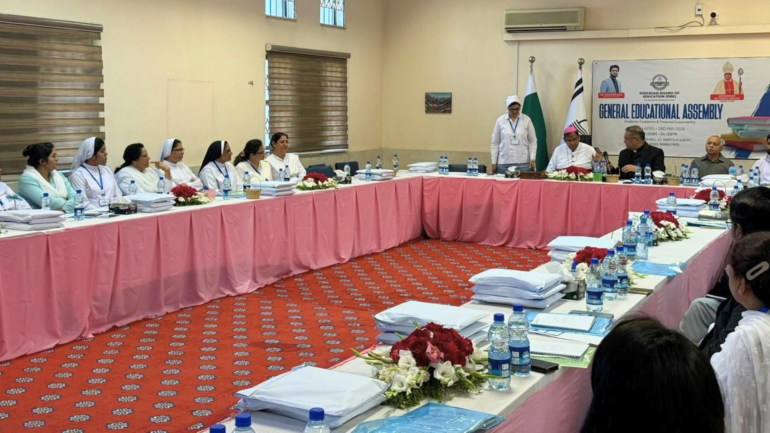
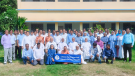
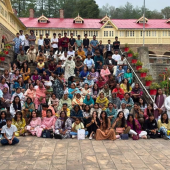
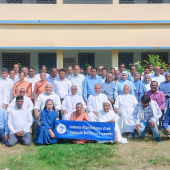
The Diocesan Board of Education (DBE) of Islamabad–Rawalpindi, Pakistan, concluded a three-day General Educational Assembly on May 2, 2026, at St. Mary’s Academy for Boys in Lalazar, Rawalpindi, bringing together school leaders, clergy, religious sisters, catechists, and senior educators to assess progress on its five-year strategic plan.
The meeting, held from April 30 to May 2, focused on strengthening academic performance, governance structures, and long-term financial sustainability across diocesan schools.
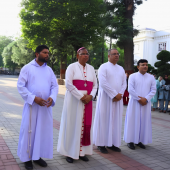
Opening the assembly, Archbishop Joseph Arshad emphasized the broader purpose of Catholic education within the diocese.
“Education within the diocesan framework is not merely an academic pursuit but a transformative mission that integrates faith, values, and intellectual development,” he said.
Six priority areas guided the discussions: academic excellence, teacher development, technology integration, student support, leadership and governance, and community engagement.
Participants underscored the need for improved learning outcomes and standardized curriculum delivery supported by continuous, data-driven assessment. The assembly also stressed that academic rigor must remain aligned with ethical and faith-based formation.
Teacher training was identified as a central priority, with calls for structured and ongoing professional development programs. According to participants, strengthening pedagogical skills while maintaining the Catholic identity of schools is essential to improving education quality.
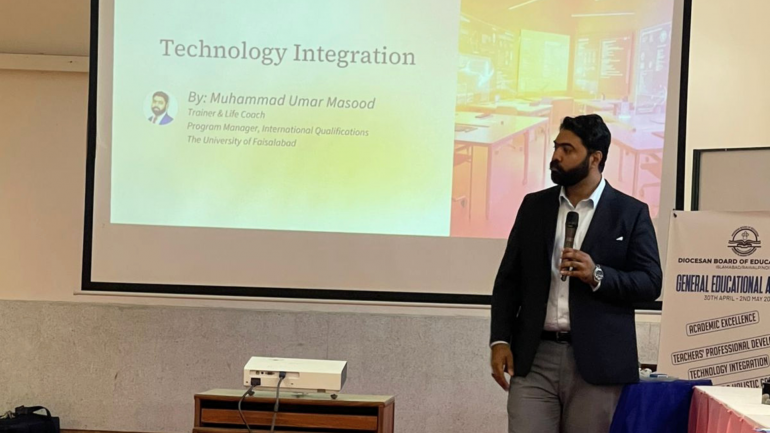
The integration of technology in classrooms and administration was highlighted as urgent, with school leaders urged to develop clear implementation plans to prepare students for a digital learning environment.
On student development, the assembly endorsed a holistic approach addressing academic, emotional, and social needs, with special attention to scholarships and pastoral support for marginalized Christian students.
Governance and leadership structures were also reviewed, with emphasis on transparency, accountability, and regular performance evaluation. School heads were described as key drivers of institutional direction and mentorship.
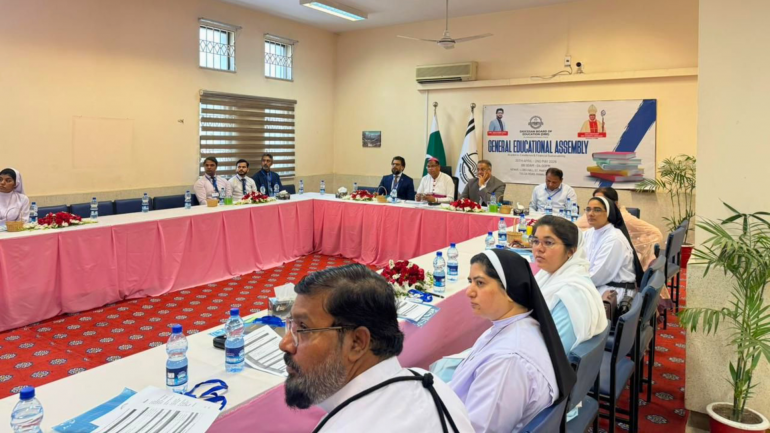
Community engagement formed another key focus, with participants calling for stronger collaboration between schools, parents, and parish communities to support educational outcomes.
In his closing address, Archbishop Arshad reiterated the importance of integrating faith across all aspects of education.
“Faith integration must remain at the heart of all educational endeavors, guiding decision-making processes and shaping institutional culture,” he said.
He also urged stakeholders to adopt a unified approach to implementation.
“All stakeholders must work together with a shared vision and mutual respect,” he said, calling for renewed commitment to institutional goals.
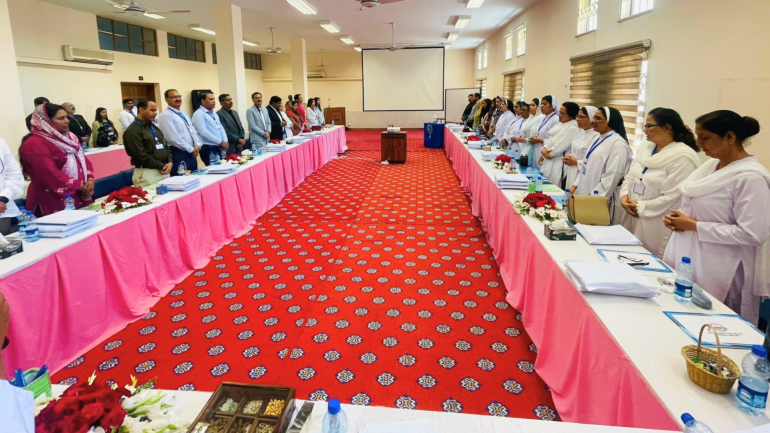
The assembly concluded with a thanksgiving hymn and the Archbishop’s blessing, marking the end of deliberations aimed at strengthening Catholic education as a system that fosters academic competence, character formation, and faith development across the diocese.
Radio Veritas Asia (RVA), a media platform of the Catholic Church, aims to share Christ. RVA started in 1969 as a continental Catholic radio station to serve Asian countries in their respective local language, thus earning the tag “the Voice of Asian Christianity.” Responding to the emerging context, RVA embraced media platforms to connect with the global Asian audience via its 21 language websites and various social media platforms.
Comments
Latest News




- Reply
Permalink