Pakistan: Punjab Government Approves New Religious Education Books for Non-Muslim Students

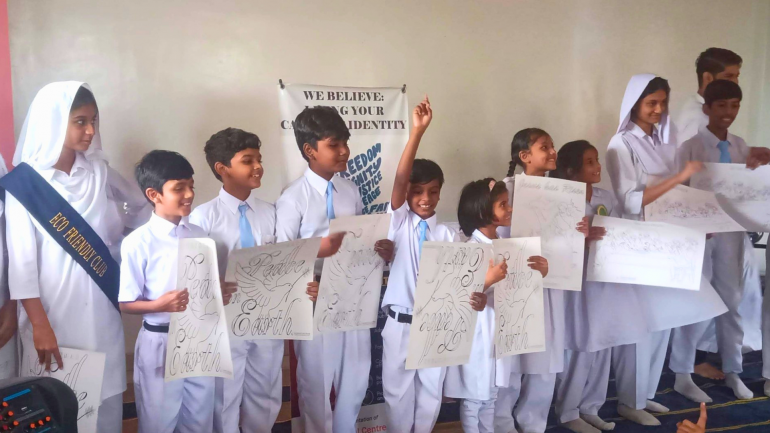
In an official notification issued on March 30, the Punjab Education, Curriculum, Training and Assessment Authority (PECTAA) approved new Religious Education textbooks for non-Muslim students in the province of Punjab, Pakistan.
Church leaders and rights groups have welcomed the move.
Fr. Qaisar Feroz, OFM Cap, executive secretary of the Episcopal Catholic Commission for Social Communications, called the government decision a milestone for equality. “This will allow Christian students and students of other religious minorities to learn more about their own religion and religious values in schools,” he said.
Fr. Feroz noted that the textbooks were developed according to the National Curriculum for Religious Education. “They are free from cultural, linguistic, and ethnic prejudice and do not contain any material against any religion or the state of Pakistan,” he added.
PECTAA has approved the following textbooks:
- Masihi Taleem for Christian students, Grades 1 to 11
- Sanatan Dharam for Hindu students, Grades 1 to 2
- Sikh Dharam for Sikh students, Grades 1 to 3
- Kalasha Taleem for Kalasha students, Grades 1 to 3
- Buddhmat for Buddhist students, Grades 1 to 3
- Zoroastrianism for Parsi students, Grades 1 to 5
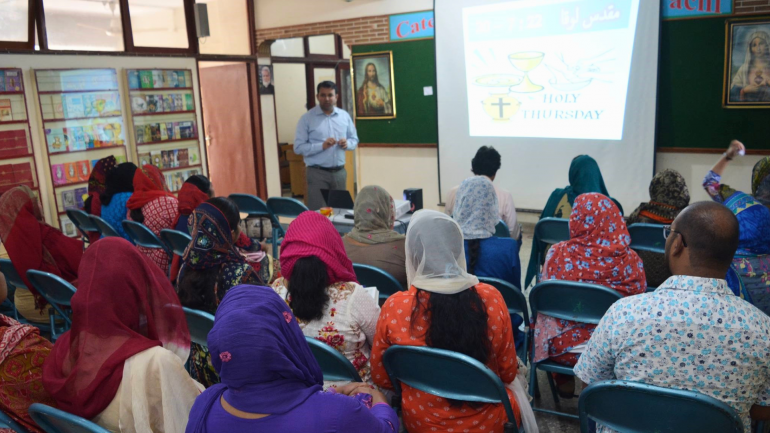
Professor Anjum James Paul, chairman of the Pakistan Minorities Teachers’ Association (PMTA), described the approval as a historic achievement. “Pakistani minority students were previously deprived of religious education guaranteed by the Constitution of Pakistan under Article 25,” he said. He also urged the Punjab government and PECTAA to facilitate the recruitment of qualified teachers for these programs.
Ashiknaz Khokhar, a lay Dominican, highlighted the practical impact of the initiative: “In the past, non-Muslim students were forced to take ‘Ethics’ as a subject, and if no teacher was available, they had to study Islamiat (Islamic Studies) or sit out of class. This initiative allows students to study their own faith within the formal school system.”
Nabila Bhatti, member of the National Commission on the Rights of the Child, welcomed the announcement: “Now children belonging to religious minorities will study their respective religions in schools across Punjab.”
Radio Veritas Asia (RVA), a media platform of the Catholic Church, aims to share Christ. RVA started in 1969 as a continental Catholic radio station to serve Asian countries in their respective local language, thus earning the tag “the Voice of Asian Christianity.” Responding to the emerging context, RVA embraced media platforms to connect with the global Asian audience via its 21 language websites and various social media platforms.
Latest News