

Philippine Diocese Opposes Offshore Wind Project, Cites Threats to Fisherfolk and Marine Ecosystems

The Diocese of Laoag in northern Philippines has formally opposed the proposed offshore wind farm projects in the coastal waters of Burgos, Bangui, and Pagudpud in Ilocos Norte province, saying the development could harm marine ecosystems and displace thousands of small-scale fisherfolk despite its renewable energy goals.
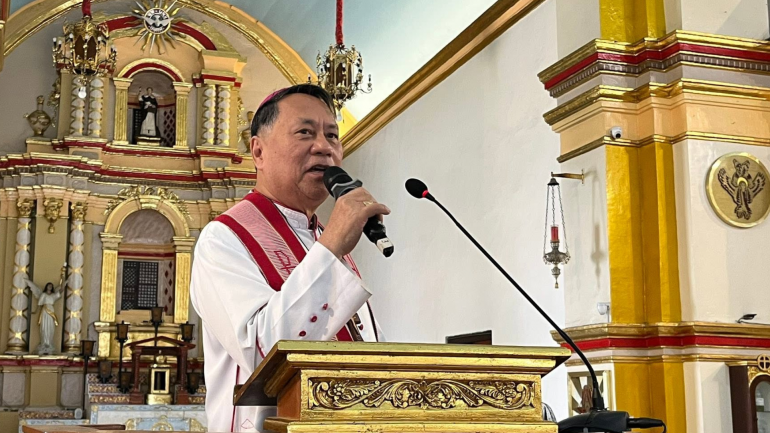
In a circular letter dated June 28, Bishop Renato P. Mayugba called on the clergy, religious, and lay faithful to defend what the diocese described as the region's "common home," invoking Pope Francis' encyclical Laudato Si' as the foundation of its position.
The bishop stressed that the Church supports renewable energy but maintained that environmental initiatives should not come at the expense of poor communities and local biodiversity.
According to the diocese, the planned installation of floating wind turbines and the creation of no-sail zones could disrupt traditional fishing grounds, restrict access to coastal waters, and damage marine habitats that sustain thousands of families in Ilocos Norte.
The circular claimed that more than 6,500 municipal fisherfolk in the towns of Pasuquin, Burgos, Bangui, and Pagudpud could face economic displacement if the project proceeds. It also raised concerns over underwater construction, continuous low-frequency noise, and possible disruptions to fish migration and marine biodiversity.
The diocese emphasized that "true ecological conversion" must integrate environmental protection with social justice, insisting that development should not sacrifice the livelihoods of marginalized coastal communities.
It also appealed to government officials, environmental experts, academic institutions, youth groups, and local residents to work together in protecting Ilocos Norte's coastal waters and to prioritize "genuine human ecology over corporate greed."
"We cannot heal a broken planet by breaking the lives of the people who protect it," the bishop said in the letter, urging Ilocanos - the people of the Ilocos region - to stand united in preserving their coastal environment and safeguarding the welfare of future generations.
The Diocese of Laoag's statement comes amid the Philippine government's continued push to expand offshore wind energy as part of its renewable energy and energy security agenda.
Radio Veritas Asia (RVA), a media platform of the Catholic Church, aims to share Christ. RVA started in 1969 as a continental Catholic radio station to serve Asian countries in their respective local language, thus earning the tag “the Voice of Asian Christianity.” Responding to the emerging context, RVA embraced media platforms to connect with the global Asian audience via its 21 language websites and various social media platforms.
Latest News