


Philosophical Counselling Can Help Believers Rediscover Meaningful Faith, Says Research Scholar

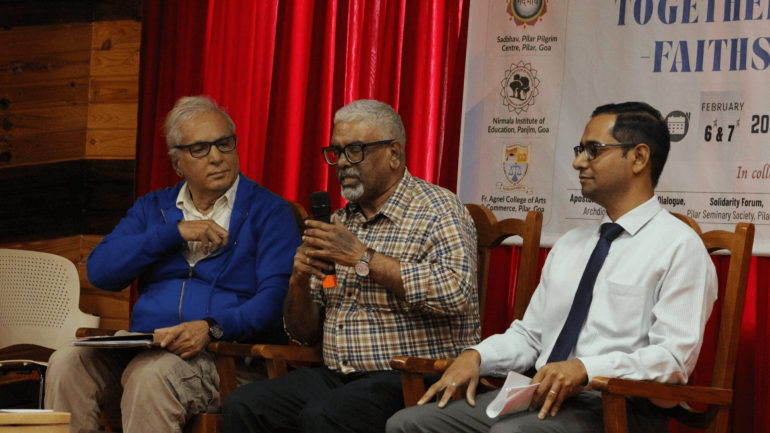
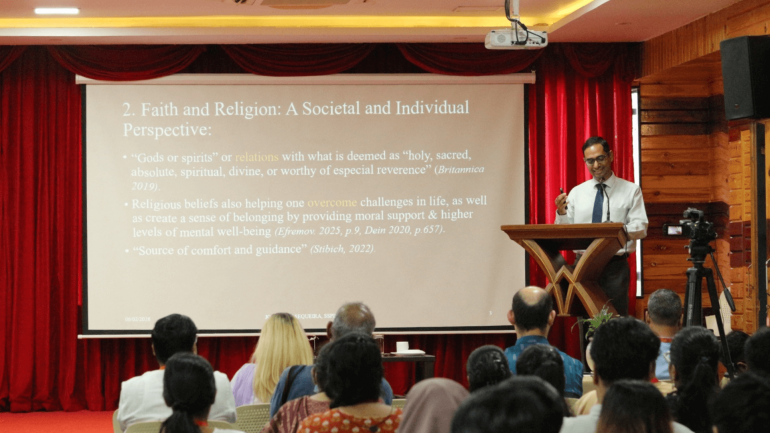
Philosophical counselling can serve as a powerful tool to help believers experience their faith more meaningfully through religious texts, said Jonathan Sequeira, a research scholar from the School of Sanskrit, Philosophy and Indic Studies, Goa University.
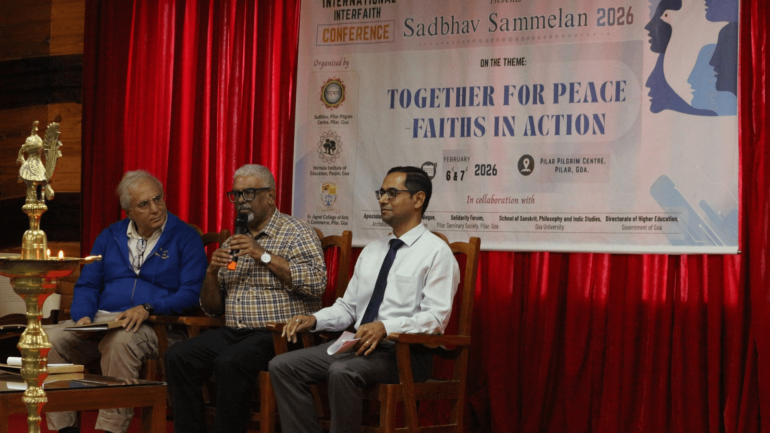
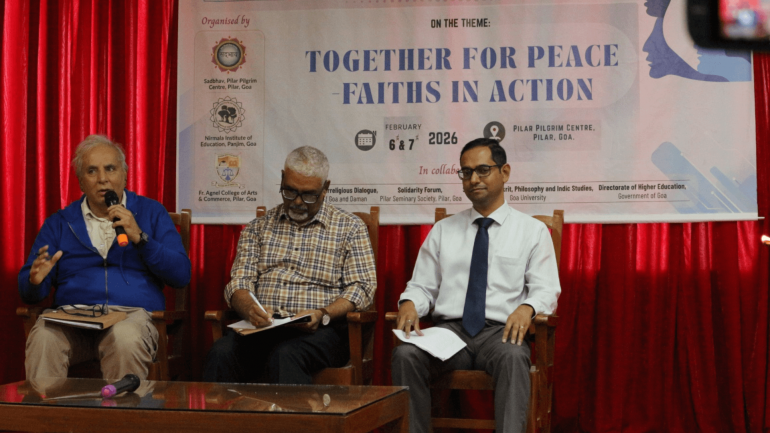
Sequeira made the observation during a thought-provoking presentation on February 6 at the 4th edition of the Society of Pilar’s Sadbhav Sammelan 2026, an international interfaith conference held on the theme “Together for Peace: Faith in Action.”
The conference is jointly organised by Sadbhav, Pilar; Fr. Agnel College of Commerce and Arts, Pilar; and Nirmala Institute of Education, in collaboration with the Apostolate of Interreligious Dialogue of the Archdiocese of Goa and Daman, the Solidarity Forum of Pilar Seminary, the School of Sanskrit, Philosophy and Indic Studies of Goa University, and the Directorate of Higher Education, Government of Goa.
Presenting his research paper titled “Faith through Philosophical Counseling: Can Philosophical Counseling Help One Experience Faith Meaningfully through Religious Texts?” Sequeira addressed the contemporary crisis of declining religiosity alongside rising social isolation, particularly in today’s technologically driven world.
Faith, Meaning, and the Modern Crisis
Drawing on interdisciplinary research in philosophy, psychology, and religious studies, Sequeira noted that faith and religion have historically offered moral guidance, a sense of belonging, and existential meaning—factors that significantly contribute to mental and emotional well-being.
“Faith is not merely doctrinal assent, but a deeply personal foundation that gives coherence, purpose, and meaning to life,” he observed. He added that religion has long functioned as both a personal and communal guide, helping people navigate suffering, uncertainty, and moral dilemmas.
Referring to global trends, Sequeira highlighted the steady decline in organised religious practice, often replaced by individualised spirituality or secular alternatives. At the same time, he pointed to research identifying loneliness and social isolation as emerging global public-health concerns.
“As people move away from organised religion, they often unknowingly distance themselves from the social and psychological resources that faith communities provide,” he said.
Sacred Texts: Ambiguity as Invitation, Not Threat
A central focus of the paper was the role of sacred texts in shaping faith. Sequeira cautioned against rigid or purely literal interpretations, suggesting that many crises of faith arise from misreading or oversimplifying scripture.
“Sacred texts were not written to eliminate ambiguity, but to invite reflection, self-inquiry, and transformation,” he said, describing ambiguity as “a doorway to deeper meaning rather than a cause for doubt.”
He stressed the importance of reading religious texts within their historical, cultural, and literary contexts, noting that guided reflection can prevent dogmatism while deepening personal faith.
Philosophical Counselling as a Bridge to Faith
Sequeira proposed philosophical counselling as a non-dogmatic, dialogical approach that enables individuals to examine their beliefs, assumptions, and faith-related struggles without imposing ready-made answers.
“Philosophical counselling does not tell a person what to believe; it helps them learn how to think about what they believe,” he explained.
Unlike psychological or pastoral counselling, philosophical counselling focuses on meaning, clarity, and worldview analysis, making it particularly effective for those wrestling with doubt, ambiguity, or existential questions related to faith.
The READ Model: A Practical Framework
To translate theory into practice, Sequeira introduced the “READ Model,” developed specifically for faith-based philosophical counselling:
-
R – Recite Sacred Texts: Deep engagement with selected passages through slow, contemplative reading
-
E – Examination of Ideas: Reflective contemplation using methods such as Lectio Divina
-
A – Analysis through Dialogue: Guided philosophical dialogue to explore meanings and perspectives
-
D – Directional Shifts: Identifying changes in understanding and personal faith orientation
“Sacred texts act as mirrors of the self,” Sequeira said. “When read reflectively, they reveal not only God but also our own inner struggles and hopes.”
Faith in Action for Peace and Dialogue
Situating his research within the broader theme of the conference, Sequeira concluded that philosophical counselling can become a valuable pastoral and interreligious tool, enabling believers to remain rooted in faith while remaining open to dialogue.
“When faith is approached reflectively rather than defensively, it becomes a force for peace, understanding, and solidarity,” he said.
The session was moderated by Prof. Koshy Thokaran of the School of Sanskrit, Philosophy and Indic Studies, Goa University. Referring to Sequeira’s presentation, Prof. Thokaran noted that it addressed the ambiguities encountered when engaging religious texts and highlighted philosophical counselling as a form of personal accompaniment in resolving interpretative tensions and doubts.