January 22, 2026 Thursday of the Second Week in Ordinary Time
Day of Prayer for the Legal Protection of Unborn Children
Daily Readings: 1 Samuel 18:6-9; 19:1-7; Mark 3:7–12
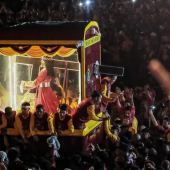
Children of God: Every January in Manila, millions of devotees take part in the Traslacion of the Black Nazarene, but some years stand out for how long the procession lasts.
In 2026, the Traslacion became the longest ever recorded, taking 30 hours, 50 minutes, and 1 second from the time it left Quirino Grandstand at 4:00 a.m. on January 9 until it returned to Quiapo Church at 10:50 a.m. on January 10, drawing an unprecedented crowd of over 9.6 million participants.
Before 2026, other notably long processions included 2017 (22 hours, 19 minutes), also 2012 (22 hours, 14 minutes), 2018 (21 hours, 54 minutes), and 2019 (21 hours, 12 minutes).
These lengthy journeys were the result of massive crowds, obstacles along the route, and the sheer will of devotees to remain close to the image of Jesus Nazareno.
It is common that crowds gather around Jesus from many regions because they have heard about his words and deeds. What draws people to Jesus then, and what draws crowds today, goes beyond mere curiosity: it reflects something deeper in the human heart.
What, then, are our inspirations for today as we reflect on these massive gatherings of people drawn together by hope and faith?
First, when people are drawn by hope, limits are forgotten and barriers become invitations.
In the gospel, large crowds follow Jesus from Judea, Jerusalem, Idumea, and even from across the Jordan and beyond Tyre and Sidon, because they have heard about what he is doing. These were not small groups or casual onlookers, but great throngs pressing toward someone whom they believed could address their deepest needs. The journey to Jesus reflects urgency and trust.
Similarly, during the long Traslacion processions, devotees walk for hours, sometimes barefoot, despite heat, exhaustion, and danger. Their willingness to endure shows that when hope is alive, people do not calculate time, they treasure presence. Just as the crowds moved toward Jesus, so also modern pilgrims press forward, driven by what they hope to find.
This teaches us that hope is the powerful force that draws us together. Whether in ancient Galilee or modern Manila, people seek healing, meaning, and connection. True hope moves us from passive observers to active seekers, willing to go beyond our comfort zones.
Second, True devotion transforms.
In the gospel, the crowd presses upon Jesus and even unclean spirits recognize him, crying out that he is the Son of God. Yet Jesus remains focused on his mission, and the movement of people around him becomes an opportunity for healing and restoration.
This calls us to ask: Is our closeness to God or to holy things merely physical, or does it change how we live, love, and serve when we return to ordinary life? True devotion transforms.
Children of God: Whether it is the crowd that follows Jesus across the countryside or the millions walking for hours in Manila’s streets, what truly matters is not how long the journey lasts, but how deeply it transforms the heart. May we learn that hope mobilizes us, and that transformation completes us.
Radio Veritas Asia (RVA), a media platform of the Catholic Church, aims to share Christ. RVA started in 1969 as a continental Catholic radio station to serve Asian countries in their respective local language, thus earning the tag “the Voice of Asian Christianity.” Responding to the emerging context, RVA embraced media platforms to connect with the global Asian audience via its 21 language websites and various social media platforms.
Latest News