




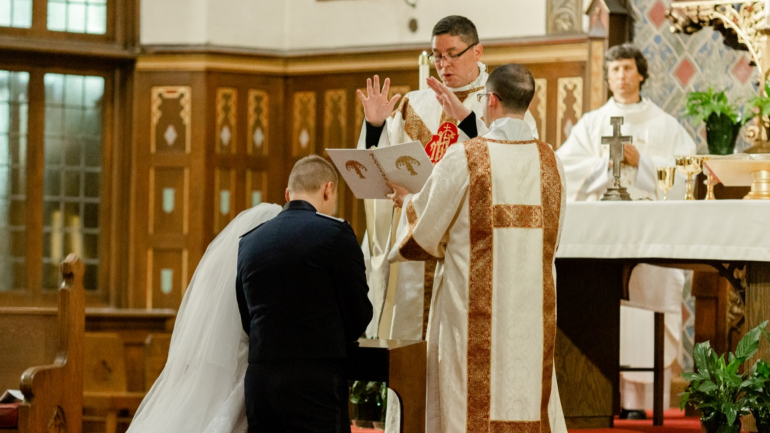
During the past Christmas season, we, the priests of the parish of Santi Silvestro e Martino in Milan resumed our traditional family visits, suspended for several years due to the Covid-19 pandemic. For many parishioners, the visit of a priest—offering a prayer, a blessing, a smile, and a brief conversation—proved deeply meaningful, even for those who rarely attend Mass or parish activities.
These encounters revealed to me the real and often complex face of family life today.
There were tears over recent losses, stories of long loneliness, the joy of young couples in love but not yet considering marriage, and conversations with university students far from home, searching for meaning and direction. There were also expectant mothers asking for prayers. At the same time, there were many who spoke of living with a partner without plans for marriage, or of choosing pets instead of children.
Without judging, one question quietly emerged: Where are the families?
It is against this lived reality that the Dicastery for the Doctrine of the Faith (DDF) released the document Una Caro (One Flesh: In Praise of Monogamy), on 25 November 2025. Approved by Pope Leo XIV, the text reflects on the value of marriage as an exclusive, lifelong union of mutual belonging. Though published only in Italian, its message speaks directly to pastoral challenges faced by families across cultures.
Why the Document Matters
The DDF explains that the document responds to three major concerns. First, some bishops—especially in Africa—continue to address the pastoral reality of polygamy. Second, Western societies are seeing the rise of publicly accepted non-monogamous relationships, often described as “polyamory.” Third, modern technological culture encourages people to see themselves as free from limits, making stable and exclusive commitments seem unnecessary or even undesirable.
Rather than reacting defensively, Una Caro offers a positive vision. As Cardinal Víctor Manuel Fernández explains, the document draws from Scripture, Christian tradition, philosophy, and literature to show why choosing a unique and exclusive union of love is both humanly fulfilling and spiritually meaningful.
Marriage as a Unitive Bond
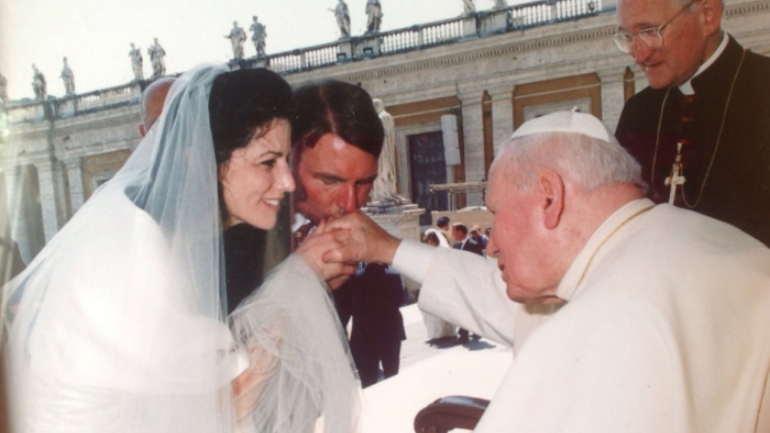
At the heart of the document is a clear affirmation: true marriage is a union of two persons that cannot be shared with others. Rooted in the biblical image of becoming “one flesh,” this unity is not about losing individuality, but about mutual self-giving. The document stresses that only two persons can fully give themselves to one another in a personal and total way. When such love is divided among many, it becomes partial and fails to respect the dignity of each person.
Drawing on Saint Augustine, the text highlights marriage as the most basic bond of human society. Man and woman are created for communion, walking side by side toward a shared goal. Far from being an outdated social rule, monogamy is presented as a form of love that opens the couple to fidelity, depth, and even eternity.
Mutual Belonging, Not Possession
A key insight of Una Caro is its explanation of “mutual belonging.” Belonging does not mean ownership, control, or domination. Instead, it describes a freely chosen relationship of respect, equality, and reciprocity. Each spouse belongs to the other in dignity and freedom.
This belonging flows from self-gift. Marriage is sustained not by external pressure or obligation, but by the inner law of love freely embraced by both spouses. Their unity creates something greater than each individual—a shared life that is fruitful, creative, and guided by the Holy Spirit. In this sense, marital love is not only personal but also spiritual.
Facing Cultural Challenges
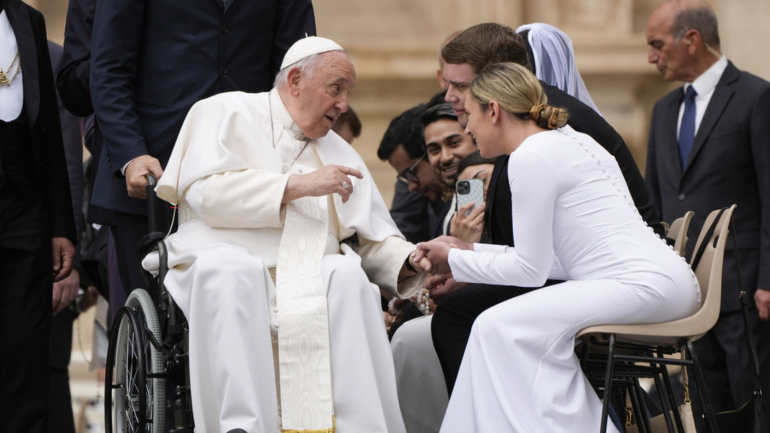
The document also speaks directly to cultural forces that weaken marriage today. It critiques a consumerist mindset that treats relationships as temporary and people as replaceable. It warns against a digital culture where intimacy is trivialized, modesty disappears, and emotional or symbolic violence becomes normal.
In response, Una Caro calls for a renewed education in love—one that teaches young people to see love as responsibility, patience, and hope. Conjugal love is described as the “greatest friendship,” strengthened through prayer, shared life, and mutual care. Sexuality, lived with respect for body and soul, is affirmed as a gift from God oriented toward self-giving love. The document also notes that marriage remains fully meaningful even when couples are unable to have children.
Marriage and Social Responsibility
Married love is not only private; it has a social mission. Couples are encouraged to look beyond themselves and engage in service to others. Pope Leo XIV, quoted in the document, reminds couples that the poor are “a family matter,” not just a social issue. This openness protects marriage from becoming self-centered and helps it contribute to the common good.
A Message of Hope
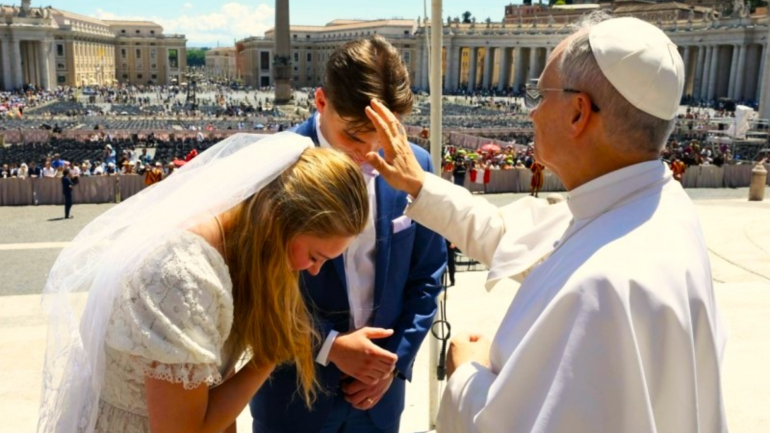
For today’s families and those preparing for marriage, Una Caro offers several invitations: to rediscover monogamy as a path to lasting love; to reject domination or manipulation; to grow in friendship and mutual trust; to resist treating people as disposable; and to open family life to service, especially to the poor.
Though its message may seem countercultural, the document ultimately speaks to a deep human desire. As Saint Augustine wrote, “Give me a heart that loves, and it will understand.” In a world searching for connection and meaning, Una Caro reminds the Church that faithful, monogamous love remains a powerful and hopeful witness.
Let us know how you feel!
Comments





We need to understand that the married life is also equally sacramental as like a priesthood life. We need to live for our family not for us.
- Reply
Permalink