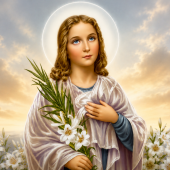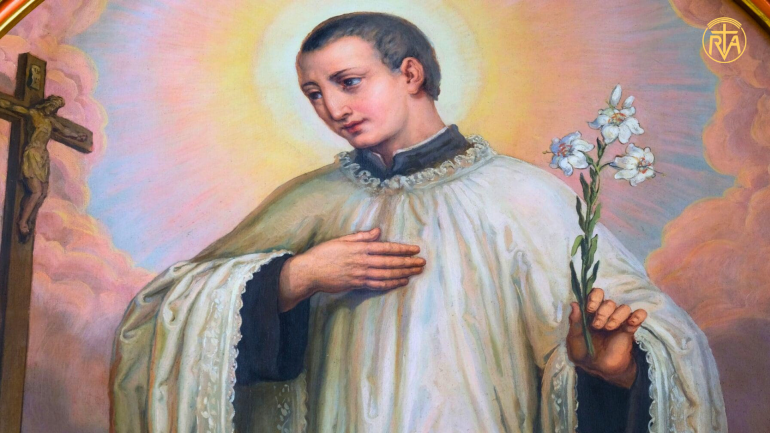
St. Aloysius Gonzaga is commonly depicted as a pale young man holding a lily and a crucifix, with downcast eyes, who died at the age of twenty-three. He is frequently remembered as the patron of "purity," respected yet often overlooked. However, Aloysius was a far more complex figure. When examined through a psychological lens, his life offers valuable insights beyond the traditional statue. His significance lies in demonstrating how a scrupulous and anxious young man can achieve stability through service to others, rather than being diminished by the pursuit of holiness.
A childhood shaped by power and violence
Aloysius was born in 1568 into the Gonzaga family of Castiglione, one of the most influential families in Renaissance Italy. As the eldest son, he was expected to inherit a marquisate. His father, Ferrante, a soldier and gambler, dressed Aloysius in armour and exposed him to military camps, preparing him for court life. Aloysius was raised amid duels, intrigue, and violence. His younger brother Rodolfo, who ultimately inherited the title, was later killed in a feud. Aloysius did not abandon a life of comfort; rather, he relinquished significant power after years of conflict with a father who resisted his departure.
From a developmental perspective, this renunciation is notable. Erik Erikson characterized adolescence as a period defined by the crisis of identity versus role confusion, during which individuals separate from inherited expectations to establish their own identities. While most adolescents express this through minor acts of rebellion, Aloysius accomplished it by formally relinquishing a principality. His entry into the Society of Jesus in 1585 represented not an escape, but a radical act of self-definition in opposition to a dominant paternal narrative. This act of self-definition remains relevant today.
The saint who was told to do less
Traditional narratives about saints often omit a significant detail: Aloysius’s self-denial was so extreme that his Jesuit superiors intervened. They instructed him to eat more, reduce his penances, limit his time in prayer, and participate in recreation with other novices. His practice of "custody of the eyes," which entailed never looking directly at a woman’s face, including his mother’s, was so rigorous that it unsettled even the disciplined Jesuits of his era.
Contemporary clinical terminology describes such behaviour as scrupulosity, defined as excessive concern over one’s own sins and moral failings, and now recognized as a religious manifestation of obsessive-compulsive disorder. While retrospective diagnosis is inappropriate and it would be reductive to interpret Aloysius’s holiness solely through a medical lens, the behavioural pattern is recognizable. Notably, his community’s response is instructive. Long before the term "scrupulosity" was coined, his superiors and his confessor, Robert Bellarmine, provided spiritual guidance, emphasizing that holiness does not equate to self-harm. Their approach demonstrates that holiness attains its fullest expression when directed outward rather than inward.
The turn outward
Aloysius transcended the label of anxious piety through the application of his intense disposition. During the plague in Rome in 1591, the Jesuits established a hospital, and despite his physical frailty, Aloysius volunteered to assist. He brought dying individuals from the streets, cared for them, and provided nourishment. Ultimately, he contracted the disease and died on June 21, 1591. As argued in analyses of twentieth-century catastrophes, the deepest human drive is not pleasure or power, but meaning, which is most fully realised through self-transcendence, directing attention away from oneself toward another person or cause. Aloysius’s life exemplifies this trajectory: an interior world marked by self-scrutiny, ultimately resolved through selfless service to the plague-stricken poor. He attained peace not through self-perfection, but through self-forgetfulness, which renders his story relevant to contemporary readers experiencing anxiety.
Aloysius Gonzaga’s relevance is particularly evident in the present context. Contemporary society faces a youth mental health crisis characterized by perfectionism, social comparison, and pervasive anxiety. As the patron of youth, Aloysius also grappled with perfectionism and ultimately learned to relinquish it. His practice of "custody of the eyes" parallels modern challenges in managing attention amid constant distractions. As the patron of plague victims, caregivers, and more recently those affected by AIDS, his example resonates in a world that has witnessed the sacrifices of caregivers during the pandemic. His significance lies in demonstrating how anxiety can be transformed into compassionate care.
Aloysius Gonzaga represents more than a symbolic figure. He confronted the privileges and expectations of his birth, contended with personal anxiety, received support from a discerning community, and ultimately discovered freedom through service to others. His enduring relevance in times of widespread anxiety lies in his demonstration that holiness can transform anxiety into love.
Radio Veritas Asia (RVA), a media platform of the Catholic Church, aims to share Christ. RVA started in 1969 as a continental Catholic radio station to serve Asian countries in their respective local language, thus earning the tag “the Voice of Asian Christianity.” Responding to the emerging context, RVA embraced media platforms to connect with the global Asian audience via its 21 language websites and various social media platforms.
Latest News